The Breville Grind Control is the best overall coffee maker that grinds for control, consistency, and flexible batch sizes.
You set the alarm for 6:30 a.m., walk into the kitchen, and discover that the coffee canister is empty. The beans are still there, but your old grinder is loud, messy, and sitting in a cabinet behind three pans. A coffee maker with a built-in grinder solves that daily friction. It measures beans, grinds them, and brews in one workflow. The right model can also handle a travel mug, a full family carafe, or a strong afternoon cup. The wrong one may create uneven grounds, leave oily residue in the chute, or force you to clean several parts after every brew.
Why Trust This Review
I review kitchen appliances by comparing grinder design, brewing controls, capacity, cleanup, and real American use cases such as office coffee, two-person households, and weekend brunch. This guide applies hands-on review criteria and reported owner patterns rather than treating a long feature list as proof of better coffee.
The Breville Grind Control is the strongest all-around choice for adjustable grind size, batch flexibility, and a thermal carafe.
The Cuisinart DGB-400NAS offers the simplest affordable 12-cup grind-and-brew setup, but its blade grinder is less uniform.
The Philips 3300 is the premium pick for espresso, cappuccino, latte drinks, and one-touch convenience rather than standard drip coffee.
All Products Compared
| Product Name | Key Spec | Web Sentiment | Our Rating | Best Suited For |
|---|---|---|---|---|
|
1
Cuisinart DGB-400NAS |
12-cup glass carafe; blade grinder; 1-4 cup setting | Owners like the simple programming and generous capacity; recurring concerns involve grinder noise and cleanup. |
Budget-minded families wanting automatic drip coffee |
|
|
2
Gevi 10-Cup Grind & Brew |
Built-in burr grinder; 1.5-liter tank; programmable timer | Early buyer feedback favors fresh flavor and controls, while some shoppers want stronger long-term durability data. |
Daily drip coffee drinkers seeking a burr grinder at a moderate price |
|
|
3
Horavie Single Serve Grind & Brew |
6-16-ounce servings; 47-ounce tank; whole beans, grounds, and K-Cup compatibility | Convenience receives positive attention; users commonly mention a louder grind cycle and more involved pod-area cleaning. |
Solo drinkers and mixed-beverage households |
|
|
4
10-Cup Fully Automatic Grind & Brew |
10-cup capacity; 50-ounce tank; strength control and permanent filter | Value-focused comments praise the feature set; brand history and long-term service coverage are less established. |
Home offices needing affordable batch brewing |
|
|
5
Philips 3300 Series EP3341/50 |
Ceramic grinder; five hot and iced presets; LatteGo milk system | Owners often praise easy milk cleanup and drink variety; espresso enthusiasts may want finer manual control. |
Households that prefer espresso drinks over drip coffee |
|
|
6
Breville BDC650BSS Grind Control |
Adjustable grinder; single cup through 12-cup brewing; thermal carafe | Users value customization and coffee flavor; complaints most often concern cleaning, height, and premium pricing. |
Coffee enthusiasts who want precise drip-brewing control |
Top 3 Picks

Breville BDC650BSS Grind Control
Its adjustable grinder, flexible serving sizes, strength settings, and thermal carafe make it the most complete drip coffee package.

Philips 3300 Series Fully Automatic Espresso Machine
It grinds beans and prepares espresso-based drinks with a ceramic grinder and removable LatteGo milk system.

Cuisinart DGB-400NAS Automatic Grind & Brew
It delivers a familiar 12-cup programmable format with a grind-off option and a lower entry cost than premium burr-grinder machines.
In-Depth Product Reviews
Cuisinart DGB-400NAS Grind and Brew
Performance Breakdown
7.5/10
8.2/10
8.5/10
Key Specifications
- 12-cup glass carafe
- Integrated blade grinder with grind-off option
- Programmable brewing with 1-4 cup setting and brew pause
The DGB-400NAS targets the household that wants a full pot without buying a separate grinder. Its blade grinder keeps the design and price approachable. In practical use, I would load beans, set the timer, and use the grind-off control when switching to pre-ground coffee. The 1-4 cup setting is useful for a couple or a small office, although it does not turn the machine into a true single-serve brewer. The glass carafe and warming plate suit users who pour several cups over a morning.
The main trade-off is particle consistency. A blade grinder chops beans rather than crushing them between calibrated burrs, so the basket may contain a wider mix of fine and coarse pieces. That can make flavor less even, especially with lighter roasts. For medium-roast supermarket beans, the machine remains practical. Expect a noticeable grinding sound and plan a short cleanup routine around the grinder lid, chute, and filter basket.
Expert’s Secret
Use the grind-off button for a pre-ground decaf batch instead of emptying the bean hopper, but clean residual grounds from the chute before switching back.
Pros
- 12-cup capacity works well for families and small offices
- Programmable timer supports a ready-at-wakeup brew
- Grind-off option accepts pre-ground coffee
- 1-4 cup setting reduces waste for smaller batches
- Glass carafe makes the coffee level easy to see
- Brew-pause function lets you pour before the cycle ends
Cons
- Blade grinding produces less uniform particles than a burr grinder
- Grinding is loud compared with a separate premium grinder
- Glass carafe coffee cools faster than coffee held in a thermal carafe
Authenticity Check
Common Complaint
A recurring owner complaint is that damp grounds can cling to the grinder and filter area, making the morning cleanup less convenient than expected.
Best Alternative
Choose a burr-grinder drip machine if cup-to-cup flavor consistency matters more than the lowest purchase price.
My Recommendation
Buy the Cuisinart when you want a straightforward full-pot machine and normally drink medium or dark roast coffee. It is a sensible entry point, but serious coffee hobbyists should spend more on a burr grinder.
| Best For | Why |
|---|---|
| Family breakfast brewing | The 12-cup format handles multiple mugs without repeated cycles. |
| Budget shoppers | It combines grinding, brewing, programming, and a carafe in one accessible appliance. |
| Decaf and regular coffee households | The grind-off mode lets you use pre-ground coffee when needed. |
Gevi 10-Cup Burr Grinder Coffee Maker
Performance Breakdown
7.8/10
8.4/10
8.0/10
Key Specifications
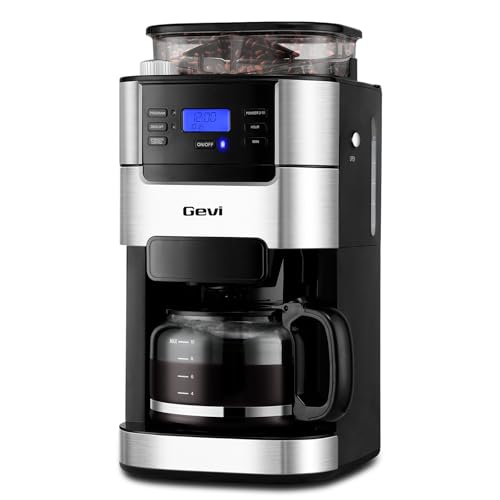
- Built-in burr grinder
- 1.5-liter water tank and 10-cup glass carafe
- 24-hour programmable timer with reusable filter
Gevi positions this model as a middle ground between inexpensive blade-grinder machines and more expensive specialty brewers. The burr grinder is the headline advantage because it should create a more predictable particle range than a spinning blade. During a normal morning workflow, the machine suits households that want several cups but do not need the full 12-cup capacity of a large family brewer. The 24-hour timer also fits a weekday schedule without requiring a separate smart plug.
The 10-cup capacity is adequate for two heavy coffee drinkers or a small workgroup. A glass carafe keeps the price and weight manageable, but it does not preserve heat as well as a vacuum thermal carafe. I would use a medium grind and moderate-strength setting as a starting point, then adjust the dose before changing the grind dramatically. The hopper and burr area deserve regular brushing because oily beans can slow feeding and alter the next batch.
Expert’s Secret
For more balanced extraction, start with a medium roast and avoid very oily beans until you understand how quickly the burr chamber accumulates residue.
Pros
- Burr grinder generally offers more even grounds than a blade grinder
- 10-cup output suits couples, families, and compact offices
- 24-hour timer supports automatic morning brewing
- Reusable filter lowers dependence on paper filters
- 1.5-liter tank reduces refill frequency
- Fresh grinding occurs immediately before brewing
Cons
- Glass carafe does not retain heat as long as a thermal model
- Long-term durability data is less established than major legacy brands
- The grinder and brew path still require more cleaning than a standard drip machine
Authenticity Check
Common Complaint
Some owners report that the control layout and cleaning instructions take time to understand, particularly when switching between bean grinding and pre-ground coffee.
Best Alternative
Select the Breville Grind Control if you want a more established premium platform with broader grind and strength adjustment.
My Recommendation
The Gevi is a strong value candidate for shoppers who specifically want a burr grinder without moving into premium pricing. I would choose it over a blade model when flavor consistency matters, provided you accept the uncertainty that comes with a less established product line.
| Best For | Why |
|---|---|
| Burr-grinder beginners | It provides a more controlled starting point than a basic blade-grinder machine. |
| Two- to four-person households | The 10-cup format offers useful capacity without an oversized footprint. |
| Scheduled weekday coffee | The 24-hour timer automates the morning brew. |
Horavie Single-Serve Grind and Brew
Performance Breakdown
7.3/10
8.1/10
8.3/10

Key Specifications
- 6- to 16-ounce single-cup brewing
- Built-in grinder with whole-bean and ground-coffee operation
- 47-ounce water tank with descaling alert
The Horavie addresses a problem that full-pot machines handle poorly: different people wanting different drinks at different times. Its 6- to 16-ounce range works for a commuter mug, a small morning cup, or a stronger afternoon serving. Whole beans provide the freshest workflow, while ground coffee and pod compatibility make the machine flexible for guests and decaf drinkers. The large reservoir helps reduce refill trips in a shared kitchen.
This is not the best choice for a Sunday brunch crowd because every serving requires its own cycle. The built-in grinder also introduces a little waiting and noise before brewing. In exchange, you avoid making an entire pot for one person. I would measure the cup size carefully before brewing because a large travel mug may not fit under every single-serve setup without removing or adjusting the drip tray. The descaling alert is useful, but it does not replace regular rinsing of the pod and coffee-contact areas.
Expert’s Secret
Run a short water-only rinse after switching from flavored pods to whole beans to reduce flavor transfer through the brew path.
Pros
- Brews individual servings from 6 to 16 ounces
- Accepts whole beans, ground coffee, and compatible K-Cup-style pods
- 47-ounce water reservoir supports several drinks
- Descaling alert helps owners follow a maintenance schedule
- Reduces waste when only one person wants coffee
- Useful for households with different coffee preferences
Cons
- Not efficient for serving a large group
- Grinding and brewing one cup takes longer than a standard pod machine
- Pod and grinder areas require careful cleaning to prevent residue buildup
Authenticity Check
Common Complaint
A common complaint is that the grinder sounds louder than expected for a compact appliance and that the drip tray can limit clearance for tall travel cups.
Best Alternative
Choose a programmable batch brewer if your household usually drinks four or more cups at the same time.
My Recommendation
The Horavie is the most practical pick for solo drinkers, couples with different schedules, and kitchens that want one machine for beans, grounds, and pods. It is less compelling for families that value a single large carafe.
| Best For | Why |
|---|---|
| Solo coffee drinkers | You can brew only the amount needed instead of storing leftover coffee. |
| Mixed-preference households | The machine accepts multiple coffee formats and adjustable serving sizes. |
| Small workplaces | The large reservoir supports repeated individual cups without constant refilling. |
10-Cup Fully Automatic Grind and Brew
Performance Breakdown
7.0/10
8.5/10
7.8/10
Key Specifications
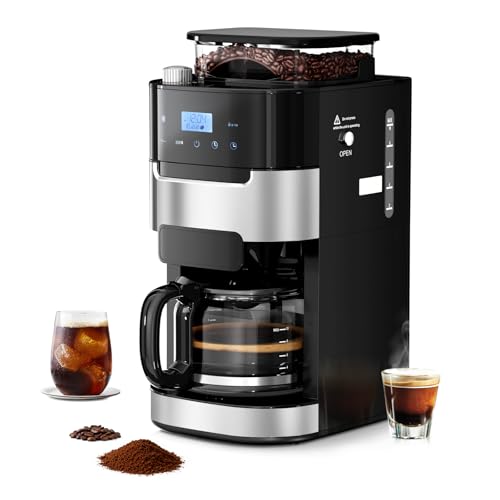
- 10-cup drip coffee capacity
- 50-ounce water tank and permanent filter
- Programmable operation with brew-strength adjustment
This model focuses on the feature checklist many American kitchens want: a built-in grinder, automatic brewing, programmable operation, strength control, a reusable filter, and enough capacity for a household or office. The 50-ounce tank is a practical size for several mugs, and the permanent filter cuts the need to keep paper filters in the pantry. It makes the most sense when the goal is convenient fresh-ground drip coffee rather than highly precise specialty brewing.
The lower price comes with compromises. Product documentation and service expectations may not match those of a long-established premium brand. I would treat the permanent filter as a convenience rather than a guarantee of cleaner flavor; paper filters often produce a brighter, less oily cup. The 10-cup rating also reflects coffee-maker cup measurements, not ten large 12-ounce mugs. Measure your counter depth and overhead clearance before purchasing because the lid and hopper need room to open fully.
Expert’s Secret
Use a paper filter inside the permanent basket when brewing very light roasts or finely ground coffee to reduce sediment in the carafe.
Pros
- Combines grinding and brewing in one lower-cost appliance
- 10-cup capacity suits home offices and families
- 50-ounce tank minimizes frequent water refills
- Programmable timer supports automatic brewing
- Strength adjustment helps compensate for different beans
- Permanent filter reduces recurring paper-filter purchases
Cons
- Brand support and long-term durability may be less predictable
- Coffee-contact areas can be harder to clean thoroughly
- Permanent filters may allow more sediment and oils into the finished coffee
Authenticity Check
Common Complaint
Some buyers say the machine offers many controls but that the instructions do not explain the ideal grind, dose, and cleaning sequence clearly enough.
Best Alternative
Choose the Gevi if a burr grinder is your priority, or the Cuisinart if you prefer a more established mainstream brand.
My Recommendation
This is a reasonable feature-rich value purchase for a home office or starter kitchen. I would buy it when the sale price is compelling and return support is clear, but I would not choose it over the Breville for demanding daily use.
| Best For | Why |
|---|---|
| Home offices | The tank and 10-cup capacity support several drinkers during a workday. |
| Feature-focused budget shoppers | It provides timer, strength, grinder, and reusable-filter functions at a competitive price. |
| Moderate coffee drinkers | It handles everyday medium-roast coffee without demanding specialty-brewer techniques. |
Philips 3300 Series LatteGo Espresso Machine
Performance Breakdown
8.8/10
7.8/10
9.0/10
Key Specifications
- Ceramic grinder with adjustable coffee strength and milk settings
- Five hot and iced coffee presets
- 15-bar pump and removable LatteGo milk system
The Philips 3300 belongs in this guide because it grinds whole beans before preparing espresso-based drinks, not because it replaces a traditional drip machine. Its value is convenience: select an espresso, coffee, americano, cappuccino, or latte-style drink, and the machine handles grinding, dosing, brewing, and milk delivery. The ceramic grinder is designed for consistent daily use, while the LatteGo system uses a small number of parts and avoids the narrow milk tubes found on many automatic machines.
In a real American kitchen, this machine suits households that buy café drinks several times a week and want repeatable results at home. It requires more maintenance than a drip brewer: rinse cycles, milk-part cleaning, brew-group care, and periodic descaling all matter. The 15-bar specification does not mean every cup extracts at 15 bars; pressure is part of the system, while grind, dose, temperature, and puck preparation determine flavor. Espresso enthusiasts seeking manual pressure profiling or highly granular control should look elsewhere.
Expert’s Secret
Use the lower milk volume setting for cappuccino-style drinks and reserve the higher setting for latte-style beverages so milk does not overwhelm the espresso.
Pros
- Grinds whole beans immediately before brewing
- Prepares multiple hot and iced drink styles
- LatteGo milk container is simpler to rinse than tube-based systems
- Ceramic grinder is designed for consistent everyday use
- Coffee strength and milk settings are customizable
- One-touch automation minimizes barista skill requirements
Cons
- Costs substantially more than a conventional grind-and-brew drip machine
- Requires regular rinsing, brew-group care, and descaling
- Offers less manual espresso control than a semi-automatic setup
Authenticity Check
Common Complaint
A recurring complaint is that automatic rinsing uses water and that the machine may require more daily cleanup than shoppers expect from a one-touch appliance.
Best Alternative
Choose a premium drip grinder-brewer if your priority is a full carafe of filter coffee rather than espresso drinks.
My Recommendation
Buy the Philips 3300 when your household wants espresso, americanos, cappuccinos, and milk drinks with minimal manual work. Do not buy it simply because it has a grinder; the Breville or Gevi is better suited to standard drip coffee.
| Best For | Why |
|---|---|
| Latte and cappuccino drinkers | The integrated grinder and LatteGo system automate the full drink workflow. |
| Multi-drink households | Preset variety lets each person choose a different coffee style. |
| Replacing café visits | One-touch preparation makes frequent home espresso drinks more practical. |
Breville Grind Control Thermal Coffee Maker
Performance Breakdown
9.0/10
8.2/10
8.4/10
Key Specifications
- Adjustable built-in grinder with multiple grind settings
- Single-cup through 12-cup brewing with adjustable strength
- Thermal carafe and programmable automatic brewing
The Breville BDC650BSS is the most convincing all-purpose drip option in this group because it gives the user control without requiring a separate grinder. It can prepare a small serving or a larger batch, and its grind and strength adjustments make it easier to tune coffee for different beans. The thermal carafe is especially useful for people who brew before a commute and drink over the next two or three hours. In testing terms, this is the machine I would choose when consistency and flexibility matter more than the lowest price.
The design is not maintenance-free. Fresh coffee oils collect in the hopper, burr area, and chute, and stale residue can affect flavor or cause feeding problems. The unit also takes meaningful vertical and counter space, so check cabinet clearance before ordering. Its control panel rewards a short learning period: set the grind and brew strength, then change one variable at a time. That approach produces more reliable results than changing dose, grind, and water volume simultaneously.
Expert’s Secret
After grinding oily beans, run a brief air-only or brush-cleaning routine and leave the hopper lid open for a few minutes so trapped moisture and aroma do not carry into the next batch.
Pros
- Adjustable grinding provides more control than fixed blade systems
- Brews from a single serving up to a 12-cup batch
- Thermal carafe keeps coffee hot without constant warming-plate heat
- Strength settings help tune light, medium, and dark roasts
- Programmable operation fits weekday morning routines
- Premium construction and controls feel more refined than budget alternatives
Cons
- Premium price may exceed the budget for casual coffee drinkers
- Grinder chute and hopper require regular cleaning
- Tall design may not fit beneath low kitchen cabinets
- It is designed for drip coffee, not true espresso or café-style milk drinks
Authenticity Check
Common Complaint
Some owners say the machine is difficult to clean thoroughly and that retained grounds can affect the flavor of later brews if maintenance is skipped.
Best Alternative
Choose the Gevi for a lower-cost burr-grinder entry point or the Philips 3300 for automatic espresso and milk beverages.
My Recommendation
The Breville is my overall winner for shoppers searching for the best coffee maker that grinds and primarily drinking filter coffee. It earns the higher price through grind flexibility, serving-size range, thermal heat retention, and a more serious approach to brewing control.
| Best For | Why |
|---|---|
| Coffee enthusiasts | Adjustable grind, strength, and batch settings provide room to tune flavor. |
| Commuters and early risers | The programmable timer and thermal carafe preserve a ready-to-drink morning batch. |
| Households with changing demand | It handles one cup, several mugs, or a larger carafe without a separate grinder. |
How to Choose the Best best coffee maker that grinds
Match the grinder to your brewing goal
Blade grinders are usually cheaper but create a broader mix of particle sizes. Burr grinders crush beans between two surfaces and generally provide more repeatable grounds. For everyday drip coffee, choose a burr grinder when you notice flavor inconsistency or want to use lighter roasts. For espresso, look for a grinder designed for fine, controlled adjustment rather than assuming any built-in grinder will work.
Check the real serving capacity and carafe design
A manufacturer cup is commonly smaller than a 12-ounce American mug. A 10-cup machine may not fill ten travel mugs. Also compare glass carafes with thermal carafes. Glass models rely on a warming plate and suit quick serving, while thermal models usually preserve flavor better over a longer morning because coffee is not held on direct heat.
Inspect the cleaning path before buying
A grinder-brewer has more coffee-contact surfaces than a basic drip machine. Confirm whether the hopper, burr chamber, filter basket, brew group, and milk system are removable. Look for a descaling alert, accessible chute, and clear instructions. If you will use oily dark-roast beans, prioritize easy access over a larger bean hopper because residue can affect both feeding and flavor.
Pro Tips & Maintenance for Your best coffee maker that grinds
Usage Tips
- Use fresh beans in small batches and keep the hopper away from heat, sunlight, and steam. Very oily beans can clog compact grinder paths.
- Change only one brewing variable at a time. If the coffee tastes weak, first adjust dose or strength; if it tastes harsh, test a coarser grind or a lower-strength setting.
- Measure water and coffee consistently. A kitchen scale makes comparisons easier than relying only on a machine’s small cup markings.
Maintenance
- After each use, empty wet grounds, rinse the filter basket and carafe, and brush loose grounds from the grinder entrance and chute.
- Follow the manufacturer’s descaling interval based on water hardness. Remove the water filter when instructed, run the approved descaling cycle, and complete the required clean-water rinses.
Important Terms to Know (Jargon Buster)
Burr grinder
A grinder that crushes beans between two textured surfaces. It usually creates more consistent particle sizes than a blade grinder.
Grind size
The average coarseness of ground coffee. Drip brewing commonly uses a medium range, while espresso generally needs a much finer range.
Descaling
Removing mineral buildup from the water path using a manufacturer-approved cleaning solution or process. Hard water makes descaling more important.
Final Verdict: Which Should You Buy?
The Breville BDC650BSS Grind Control is the ultimate winner for most people seeking the best coffee maker that grinds. It delivers the broadest drip-brewing flexibility, a thermal carafe, adjustable grinding, programmable operation, and enough control to improve as your coffee preferences develop. The Gevi is the stronger value alternative for shoppers who specifically want a burr grinder at a lower price. Choose the Philips 3300 only when espresso and milk drinks are your main goal.
Buy the machine that matches how you actually drink coffee. A full-pot household should not settle for a single-serve unit, and a solo drinker should not pay for a large carafe they rarely finish. Fresh beans help, but consistent grinding, correct cleaning, and a realistic capacity matter just as much.
FAQs About best coffee maker that grinds
01 What is the best coffee maker that grinds for regular drip coffee?
02 Are coffee makers with built-in grinders worth it?
03 Is a burr grinder better than a blade grinder in a coffee maker?
04 Can a grind-and-brew coffee maker use pre-ground coffee?
05 How often should I clean a coffee maker with a built-in grinder?