For most coffee drinkers in the United States, hand grinding coffee takes about 30 to 90 seconds per brew. A small 8-ounce cup may take less than a minute. A larger batch, coarse grind, or espresso-fine grind may take 1 to 3 minutes.
The exact time depends on the coffee dose, grind size, grinder quality, bean hardness, and your grinding speed. A good hand grinder should feel steady, not painfully hard to turn.

Quick Answer: How Long Does It Take to Grind Coffee by Hand?
Hand grinding coffee usually takes:
| Coffee type | Typical dose | Approximate hand-grinding time |
|---|---|---|
| Single-cup pour-over | 15–20 grams | 30–60 seconds |
| AeroPress | 15–18 grams | 30–60 seconds |
| French press | 25–35 grams | 45–90 seconds |
| Drip coffee maker | 30–60 grams | 45–120 seconds |
| Espresso | 18–20 grams | 1–3 minutes |
| Cold brew | 60–100 grams | 2–5 minutes, often in batches |
These are practical estimates, not fixed rules. A strong steel-burr grinder may finish a 20-gram dose in 30 to 45 seconds. A small ceramic-burr grinder may take twice as long.
The most useful answer is this: plan on about one minute for a normal single cup and two minutes for a larger brew.
What Changes the Hand-Grinding Time?
The coffee dose and grind size have the greatest effect on grinding time. Grinder design, bean density, and your technique also matter.
Coffee dose
More beans require more turns of the grinder.
For example:
- 15 grams may take 30–60 seconds.
- 30 grams may take 45–90 seconds.
- 60 grams may take 90 seconds to 3 minutes.
The time does not always double perfectly. Some grinders handle larger loads more efficiently than others.
Grind size
Grind size changes how much work the burrs must do.
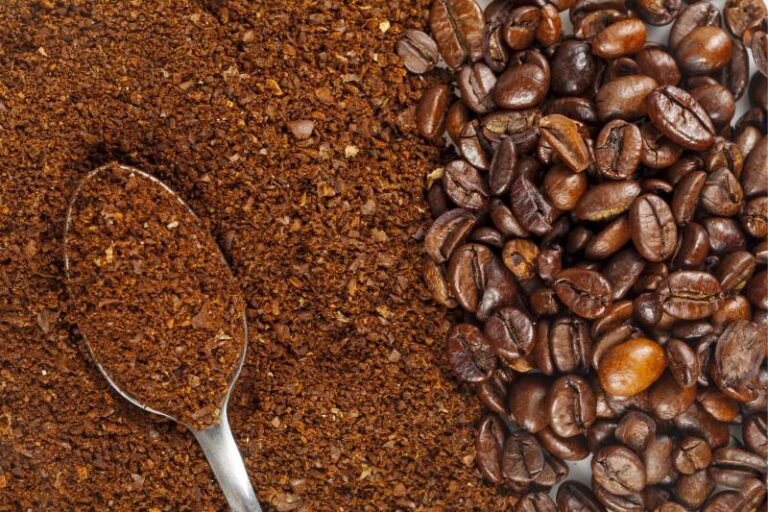
A coarse grind leaves larger coffee particles. It often takes fewer cutting actions than a fine grind. However, coarse beans can sometimes bounce around inside a low-cost grinder, which slows the process.
A fine grind needs the burrs to break the beans into much smaller pieces. This creates more resistance and usually takes longer.
Espresso grinding is often the slowest common task. It may take one to three minutes for an 18- to 20-gram dose, especially with a compact travel grinder.
Burr design
A burr grinder crushes coffee between two surfaces. A hand grinder may use:
- Ceramic burrs: Often affordable and durable, but they may grind more slowly.
- Stainless steel burrs: Commonly smoother and faster, though quality varies.
- Larger burrs: Usually remove beans more quickly.
- Small burrs: Often need more turns for the same dose.
Burr material alone does not determine speed. Burr size, alignment, gear ratio, and the grinder’s internal design also play a role.
Coffee bean density and roast level
Beans differ in size and density. Dark-roasted coffee is often more brittle and may break easily, but this does not mean every dark roast grinds faster.
Light-roasted coffee is often denser and can feel harder to grind. Some light beans also create more resistance at fine settings.
Do not force the handle if it suddenly jams. A bean may be stuck between the burrs.
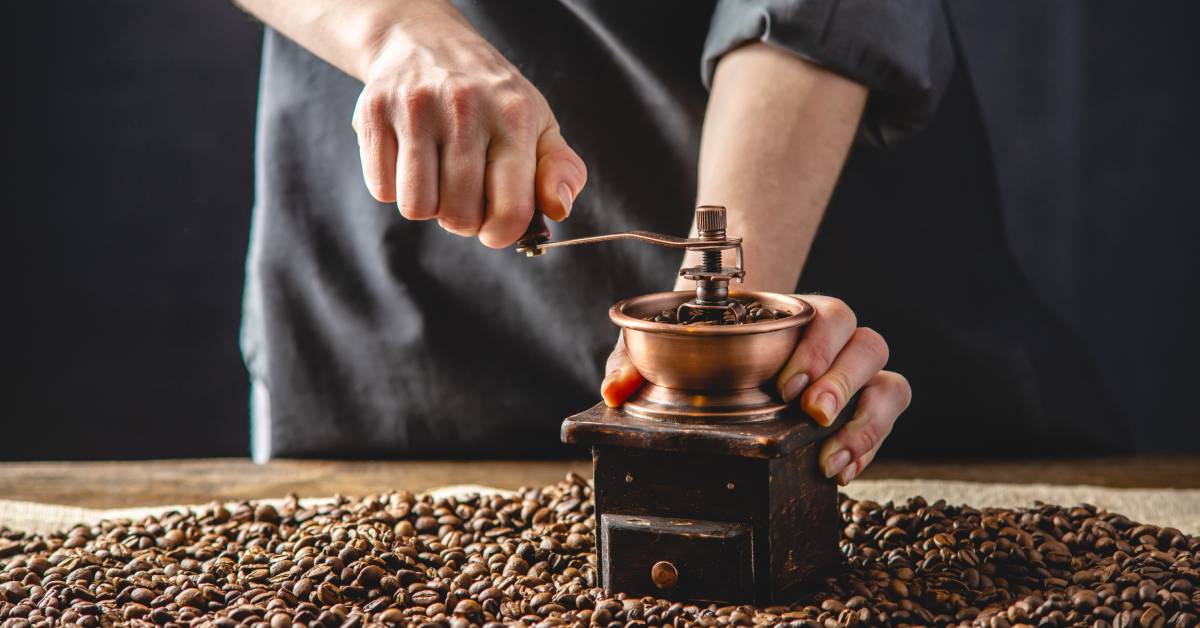
Your grinding speed
Most people turn a hand grinder at a steady pace rather than trying to go as fast as possible. A smooth rhythm is easier on your wrist and may produce more even grinding.
Fast, uneven cranking can cause:
- Grinder wobble
- Poor control
- Extra noise
- More strain on the wrist
- Beans bouncing inside the chamber
A steady pace matters more than speed alone.
How Long Should You Expect for Each Brewing Method?
Your brewing method sets the target dose and grind size. That makes it a useful way to estimate the time before you start.
Pour-over coffee
A single pour-over serving usually uses 15 to 20 grams of coffee. Hand grinding often takes 30 to 60 seconds.
For a larger pour-over, such as a 30-gram brew for two people, expect roughly one minute or slightly more.
Pour-over coffee usually needs a medium-fine to medium grind. If the handle feels very hard, the grinder may be set too fine or the beans may be unusually dense.
French press coffee
French press coffee often uses 25 to 35 grams for two US cups. A coarse grind may take 45 to 90 seconds.
Some grinders move coarse beans quickly. Others take longer because the beans do not feed smoothly into the burrs.
For a full 32-ounce French press, you may need 50 to 60 grams of coffee. That can take 1.5 to 3 minutes, depending on the grinder.
AeroPress coffee
An AeroPress commonly uses 15 to 18 grams of coffee. Grinding usually takes 30 to 60 seconds.
The grind can range from fine to medium, based on the recipe. A very fine setting may take longer and require more effort.
Automatic drip coffee
A standard US coffee maker may use about 10 to 12 grams of coffee per 6 fluid ounces of water, though cup markings vary by machine.
A 10-cup brewer may need 50 to 60 grams. Hand grinding that amount can take one to two minutes, or longer with a small grinder.
If you make a full pot every morning, electric grinding may save time and wrist effort. Hand grinding remains practical for occasional batches.
Espresso
Espresso requires a fine and consistent grind. An 18-gram dose may take one to three minutes by hand.
The time depends heavily on the grinder. Many basic hand grinders are not designed for fast espresso preparation. If the handle becomes difficult to turn, stop and check the setting rather than pushing harder.
Cold brew
Cold brew often uses more coffee than other methods. A 1-quart batch may require 80 to 100 grams, depending on the recipe.
Grinding this amount by hand may take two to five minutes. Work in smaller batches if the grinder chamber is small.

How to Grind Coffee by Hand Faster and More Comfortably
You can reduce grinding time by using the right dose, a suitable grinder, and a steady technique.
1. Measure the beans first
Use a coffee scale if you have one. Measuring the dose before grinding prevents wasted turns and makes your brew more repeatable.
If you do not have a scale, measure the beans with the grinder’s recommended scoop. Keep in mind that volume is less exact because beans vary in size and density.
2. Set the grind before adding beans
Choose the correct grind size for your brewing method. Start with the grinder’s guide, then adjust based on taste and brew time.
Avoid changing settings while beans are trapped between the burrs unless the grinder maker says it is safe. Some grinders can be damaged when their adjustment system moves under heavy load.
3. Hold the grinder firmly
Place the grinder in your dominant hand or secure it against a stable surface. Keep the grinder upright when possible.
A stable grip transfers more of your effort into turning the burrs. It also reduces wobbling and makes the work less tiring.
4. Turn the handle at a steady pace
Use smooth, even turns. Do not race through the dose.
If the handle becomes harder to turn, slow down. A steady pace helps prevent jams and reduces stress on your wrist.
5. Use short breaks for large doses
For a large batch, stop for a few seconds after each portion. This gives your hand a break and makes the task more manageable.
Do not fill the grinder beyond its rated capacity. Overfilling can make the handle difficult to turn and may cause beans to clog the burrs.
6. Check the grounds
Good grounds should match the brewing method reasonably well. They do not need to look perfectly identical, but extreme amounts of dust or large chips can affect extraction.
If the grounds look unusually uneven, the issue may be grinder alignment, worn burrs, a blocked chute, or beans entering the burrs unevenly.

Is Hand Grinding Coffee Worth the Extra Time?
Hand grinding can be worth it when you make one or two cups and want a quiet, portable setup. It does not make coffee automatically better, but freshly ground coffee can preserve more aroma than coffee that was ground long before brewing.
Hand grinding is often useful for:
- Travel
- Camping
- Small kitchens
- Office brewing
- Occasional pour-over
- People who prefer a quiet grinder
- Brewing one or two cups at a time
An electric grinder may be a better fit when you make several full pots, prepare espresso often, or have wrist, hand, or shoulder pain.
The main trade-off is simple: hand grinders cost less to operate and take up little space, but they require physical effort and time.
A high-quality hand grinder may also offer better grind consistency than a low-cost electric blade grinder. That comparison depends on the exact models, so price alone does not determine performance.

Why Is My Hand Grinder So Slow?
A hand grinder that takes much longer than expected may have a coarse setting, a clog, worn burrs, or a difficult bean.
Check these causes in order:
- Confirm the dose. You may be grinding more coffee than you intended.
- Check the grind setting. Espresso-fine settings take longer than medium settings.
- Look for a jam. Stop turning if the handle locks or becomes sharply harder to move.
- Clean the burr area. Old grounds can restrict bean flow.
- Inspect the handle and shaft. Loose parts can waste energy.
- Consider the beans. Dense light-roasted beans may require more force.
- Check burr wear. Dull or damaged burrs can grind slowly and unevenly.
Do not use water inside the grinder unless the manufacturer specifically permits it. Moisture can damage metal parts and cause coffee residue to stick.
Never use tools to force the handle unless the grinder instructions allow it. Excess force can damage the shaft or burrs.

How to Tell Whether the Grinding Time Is Normal
Grinding time is probably normal when the handle turns smoothly, the grinder stays stable, and the grounds come out at a steady rate.
You may have a problem when:
- The handle suddenly stops
- The grinder makes a scraping sound
- The burrs touch at a setting where they should not
- The grinder produces many whole beans
- The handle slips or wobbles
- Your wrist hurts during normal use
- The grinding time keeps increasing over several brews
A small difference between doses is normal. Coffee beans do not all have the same shape, size, or density.
If the grinder is new and feels unusually hard, read the instructions before changing the burr adjustment. Grinder settings differ, and the same number does not represent the same grind size across brands.

Hand-Grinding Time: A Simple Planning Formula
You can estimate your own grinding time with a short test.
- Weigh the dose you normally use.
- Grind it while timing the process.
- Repeat the test twice.
- Use the average time.
For example, suppose you grind 18 grams in 45 seconds. A 36-gram dose may take close to 90 seconds, but not always. The result can change with grind size, bean type, and how full the grinder is.
A simple estimate is:
Estimated time = test time × new dose ÷ test dose
Hypothetical example:
- Test dose: 18 grams
- Test time: 45 seconds
- New dose: 30 grams
45 × 30 ÷ 18 = 75 seconds
This is only a starting estimate. Use real timing for your own grinder because gear ratios and burr designs vary.

Common Mistakes That Make Hand Grinding Harder
The most common mistake is choosing a grind that is finer than the brewing method requires. Start with a reasonable setting and adjust in small steps.
Other mistakes include:
- Filling the grinder too full
- Holding the grinder at an angle
- Turning the handle in a jerky motion
- Ignoring old grounds in the burrs
- Grinding several large doses without a break
- Forcing the handle through a jam
- Assuming every grinder setting uses the same scale
- Judging quality only by speed
Speed is not the only goal. A slightly slower grind may produce better control and more even grounds.
If your coffee tastes sour and weak, the grind may be too coarse, the brew may be too short, or the water may be too cool. If it tastes bitter and dry, the grind may be too fine, the brew may be too long, or the coffee may be over-extracted.
Change one variable at a time so you can see what helped.
Frequently Asked Questions
Does hand grinding coffee take longer than electric grinding?
Usually, yes. A hand grinder often takes 30 to 90 seconds for a single dose, while many electric grinders finish in seconds. Hand grinding may still be practical for one or two cups.
How long does it take to hand grind 20 grams of coffee?
Most people can grind 20 grams in about 30 to 70 seconds. Espresso-fine settings and dense light-roasted beans can take longer.
Is it harder to grind coffee finely?
Yes, fine grinding usually creates more resistance. Espresso grinding may take one to three minutes and can be tiring with a small or low-quality grinder.
Can I grind coffee faster by turning the handle harder?
Not safely in every case. Excess force can damage the grinder, cause a jam, or strain your wrist. A smooth, controlled pace is safer.
Does a faster hand grinder make better coffee?
Not automatically. Speed is useful, but grind consistency, correct grind size, fresh beans, and proper brewing matter more than finishing a few seconds sooner.
Final Answer
For a typical cup of coffee in the United States, hand grinding takes about 30 to 90 seconds. Expect closer to one to three minutes for espresso and two to five minutes for large cold-brew batches.
Start by timing your usual dose once. That gives you a more useful answer than a general estimate because your beans, grinder, grind setting, and technique all affect the result. If the grinder feels painfully hard or suddenly jams, stop and inspect it instead of forcing the handle.