
An 8-ounce cup of brewed coffee in the United States has about 95 milligrams of caffeine. Most cups range from 80 to 100 mg, but the true amount can vary widely by bean, roast, grind, brew method, and serving size.
A 12-ounce mug may contain about 140 mg, while a large 16-ounce coffee can reach 190 mg or more. The FDA says that up to 400 mg of caffeine per day is generally not linked to negative effects for most healthy adults.
Quick answer: caffeine in brewed coffee
| Coffee serving | Approximate caffeine |
|---|---|
| 6 fl oz | 70 mg |
| 8 fl oz | 95 mg |
| 10 fl oz | 120 mg |
| 12 fl oz | 140 mg |
| 16 fl oz | 190 mg |
| 20 fl oz | 240 mg |
These figures are estimates, not fixed limits. A coffee shop cup, travel mug, or home-brewed serving may hold more or less liquid than its label suggests.

How much caffeine is in an 8-ounce cup of coffee?
An 8-ounce cup of regular brewed coffee contains about 95 mg of caffeine. This is the standard reference point used for many nutrition comparisons in the United States.
Still, an 8-ounce serving can range from about 75 to 150 mg. Some strong brews may contain even more. “One cup” can also cause confusion because many American mugs hold 12 to 16 ounces, not 8 ounces.
Why the amount varies
The caffeine level depends on several factors:
- Coffee type: Robusta beans usually contain more caffeine than Arabica beans.
- Amount of coffee used: More grounds often produce more caffeine.
- Grind size: A fine grind can allow more caffeine to move into the water.
- Brew time: Longer contact with water may extract more caffeine.
- Water temperature: Hot water usually extracts caffeine more efficiently.
- Serving size: A larger drink almost always contains more total caffeine.
- Coffee shop recipe: Each business may use a different coffee-to-water ratio.
The roast level is less simple than many people think. Dark roast coffee tastes stronger, but light roast coffee can have slightly more caffeine by weight because the beans are denser. The difference is often smaller than the effect of serving size or brew method.

Caffeine in common brewed coffee serving sizes
The easiest way to estimate caffeine is to start with the 8-ounce reference amount and scale it to the drink size.
Estimated caffeine by volume
| Serving size | Estimated caffeine at 95 mg per 8 oz |
|---|---|
| 4 fl oz | 48 mg |
| 6 fl oz | 71 mg |
| 8 fl oz | 95 mg |
| 10 fl oz | 119 mg |
| 12 fl oz | 143 mg |
| 14 fl oz | 166 mg |
| 16 fl oz | 190 mg |
| 20 fl oz | 238 mg |
This table uses a simple estimate:
Caffeine estimate = serving size ÷ 8 × 95 mg
For example, a 12-ounce coffee would be:
12 ÷ 8 × 95 = about 143 mg of caffeine
This calculation works as a rough guide only. It assumes the coffee has the same strength as the reference cup. A strong 12-ounce brew may contain much more.
Why your “cup” may not be 8 ounces
Coffee makers often define a cup as 5 or 6 fluid ounces. A standard U.S. measuring cup holds 8 fluid ounces. A coffee mug may hold 10, 12, 16, or even 20 ounces.
To estimate your serving, fill the mug with water and pour it into a measuring cup. You can also check the markings on the mug or travel tumbler.

Brewed coffee compared with other coffee drinks
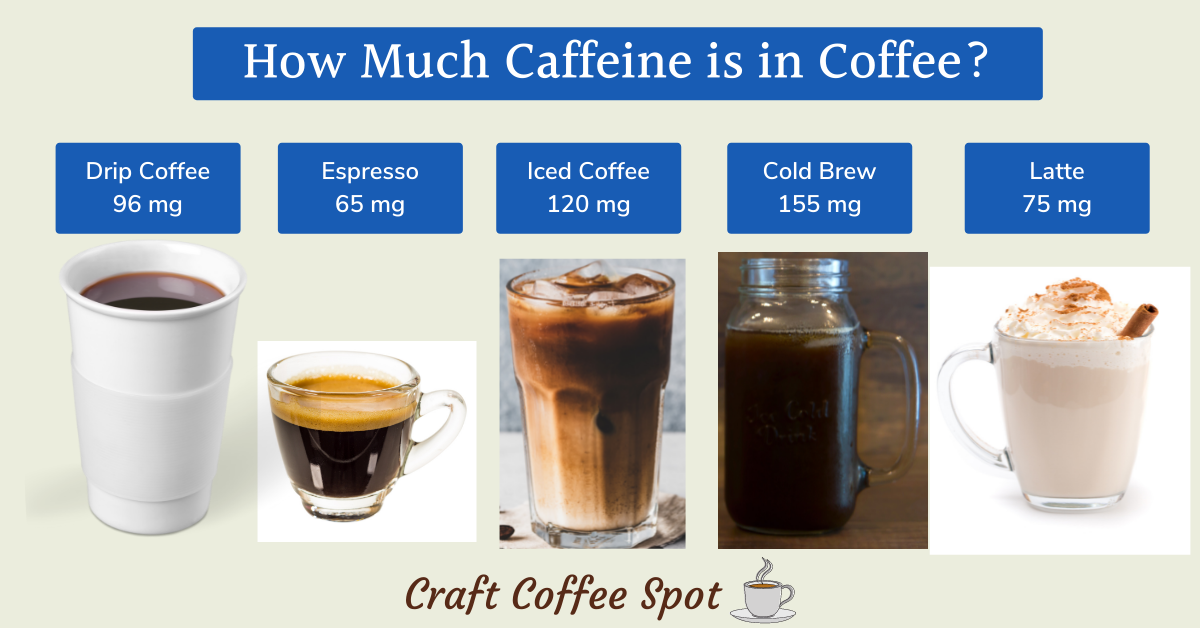
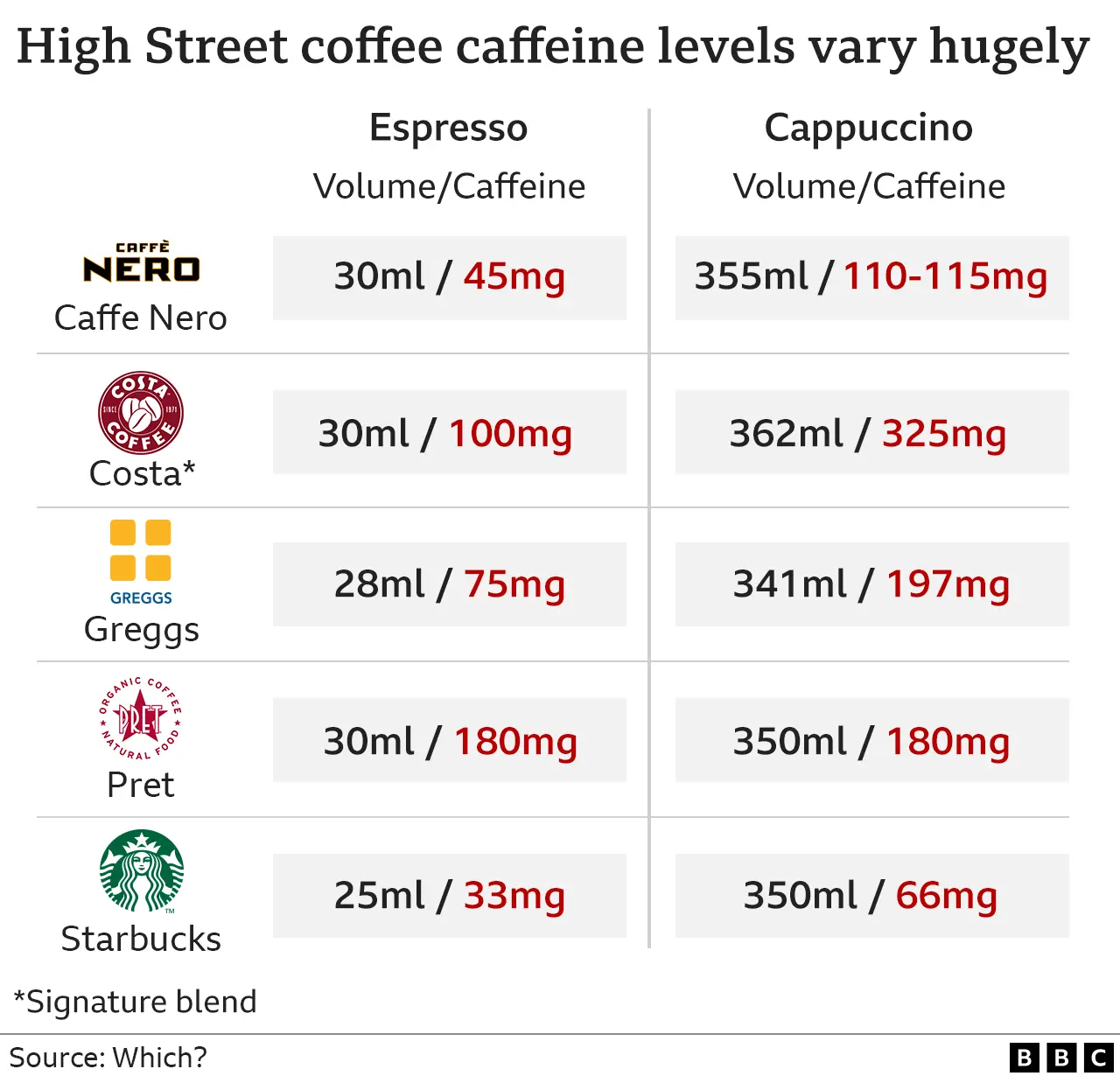
Brewed coffee does not always have the highest caffeine concentration. Espresso is more concentrated by volume, but a typical serving is much smaller.
| Drink | Typical serving | Approximate caffeine |
|---|---|---|
| Regular brewed coffee | 8 fl oz | 80–100 mg |
| Decaf brewed coffee | 8 fl oz | 2–15 mg |
| Espresso | 1 fl oz shot | 60–75 mg |
| Double espresso | 2 fl oz | 120–150 mg |
| Instant coffee | 8 fl oz | 60–80 mg |
| Black tea | 8 fl oz | 40–70 mg |
| Green tea | 8 fl oz | 20–45 mg |
| Energy drink | 8 fl oz | Varies by product |
The values above are general estimates. Product labels are the best source when a drink is packaged or sold with nutrition information.
A latte or cappuccino may taste mild because it contains milk, but the caffeine comes from the espresso. A drink made with two espresso shots may contain about as much caffeine as a regular mug of brewed coffee.

Does dark roast coffee have more caffeine?
Dark roast coffee does not always have more caffeine than light roast coffee. Roast level changes flavor, color, density, and weight, but it does not create a simple “more roast equals more caffeine” rule.
If coffee is measured by scoops, light roast beans may provide slightly more caffeine because they are denser. If coffee is measured by weight, the caffeine difference between roast levels is usually small.
The amount of coffee used and the final serving size matter more in most home-brewing situations. Choose the roast you enjoy, then adjust the portion or brew strength if you need to reduce caffeine.
Does brewing method change caffeine?
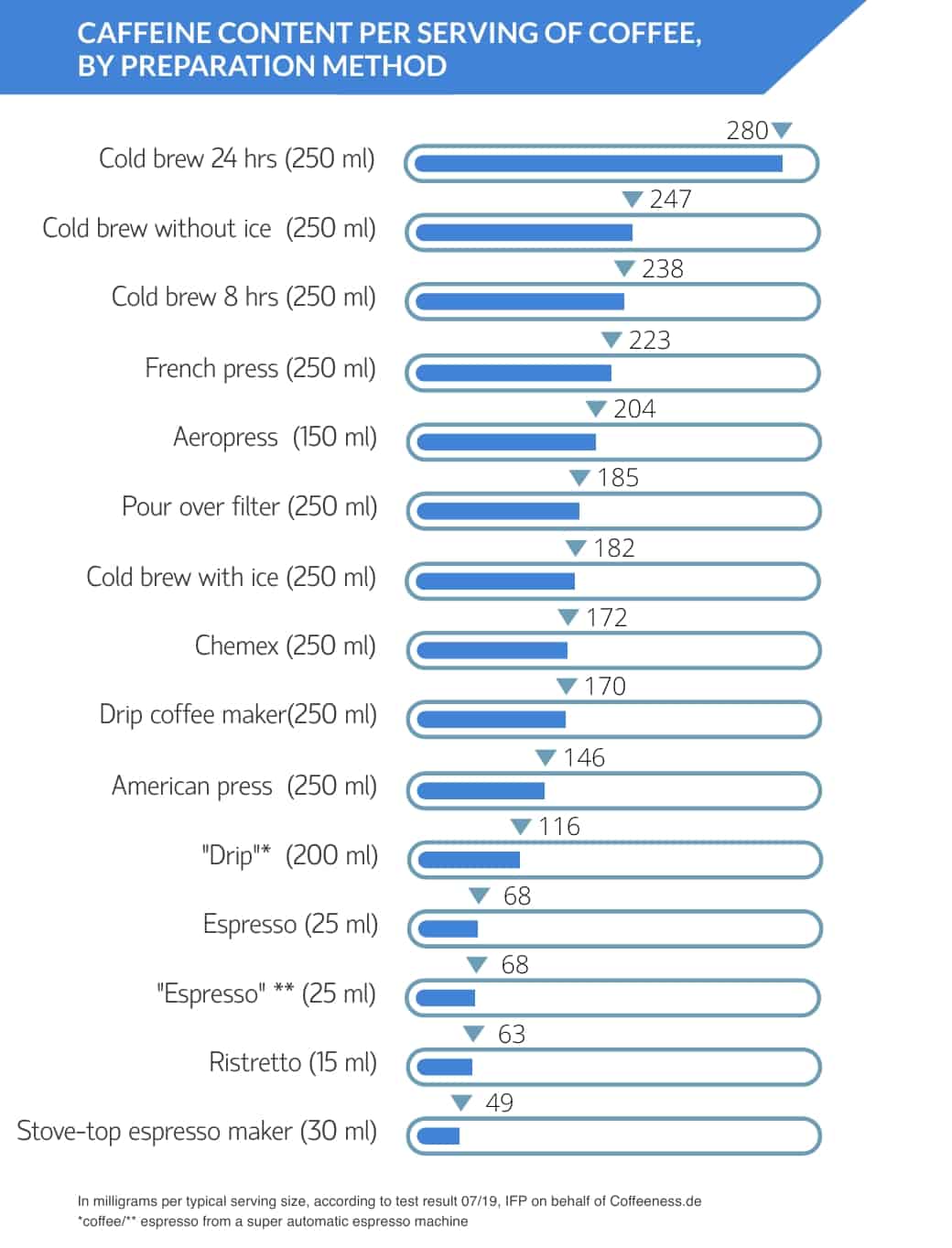
Yes. Brewing method can change both the concentration and the total caffeine in a serving.
Drip coffee
Automatic drip coffee often contains about 80 to 120 mg per 8 ounces. The final amount depends on the coffee blend, water ratio, grind, and machine settings.
Pour-over coffee
Pour-over coffee can fall in a similar range to drip coffee. A large pour-over may contain more caffeine simply because it uses more water and coffee grounds.
French press coffee
French press coffee may contain about 80 to 120 mg per 8 ounces, though longer steeping and a larger dose of grounds can raise the amount.
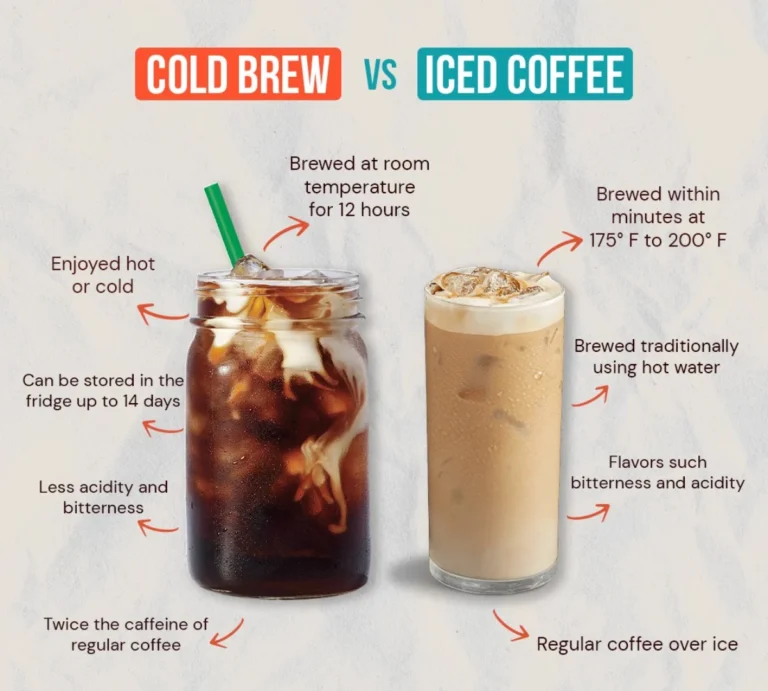
Cold brew coffee
Cold brew is often made as a concentrate. A ready-to-drink 8-ounce serving may contain about 100 to 200 mg, but some products contain more.
Do not compare cold brew concentrate with regular brewed coffee by volume. A concentrate may be intended for dilution with water or milk.
Single-serve pod coffee
Single-serve coffee can vary widely. An 8-ounce pod may contain roughly 75 to 150 mg, depending on the product and machine setting. A larger cup setting may use the same pod with more water, which can make the coffee taste weaker but does not always remove the caffeine.
Decaf coffee
Decaf coffee is not completely caffeine-free. An 8-ounce cup often contains 2 to 15 mg, although some products may contain more.

How much caffeine is safe in a day?
For most healthy adults, the FDA cites 400 mg of caffeine per day as an amount not generally associated with dangerous negative effects. That equals about four 8-ounce cups of average-strength coffee, but it does not mean four large coffees are always within the limit.
Caffeine from all sources counts. Add coffee, tea, soda, energy drinks, chocolate, pre-workout products, and some medicines when estimating daily intake.
A person may feel side effects below 400 mg. Common signs of too much caffeine include:
- Trouble sleeping
- Nervousness or jitters
- Fast heartbeat
- Upset stomach
- Headache
- Restlessness
- Increased anxiety
- Frequent urination
If symptoms are severe, sudden, or persistent, seek medical care. Serious reactions can include chest pain, fainting, severe vomiting, confusion, or an irregular heartbeat.
Pregnancy and breastfeeding
The American College of Obstetricians and Gynecologists states that moderate caffeine intake of less than 200 mg per day does not appear to be a major contributing factor in miscarriage or preterm birth. This is a pregnancy guideline, not a guarantee that every person will react the same way.
People who are pregnant, trying to become pregnant, or breastfeeding should discuss caffeine with a health care professional. Count caffeine from every source, not only coffee.
Children and teens
The American Academy of Pediatrics discourages caffeine use by children and adolescents. Energy drinks deserve extra caution because they may combine high caffeine levels with other stimulants and large amounts of sugar.
How to calculate your coffee caffeine intake
Use these steps to make a practical estimate:
- Measure the coffee volume. Find out whether your drink is 8, 12, 16, or more ounces.
- Check the label. Packaged coffee and ready-to-drink products may list caffeine.
- Ask the coffee shop. Some chains publish caffeine information online.
- Use a reference value. If no data is available, estimate 95 mg per 8 ounces for regular brewed coffee.
- Add other caffeine sources. Include tea, soda, chocolate, supplements, and medicine.
- Watch your symptoms. Sleep problems and jitters may signal that your personal limit is lower.
Example
Suppose you drink:
- One 12-ounce brewed coffee: about 143 mg
- One 8-ounce black tea: about 50 mg
- One can of caffeinated soda: about 35 mg
Your estimated total is:
143 + 50 + 35 = about 228 mg
That is below the FDA’s general adult reference level of 400 mg, but individual sensitivity still matters.

How to reduce the caffeine in brewed coffee
You can lower caffeine without giving up the routine of drinking coffee.
- Choose a smaller serving.
- Mix regular coffee with decaf.
- Use decaf for later cups.
- Avoid cold brew concentrates unless diluted as directed.
- Brew a weaker cup, while remembering that taste does not perfectly predict caffeine.
- Drink coffee earlier in the day if sleep is the concern.
- Check labels on flavored coffee drinks and supplements.
Switching from a 16-ounce regular coffee to an 8-ounce cup may cut the caffeine roughly in half. Replacing one regular cup with decaf may reduce caffeine by about 80 to 95 mg, depending on the products.
Reduce intake gradually if you drink several strong cups each day. A sudden change may cause headaches, tiredness, irritability, or difficulty concentrating. These symptoms often improve over several days.

Common mistakes when estimating coffee caffeine
Counting a large mug as one cup
A 16-ounce mug holds about two standard 8-ounce servings. Calling it “one cup” can hide the actual caffeine total.
Assuming a stronger taste means more caffeine
Bitter or dark flavors do not reliably show how much caffeine is present. Strength, roast, acidity, and bitterness are different traits.
Ignoring espresso in milk drinks
Milk changes the taste and volume, but it does not reduce the caffeine from the espresso shots.
Treating decaf as caffeine-free
Decaf still contains a small amount of caffeine. This matters if you are very sensitive or must avoid caffeine for medical reasons.
Forgetting non-coffee sources
Tea, soda, energy drinks, chocolate, supplements, and some pain relievers can add to your daily total.
Relying on a single average
An average is useful when no label exists, but it cannot replace product information. Coffee shop recipes and home-brewing methods differ.
Frequently asked questions
Does brewed coffee have more caffeine than espresso?
A normal 8-ounce cup of brewed coffee usually has more total caffeine than one 1-ounce espresso shot. Espresso has more caffeine per ounce, but brewed coffee is served in a much larger volume.
How much caffeine is in a 12-ounce brewed coffee?
A typical 12-ounce brewed coffee contains about 140 mg of caffeine. Strong coffee may contain more, so use the product’s published information when available.
Does adding milk reduce caffeine?
No. Milk changes the drink’s volume and taste but does not remove the caffeine already extracted from the coffee.
How long does caffeine stay in the body?
Caffeine can remain in the body for several hours. The exact time varies with metabolism, age, pregnancy, medications, smoking status, and health conditions. If coffee affects sleep, try moving it earlier rather than relying only on the cup count.
Is one cup of coffee a day healthy?
For many adults, one average cup fits within accepted caffeine guidance. The health effect depends on the whole drink, including added sugar and cream, plus the person’s sleep, heart health, medications, and caffeine sensitivity.
Key takeaways
- An 8-ounce cup of brewed coffee contains about 95 mg of caffeine.
- A 12-ounce serving has about 140 mg, while a 16-ounce serving may have about 190 mg.
- Brew method, bean type, coffee dose, and serving size can change the result.
- The FDA cites 400 mg per day as a general amount for most healthy adults.
- Pregnancy guidance commonly uses a limit of less than 200 mg per day.
- Decaf coffee still contains a small amount of caffeine.
- Check labels and count all caffeine sources, not just coffee.
Conclusion
For a simple estimate, count about 95 mg of caffeine per 8 ounces of regular brewed coffee. Measure the actual size of your mug, check product details when possible, and adjust for stronger brews or concentrated drinks.
If coffee causes poor sleep, jitters, a racing heart, or anxiety, your useful limit may be lower than the general adult guideline. Reduce your intake slowly and speak with a health care professional if symptoms continue.



One Comment