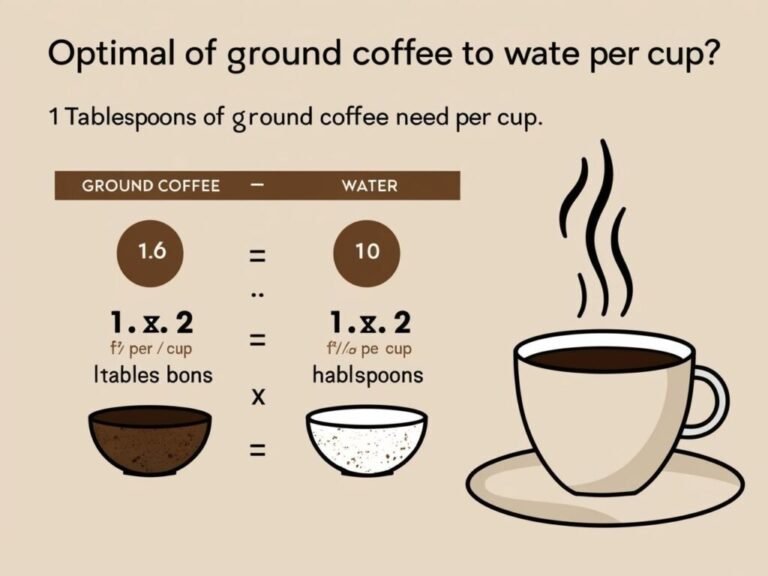
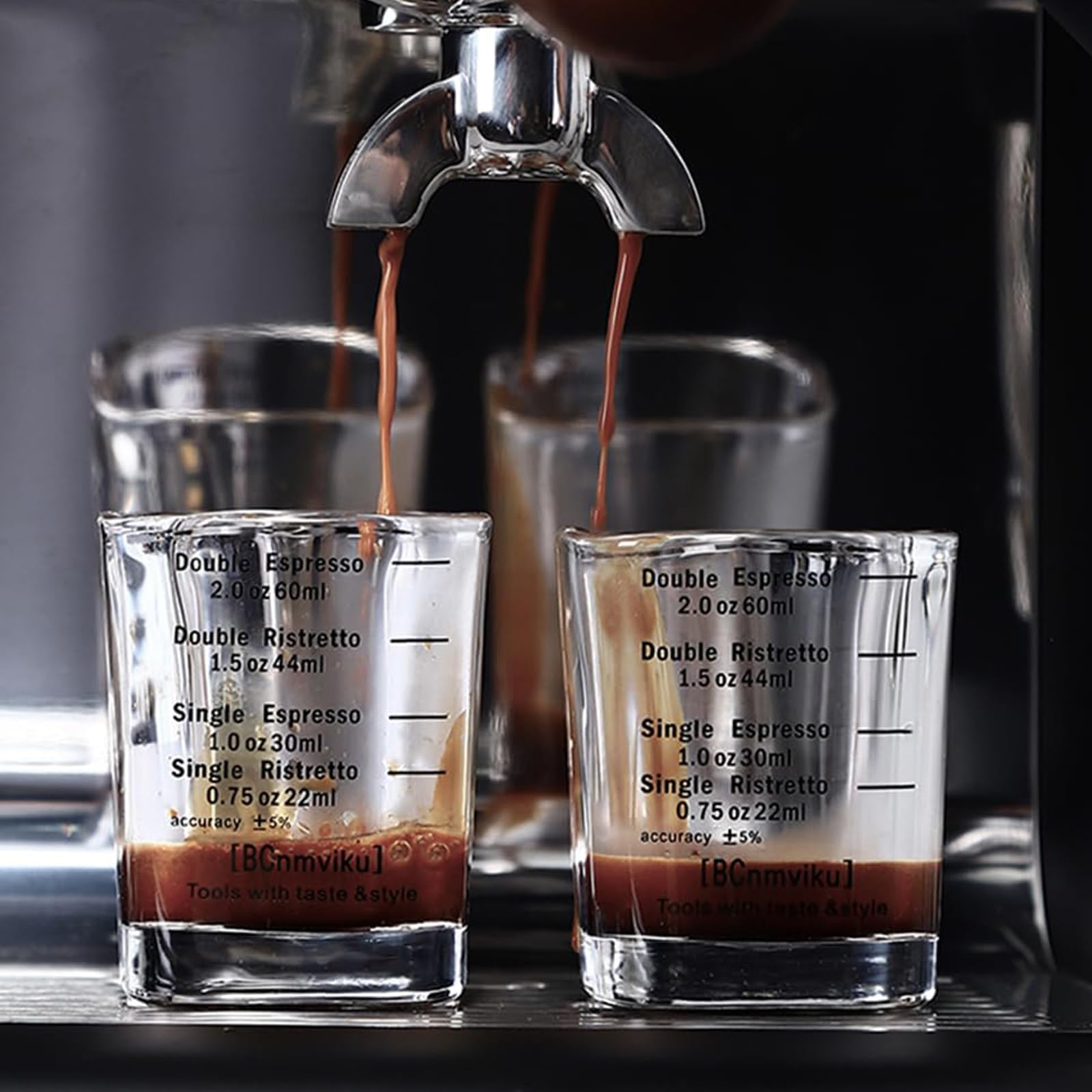
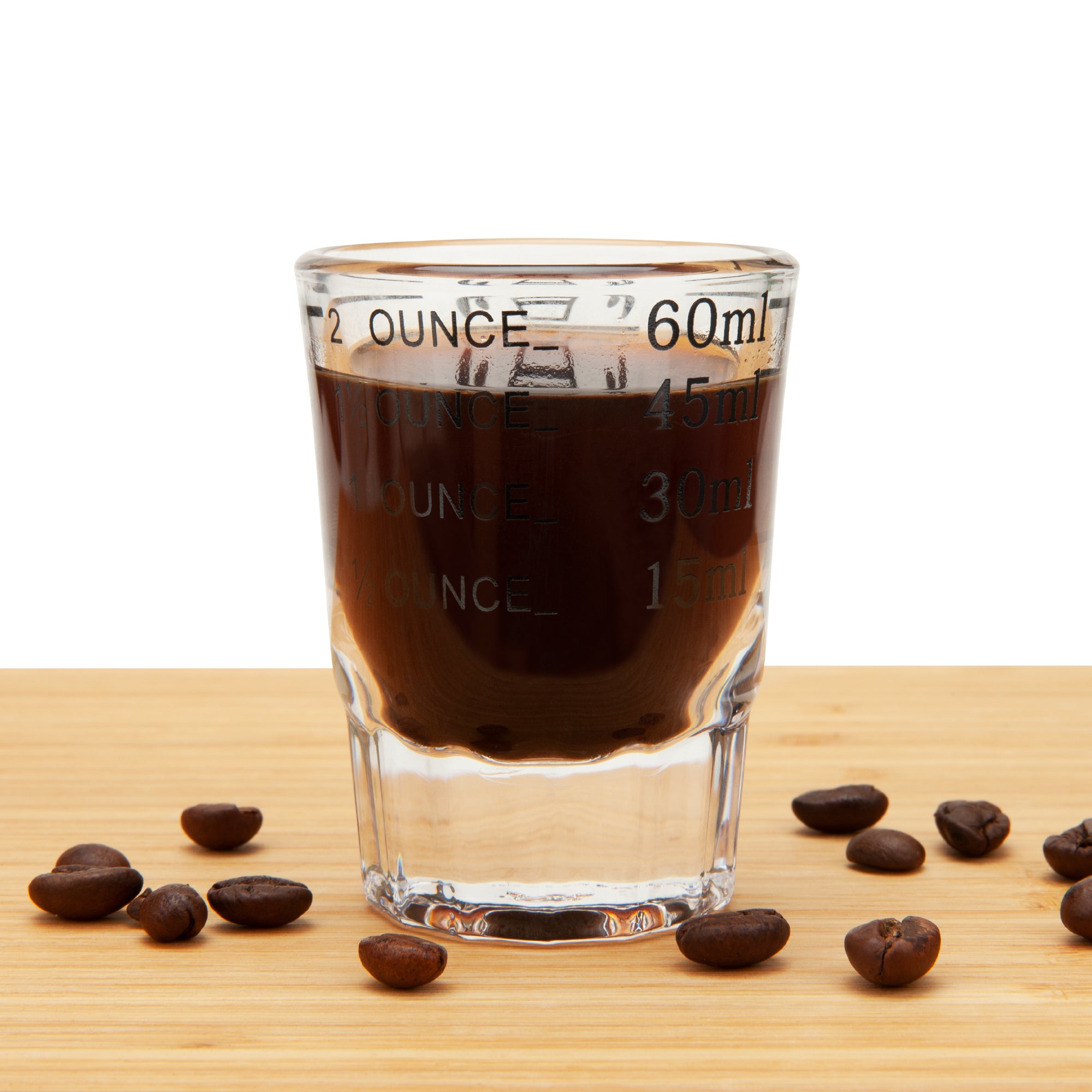
In the United States, one traditional espresso shot is about 1 fluid ounce (fl oz). A double shot is usually about 2 fluid ounces.
However, coffee shops do not all use the same recipe. Many modern cafés serve a double shot as their standard drink, and specialty coffee shops often measure espresso by weight instead of volume.
Quick answer
| Espresso serving | Typical US volume | Approximate milliliters |
|---|---|---|
| Single shot | 1 fl oz | 30 mL |
| Double shot | 2 fl oz | 60 mL |
| Ristretto | 0.5–0.75 fl oz | 15–22 mL |
| Lungo | 1.5–2 fl oz | 45–60 mL |
A US fluid ounce equals about 29.57 milliliters, so 1 fluid ounce is commonly rounded to 30 mL.

What counts as one espresso shot?
A shot is a small serving of concentrated coffee made by forcing hot water through finely ground coffee under pressure. The drink contains three main parts:
- Liquid espresso
- Dissolved coffee compounds
- Crema, the light-colored foam on top
The term “shot” does not have one universal size. In the US, it often means about 1 fluid ounce, but the actual amount depends on the café, machine, coffee dose, and recipe.
The National Coffee Association describes espresso as a concentrated coffee brewed by forcing hot water through finely ground coffee. This explains why espresso is measured differently from drip coffee, even though both are made from coffee beans and water.
Fluid ounces versus ounces by weight
“Fluid ounces” measure volume. Regular ounces measure weight. These are not the same measurement.
For example:
- 1 fluid ounce of espresso measures the space the drink takes up.
- 1 ounce by weight of espresso measures how heavy the drink is.
- Crema can make a shot look larger without adding the same amount of liquid.
Because espresso contains dissolved coffee and trapped gas, its weight and volume do not match as neatly as water. A café may therefore list a shot as 30 mL, 30 grams, or 1 ounce, depending on its recipe and equipment.

How many ounces are in a single espresso shot?
A traditional single espresso shot is about 1 fluid ounce. This is the common US kitchen and coffee-shop reference.
A single shot may use roughly 7 to 9 grams of ground coffee, although the dose can vary. Older espresso recipes often used this range, while many modern cafés use larger doses and serve a double shot as the standard.
A useful rule is:
One traditional shot = about 1 fl oz of espresso beverage.
That does not mean every single shot will measure exactly 1 fluid ounce. Espresso recipes are adjusted for the coffee, grinder, machine, and desired taste.
Why your shot may measure less or more
Your espresso may not reach exactly 1 ounce because:
- The café uses a different recipe.
- The drink is a ristretto or lungo.
- The barista measures by weight.
- Crema changes the visible volume.
- The machine uses a single or double basket.
- The coffee is a modern specialty blend with a larger dose.
For consistent results at home, use a small digital scale. Measure the coffee grounds and the espresso that comes out. This gives a more reliable result than judging the liquid level in a shot glass.

How many ounces are in a double espresso shot?
A double espresso shot usually contains about 2 fluid ounces, or roughly 60 milliliters.
A traditional double shot may use about 14 to 18 grams of ground coffee, though many cafés use a wider range. Some specialty coffee shops may serve a double shot that weighs between 36 and 45 grams while still calling it a double.
The word “double” can refer to either:
- Twice the coffee dose and yield of a single shot, or
- Two separate shots pulled at the same time
These are often similar, but not always identical. Ask the café if you need to know the exact amount.
Is a double shot always 2 ounces?
No. A double shot is often close to 2 fluid ounces, but volume is not a strict universal rule.
Many baristas use a ratio instead. For example, a recipe may use:
- 18 grams of ground coffee
- 36 grams of liquid espresso
That is a 1:2 brewing ratio. The finished espresso may occupy close to 1.5 to 2 fluid ounces, depending on crema and density.
Measuring espresso by weight helps control the recipe. It also makes results easier to repeat from one shot to the next.

Espresso shot size chart
The following chart shows common espresso styles used in US cafés and home kitchens.
| Style | Typical beverage volume | Typical description |
|---|---|---|
| Single espresso | About 1 fl oz | A traditional single serving |
| Double espresso | About 2 fl oz | Two times the traditional single |
| Ristretto | About 0.5–0.75 fl oz | Shorter, more concentrated extraction |
| Lungo | About 1.5–2 fl oz | Longer extraction with more water |
| Triple shot | About 3 fl oz | Three traditional shots, though recipes vary |
These are practical ranges, not fixed legal standards. A ristretto can be smaller than 0.5 fluid ounce, and a lungo can be larger than 2 fluid ounces.
The most important difference is not only the final volume. It is also how much water passes through the coffee and how long the extraction lasts.

Espresso ounces compared with other coffee drinks
Espresso is much smaller by volume than most American coffee drinks. The small serving can make it seem stronger, but serving size and caffeine content are separate issues.
| Drink | Common US serving size | Main difference |
|---|---|---|
| Single espresso | About 1 fl oz | Small, concentrated serving |
| Double espresso | About 2 fl oz | Larger espresso dose and yield |
| Drip coffee | About 8 fl oz | More water and a larger serving |
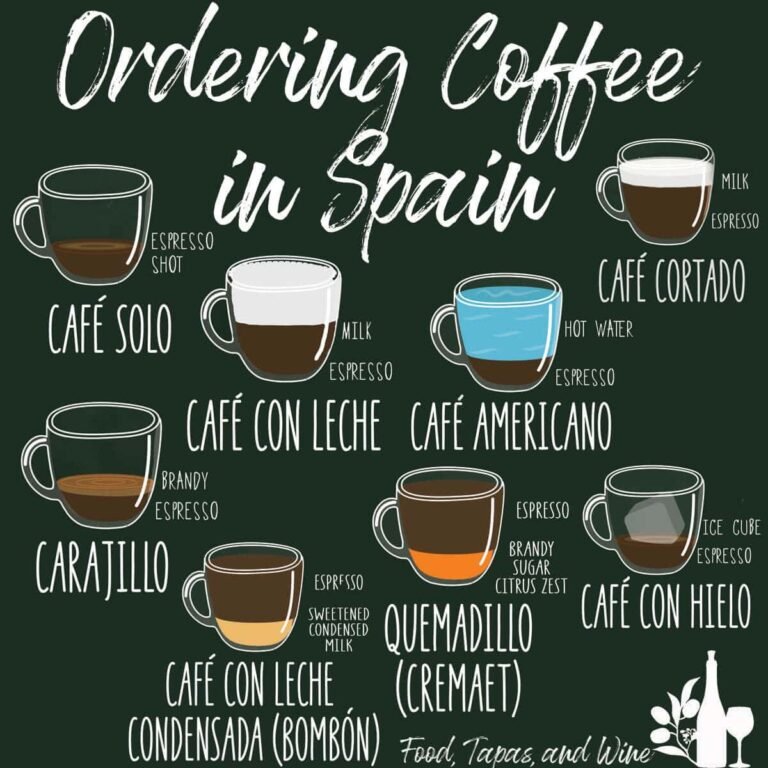
| Americano | Often 8–12 fl oz | Espresso mixed with hot water |
| Latte | Often 8–16 fl oz | Espresso with steamed milk |
| Cappuccino | Often 6–8 fl oz | Espresso, steamed milk, and foam |
An 8-ounce latte may contain one or two espresso shots. The milk increases the drink’s total volume, but it does not change how many espresso shots are in it.
An Americano also shows why total drink size can be misleading. An 8-ounce Americano may contain only one 1-ounce shot, with the remaining 7 ounces made up of hot water.
How to measure an espresso shot at home
To measure espresso accurately, use a small scale rather than relying only on a measuring cup.
What you need
- An espresso machine
- Fresh coffee beans
- A grinder that can make fine grounds
- A portafilter and basket
- A small digital scale
- A cup that fits under the portafilter
Basic method
- Place the cup on the scale. Tare the scale to zero.
- Add the coffee grounds to the basket. Record the dose by weight.
- Lock the portafilter into the machine.
- Start the extraction.
- Stop near your target yield. For a common 1:2 recipe, 18 grams of coffee may produce about 36 grams of espresso.
- Taste the result. Adjust the grind, dose, or yield if needed.
The exact recipe depends on the coffee and equipment. The 1:2 example is a starting point, not a rule that applies to every bean.
Signs the measurement is working
A well-controlled shot usually has:
- A steady stream that begins slowly
- A balanced taste
- No harsh burning taste
- No very thin, watery finish
- A repeatable dose and yield
Taste matters more than hitting a specific fluid-ounce mark. Two shots with the same volume can taste different because of grind size, coffee freshness, water temperature, and extraction time.

Why coffee shops use grams instead of ounces
Coffee shops often use grams because weight is more consistent than volume.
Crema can make a shot appear full even when the amount of liquid underneath is smaller. It also changes as the espresso sits. Measuring 36 grams of espresso gives a stable target, while measuring to a line on a glass can produce less consistent results.
A common modern recipe might look like this:
| Measurement | Example |
|---|---|
| Ground coffee dose | 18 g |
| Espresso yield | 36 g |
| Brewing ratio | 1:2 |
| Approximate volume | Around 1.25–1.5 fl oz, depending on crema |
This example may not equal a full 2 fluid ounces. That is normal. A café can call it a double because the basket and coffee dose are designed for two traditional shots, even when the final volume is measured by weight.
The Specialty Coffee Association provides brewing research and protocol resources that support the broader use of measured brewing variables. In practice, cafés select their own recipes based on the coffee and the result they want.

Does a larger espresso shot have more caffeine?
A larger espresso serving often contains more caffeine, but ounces alone do not tell you the exact caffeine amount.
Caffeine can vary with:
- The type of coffee bean
- The amount of coffee used
- The roast and blend
- The extraction recipe
- The number of shots
- The serving size
A double shot usually contains more caffeine than a single shot because it generally uses more coffee. Still, a large cup of drip coffee may contain as much or more total caffeine because it contains far more liquid and coffee compounds.
The US Food and Drug Administration notes that caffeine content varies by product and serving. Check the café’s nutrition information when available, especially if you need to limit caffeine.

Common mistakes when measuring espresso
Confusing ounces with fluid ounces
A fluid ounce measures liquid volume. An ounce by weight measures mass. Always check which one a recipe uses.
Assuming every café uses a single shot
Many US cafés use a double shot as the base for a latte, cappuccino, or Americano. A “small latte” does not always mean one shot.
Measuring crema as if it were liquid
Fresh crema takes up space and can make the shot look larger. Letting the shot sit will change the visible level, but it will not create more espresso.
Treating a shot glass line as exact
Small shot glasses are useful for rough checks, but a scale gives better control. Glass markings may also be designed for liquor rather than espresso.
Using cup size to estimate espresso amount
A 12-ounce latte may contain one, two, or even three shots. The cup size describes the finished drink, not the espresso dose.

What to do if your espresso amount is wrong
If your shot is far below or above the intended amount, check the measurement method first.
The shot is too small
Possible causes include:
- The machine stopped early.
- The grind is too fine and restricted flow.
- The dose is too large for the basket.
- The shot was made as a ristretto.
- The scale or cup was not tared correctly.
Try weighing the coffee grounds and stopping the shot at the target yield.
The shot is too large
Possible causes include:
- The machine ran too long.
- The grind is too coarse.
- The dose is too small.
- The shot was made as a lungo.
- Crema was included in a volume estimate.
Adjust one variable at a time. Start with grind size and yield. Avoid changing the dose, grind, and brew time all at once because you will not know which change affected the result.
The shot tastes sour
A sour or sharp taste can indicate under-extraction. The water may have passed through the grounds too quickly. A slightly finer grind or longer extraction may help.
The shot tastes bitter
A bitter, dry, or burnt taste can indicate over-extraction. The shot may have run too long or too slowly. A slightly coarser grind or shorter yield may help.
These are general brewing clues, not guarantees. Dark roasts, light roasts, water quality, and coffee freshness can change the taste.
Frequently asked questions
Is 1 ounce of espresso the same as one shot?
Usually, yes, in the traditional US sense. One espresso shot is commonly treated as about 1 fluid ounce, or 30 milliliters. Café recipes vary, so the actual amount may be somewhat different.
How many ounces are in two shots of espresso?
Two traditional shots contain about 2 fluid ounces, or approximately 60 milliliters. If a café pulls a double by weight, the volume may not equal exactly 2 fluid ounces.
Is a shot of espresso 1 ounce or 1.5 ounces?
Both measurements may appear in recipes. The traditional reference is about 1 fluid ounce, while some cafés use larger single-shot recipes. Check whether the recipe refers to a single, double, ristretto, or lungo.
How many ounces of espresso go into a latte?
A latte may contain 1 to 3 espresso shots, depending on its size and the café’s recipe. The espresso portion is usually about 1 ounce per traditional shot. The rest of the drink is steamed milk.
How many ounces of espresso are in an Americano?
An Americano can contain 1 or more espresso shots. A one-shot Americano has about 1 fluid ounce of espresso, while a two-shot Americano has about 2 fluid ounces. The rest is hot water.
Is a double espresso stronger than a single?
A double usually has more total caffeine and coffee flavor because it uses more coffee. It may not taste twice as strong, especially when mixed with milk or water.

Bottom line
For most US recipes, use these simple measurements:
- Single espresso shot: about 1 fluid ounce
- Double espresso shot: about 2 fluid ounces
- One fluid ounce: about 30 milliliters
- Two fluid ounces: about 60 milliliters
For better accuracy at home, measure espresso by grams rather than by volume. If you order coffee at a café, ask how many shots it contains because the finished drink size does not always reveal the espresso amount.