
Introduction
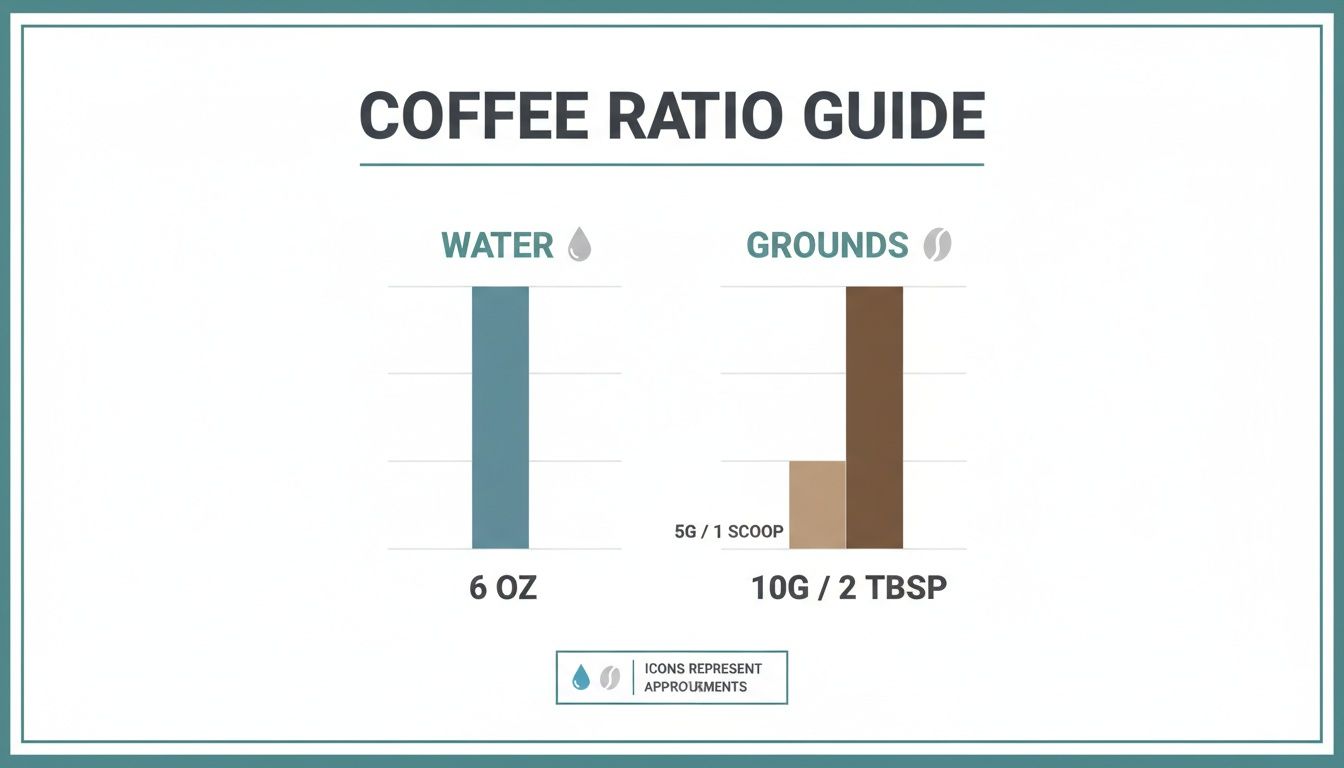
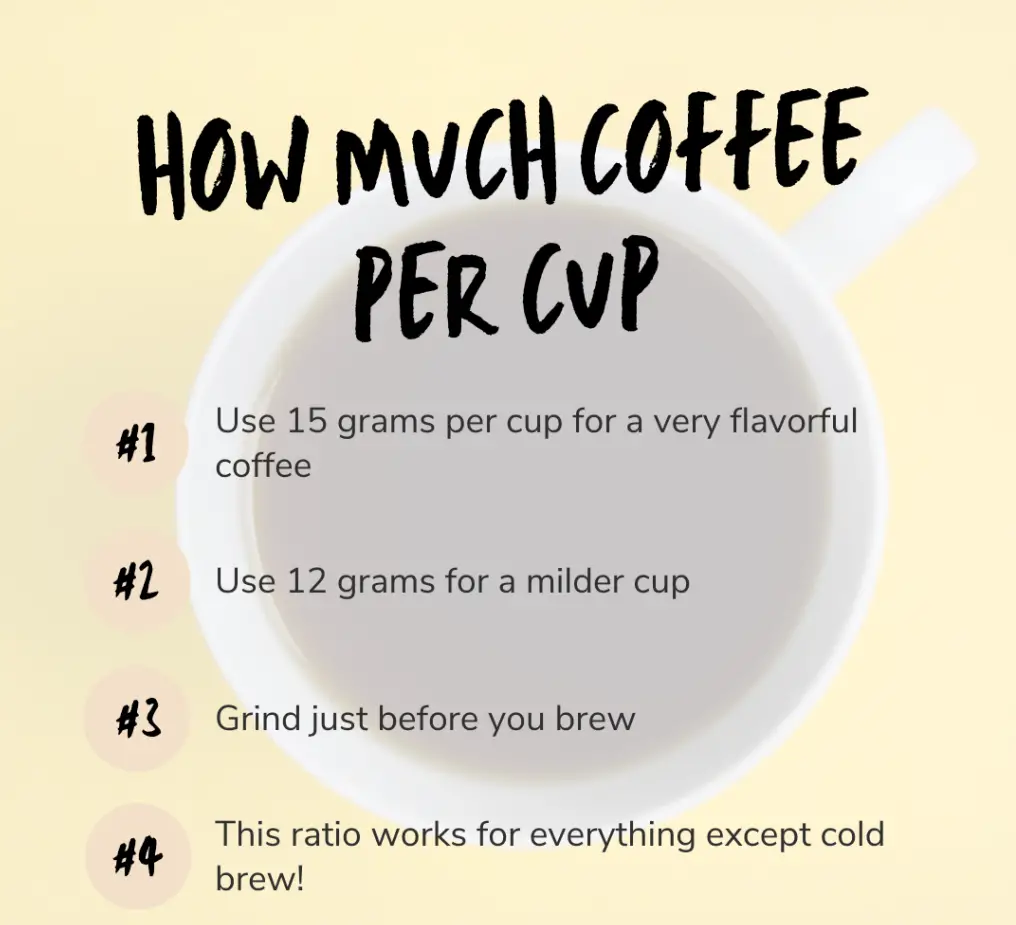
For most coffee makers in the United States, use 1 to 2 level tablespoons of ground coffee for each 6 fluid ounces of water. For a typical 8-ounce mug, that equals about 14 to 16 grams of coffee, or roughly 2½ to 3 level tablespoons.
The most reliable starting point is a 1:16 coffee-to-water ratio:
- 1 gram of coffee for every 16 grams of water
- 15 grams of coffee for about 8 ounces of water
- 30 grams of coffee for about 16 ounces of water
A kitchen scale gives the best result because spoon sizes, grind density, and bean types vary. If you do not have a scale, start with 2 level tablespoons per 8-ounce mug and adjust to taste.

The Quick Answer: Coffee Grounds per Cup
The right amount depends on what you mean by a “cup.” In American coffee brewing, a coffee maker cup is often 5 or 6 fluid ounces, while a home mug may hold 8 to 12 fluid ounces.
Use this table as a starting point:
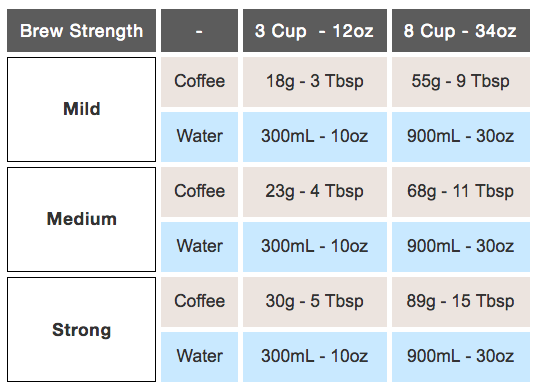
| Water | Ground coffee by weight | Ground coffee by volume |
|---|---|---|
| 6 fl oz | 10–12 g | 1½–2 tbsp |
| 8 fl oz | 13–16 g | 2–3 tbsp |
| 10 fl oz | 16–19 g | 2½–3½ tbsp |
| 12 fl oz | 19–22 g | 3–4 tbsp |
| 16 fl oz | 25–30 g | 4–5 tbsp |
| 32 fl oz | 50–60 g | 8–10 tbsp |
These amounts follow the widely used brewing range of about 55 to 65 grams of coffee per liter of water. The Specialty Coffee Association uses a similar starting point in its brewing standards.
The easiest rule to remember
Use:
2 level tablespoons of ground coffee for every 8 ounces of water.
This is a useful starting point for automatic drip coffee makers, pour-over brewers, and many manual brewing methods.
For a stronger cup, use closer to 3 tablespoons. For a lighter cup, use closer to 2 tablespoons or slightly less.

Why Coffee “Cups” Cause Confusion
A coffee maker cup is not always the same as a household cup. In the United States, many coffee machines measure one cup as 5 fluid ounces, not the 8 fluid ounces used on nutrition labels and standard kitchen measurements.
For example:
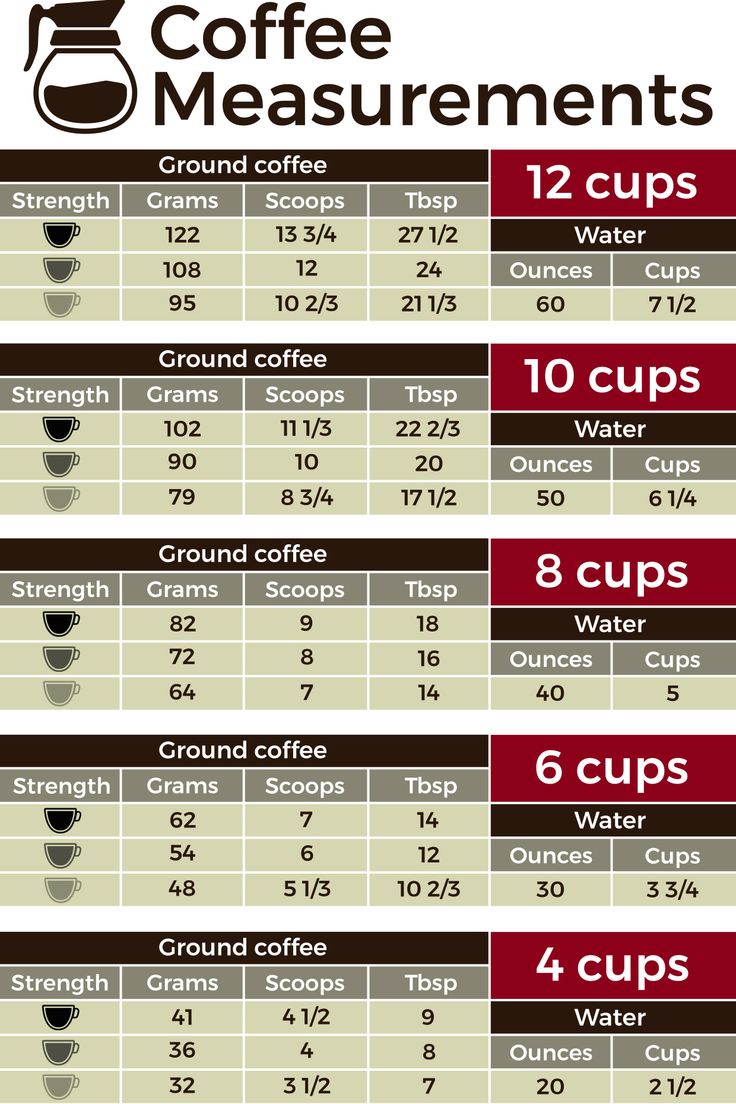
- A coffee maker marked for 12 cups may hold only about 60 fluid ounces of water.
- A large travel mug may hold 16 to 20 fluid ounces.
- A standard measuring cup holds 8 fluid ounces.
This difference affects how much coffee you need. If you add coffee for twelve 8-ounce mugs to a machine that holds twelve 5-ounce servings, the result may be much too strong.
Before measuring your grounds, check whether your brewer’s cup markings represent:
- 5 fluid ounces
- 6 fluid ounces
- 8 fluid ounces
If the markings are unclear, measure the water with a kitchen measuring cup once. Then you will know how much coffee to use each time.
Coffee maker cup calculation
If your machine uses 5-ounce cups, use about:
- 1 level tablespoon per 5-ounce cup for a mild brew
- 1¼ tablespoons per 5-ounce cup for a balanced brew
- 1½ tablespoons per 5-ounce cup for a strong brew
For a 12-cup coffee maker using 5-ounce cups, begin with about 15 tablespoons, or approximately 75 grams, of coffee.

Coffee-to-Water Ratios Explained
A coffee-to-water ratio compares the weight of dry coffee grounds with the weight of the brewing water.
A 1:16 ratio means:
- 1 part coffee
- 16 parts water
So, if you use 20 grams of coffee, you would use about 320 grams of water.
Here are common ratio examples:
| Ratio | Result | Good starting use |
|---|---|---|
| 1:14 | Strong and full | French press or bold coffee |
| 1:15 | Rich and strong | Drip coffee or pour-over |
| 1:16 | Balanced | Most drip and pour-over brewing |
| 1:17 | Lighter and softer | Light roast or mild coffee |
| 1:18 | Very light | Large batches or delicate flavor |
Water and coffee behave differently by weight. One gram of water is close to one milliliter, so a scale can measure both coffee and water with ease.
For an 8-ounce drink, the calculation looks like this:
- 8 fluid ounces of water equals about 237 milliliters
- At a 1:16 ratio, 237 ÷ 16 equals about 15 grams of coffee
That is why 15 grams per 8-ounce mug is a strong starting point.
How Many Tablespoons of Coffee Are in a Cup?
There is no single exact answer because coffee grounds vary in size, roast level, and density. Still, one level tablespoon of ground coffee usually weighs about 5 to 7 grams.
A coarse grind may take up more space than a fine grind. Dark-roasted beans may also weigh less by volume than dense light-roasted beans.
Use these estimates:
- 1 tablespoon: about 5–7 grams
- 2 tablespoons: about 10–14 grams
- 3 tablespoons: about 15–21 grams
- ¼ cup: about 20–28 grams
For the most consistent brew, weigh the grounds. If you use spoons, keep the method steady:
- Use level spoons, not heaping spoons.
- Use the same spoon each time.
- Do not pack the coffee tightly into the spoon.
- Adjust after tasting the brewed coffee.
A coffee scoop can also vary. Many scoops hold about 2 tablespoons, but some hold more or less. Check the scoop’s capacity before relying on it.

How Much Coffee to Use for Different Brewing Methods
The best amount changes slightly with the brewing method. The extraction time, grind size, filter type, and water flow all affect the final cup.
Automatic drip coffee maker
For standard drip coffee, start with:
- 10–12 grams for 6 ounces of water
- 13–16 grams for 8 ounces of water
- 50–60 grams for 32 ounces of water
Use a medium grind. If the coffee tastes weak, add more grounds before changing the grind. If it tastes bitter or harsh, use slightly less coffee or a coarser grind.
Pour-over coffee
Pour-over brewers often work well at a 1:15 to 1:17 ratio.
For one 8-ounce serving, try:
- 15 grams of coffee
- 240 grams of water
- Medium-fine grind
- About 2½ to 4 minutes of total brew time, depending on the brewer
Pour-over brewing responds strongly to grind size and pouring technique. If the coffee tastes sour and thin, the water may be passing through too quickly. If it tastes bitter and dry, the grind may be too fine or the water may be taking too long to drain.
French press
French press coffee often uses a stronger ratio because the grounds steep directly in the water.
Start with:
- 30 grams of coffee for 450 grams of water
- About 4 to 5 tablespoons of coarse-ground coffee
- A steep time of about 4 minutes
You can use a 1:15 ratio for a lighter French press brew or a 1:12 ratio for a heavier cup.
Stir gently after adding water, then press slowly. A coarse grind helps reduce sludge and makes pressing easier.
AeroPress
AeroPress recipes vary widely. A practical starting point is:
- 15 to 17 grams of coffee
- 200 to 250 grams of water
- Medium-fine grind
Some recipes make a concentrated coffee and add water afterward. Others brew a full-strength cup in the chamber. Because the device supports many methods, the listed amount is a starting point rather than a fixed rule.
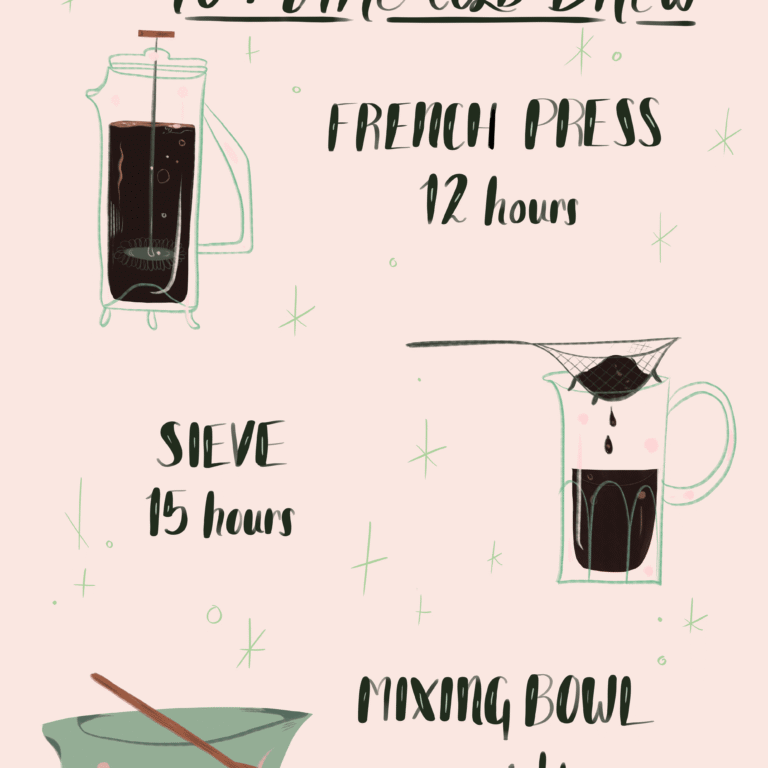
Cold brew
Cold brew usually needs more coffee than hot brewing. A common starting ratio is:
- 1 part coffee to 8 parts water for concentrate
- 1 part coffee to 12 or 16 parts water for ready-to-drink cold brew
For example, a 1:8 concentrate uses:
- 100 grams of coarse-ground coffee
- 800 grams of water
After steeping, strain the coffee. Dilute the concentrate with water or milk to taste. Cold brew methods differ, so follow the recipe’s steep time and dilution instructions.
Espresso
Espresso uses a dose for the filter basket, not a normal cup measurement.
A common double-shot dose is:
- 16 to 20 grams of coffee
- Extracted into roughly 32 to 40 grams of liquid espresso
The correct dose depends on the basket size and the espresso machine. Do not use the drip coffee ratio for espresso. Espresso has much less water and uses pressure, a fine grind, and a short extraction time.

How to Adjust the Amount for Better Flavor
Change one variable at a time. Start with the coffee amount, then adjust the grind if needed.
If the coffee tastes weak or watery
Try one of these changes:
- Add 1 to 2 grams more coffee per cup.
- Use a slightly finer grind.
- Check that the brewer reaches the correct water temperature.
- Make sure the filter is seated properly.
- Confirm that your brewer’s cup measurement is not smaller than expected.
Weak coffee can result from too little coffee, fast water flow, coarse grounds, or poor extraction. Adding more grounds is the simplest first test.
If the coffee tastes bitter or harsh
Try:
- Using 1 to 2 grams less coffee.
- Using a slightly coarser grind.
- Reducing the brew time.
- Using fresh water.
- Checking whether the coffee is being kept hot for too long.
Bitter flavor can come from over-extraction. It can also come from dark-roasted coffee or a hot holding plate. Do not assume that adding more water will fix the cause; it may only make the bitter flavor weaker.
If the coffee tastes sour or sharp
Try:
- Using a slightly finer grind.
- Brewing for a little longer.
- Using a little more coffee.
- Checking whether the water is flowing through too quickly.
Sour coffee can indicate under-extraction, especially when the cup also tastes thin. Very light roasts may naturally have bright, acidic notes, so flavor preference matters too.
If the coffee tastes dry or astringent
Try:
- Making the grind coarser.
- Shortening the brew time.
- Using less agitation.
- Reducing the water temperature if your method allows it.
A dry mouthfeel often points to over-extraction or excessive agitation. It may also come from old coffee or a roast with naturally strong bitter notes.
Should You Measure Coffee by Weight or by Volume?
Measuring by weight is more accurate. A scale accounts for the fact that two tablespoons of different coffees may not contain the same amount of coffee.
Use volume measurements when:
- You need a quick daily method.
- You do not own a scale.
- You use the same coffee and spoon each time.
- You are willing to adjust based on taste.
Use weight when:
- You want repeatable results.
- You brew pour-over or espresso.
- You change coffee brands or roast levels.
- You make large batches.
- You are troubleshooting flavor.
A simple digital kitchen scale is enough for most drip and manual brewing. You do not need specialized equipment. Measure the coffee first, then measure the water in the brewer or kettle.
Does Roast Level Change How Much Coffee You Need?
Roast level can change the amount of coffee measured by volume, but the effect is smaller when you measure by weight.
Light-roasted beans are usually denser. Dark-roasted beans are usually less dense because they lose more moisture and expand during roasting. As a result, two level tablespoons may contain different weights depending on the roast.
For consistent results:
- Use the same ratio by weight.
- Do not assume a darker roast needs more coffee.
- Adjust for flavor rather than roast color alone.
- Consider grind size and brew time as well.
Dark roasts often taste stronger because their roasted flavors are more intense. That does not always mean they contain more caffeine or that you need fewer grounds. Strength, flavor intensity, and caffeine content are different things.

Does Grind Size Affect the Amount of Coffee?
Grind size affects both volume and extraction.
- Fine grounds pack closely and may weigh more in a spoon.
- Coarse grounds take up more space.
- Fine grounds expose more surface area to water.
- Coarse grounds slow extraction and reduce clogging in some brewers.
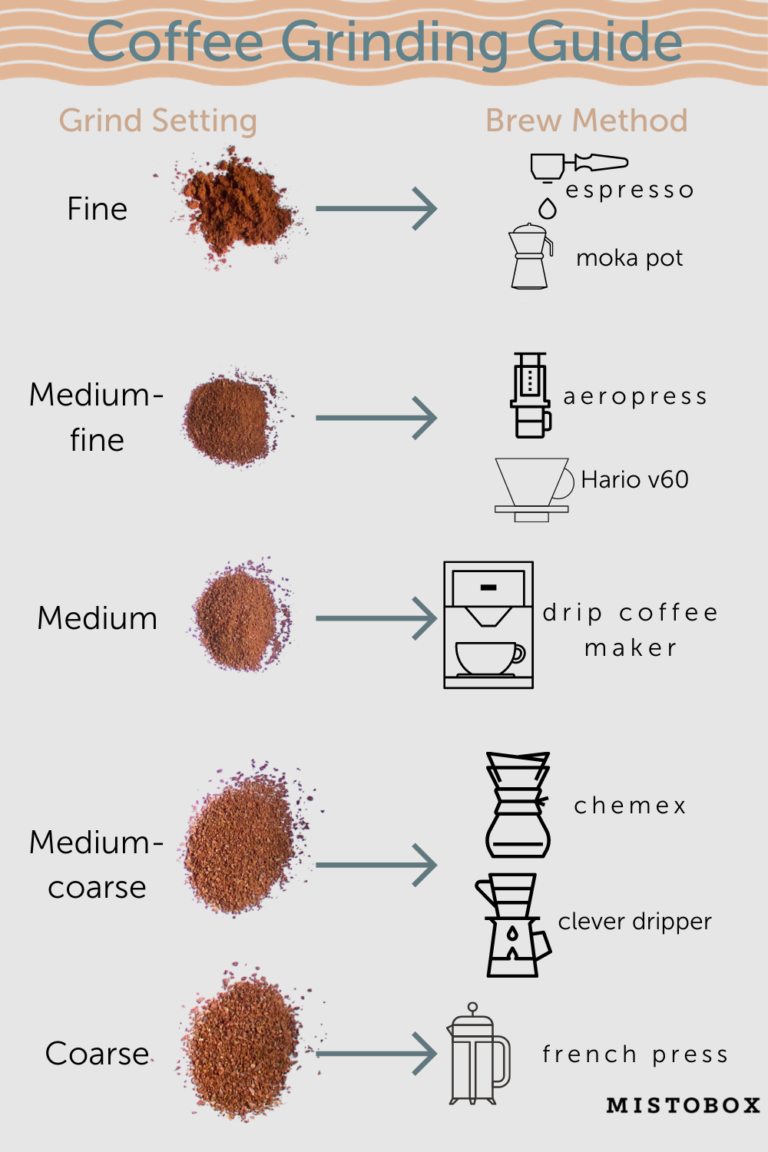
Use the right grind for the method:
| Brewing method | Typical grind |
|---|---|
| Espresso | Fine |
| AeroPress | Fine to medium |
| Pour-over | Medium-fine to medium |
| Automatic drip | Medium |
| French press | Coarse |
| Cold brew | Coarse |
If you change grind size, keep the coffee-to-water ratio the same at first. This helps you identify whether the grind caused the flavor change.

How Much Coffee for a Full Pot?
Measure the water first, then use about 60 grams of coffee per liter of water as a balanced starting point.
Common batch sizes include:
| Water volume | Coffee grounds |
|---|---|
| 20 fl oz | 37–40 g |
| 30 fl oz | 55–60 g |
| 40 fl oz | 73–80 g |
| 50 fl oz | 90–95 g |
| 60 fl oz | 110–115 g |
These amounts assume a standard drip-style brew. If your coffee maker uses 5-ounce cups, a 12-cup machine holds about 60 fluid ounces. That batch may need roughly 75 grams of coffee, depending on the brew ratio and personal taste.
For a milder pot, reduce the amount by about 10%. For a stronger pot, increase it by about 10%. Small changes are easier to taste than large ones.

Common Mistakes When Measuring Coffee Grounds
Counting the brewer’s cups as 8-ounce cups
This is the most common mistake. Check the actual water volume instead of trusting the cup number on the machine.
Using heaping tablespoons
A heaping spoon can hold much more than a level spoon. Use level tablespoons for a repeatable result.
Measuring coffee before grinding
Whole beans and ground coffee do not always fill the same volume. Measure the coffee after grinding if you use volume.
Changing coffee and grind size at the same time
If the flavor improves or worsens, you will not know which change caused it. Change one thing at a time.
Leaving coffee on the hot plate
A hot plate can make brewed coffee taste burnt over time. Transfer coffee to a thermal carafe when possible.
Ignoring water quality
Coffee is mostly water. Strong odors, heavy mineral content, or poor-tasting tap water can affect the cup. Filtered water often provides a cleaner taste, but the best choice depends on the water in your area.
Using stale grounds
Ground coffee loses aroma faster than whole beans because more surface area is exposed to air. Store coffee in a sealed container away from heat, light, and moisture.

Coffee and Caffeine: A Practical Safety Note
The amount of coffee grounds does not translate to one exact caffeine amount. Caffeine varies with:
- Bean type
- Roast level
- Serving size
- Brewing method
- Contact time
- Grind size
The U.S. Food and Drug Administration says that up to 400 milligrams of caffeine per day is an amount not generally associated with dangerous, negative effects for most healthy adults. Individual sensitivity varies.
Some people may need less caffeine, including those who are pregnant, sensitive to caffeine, or taking medicines affected by caffeine. The FDA advises people who are pregnant or trying to become pregnant to discuss caffeine intake with a health care professional.
If coffee causes anxiety, a racing heart, sleep problems, stomach upset, or headaches, reduce the amount and consider medical advice if symptoms continue.
Key Takeaways
- Use 2 level tablespoons of coffee for 8 fluid ounces of water as a simple starting point.
- For greater accuracy, use 13 to 16 grams of coffee per 8-ounce mug.
- A 1:16 coffee-to-water ratio works well for many drip and pour-over recipes.
- Check whether your coffee maker measures a cup as 5, 6, or 8 fluid ounces.
- Use more coffee for a stronger cup and less for a lighter cup.
- Adjust one variable at a time so you can identify what changes the flavor.
- A scale gives more consistent results than tablespoons.
Frequently Asked Questions
Is 1 tablespoon of coffee enough for one cup?
It may be enough for a mild 5- or 6-ounce serving. For an 8-ounce mug, 1 tablespoon will often taste weak. Start with about 2 level tablespoons, then adjust.
How many scoops of coffee do I need for 8 cups?
If one scoop holds about 2 tablespoons, use about 8 scoops for eight 5-ounce coffee-maker cups. That equals roughly 80 grams, depending on the scoop and coffee density. Check the brewer’s total water volume for a more exact amount.
How much coffee do I use for 12 cups?
For a coffee maker with 5-ounce cups, use about 70 to 80 grams of coffee, or roughly 12 to 16 level tablespoons. Start near the middle of that range and adjust to taste.
Is a coffee scoop the same as a tablespoon?
No. A coffee scoop often holds about 2 tablespoons, but scoop sizes vary. A tablespoon is a standard volume measure, while a scoop may not be.
Can I use the same coffee ratio for every brewing method?
Use the same general ratio as a starting point, but not the same exact recipe. Espresso, French press, cold brew, pour-over, and drip coffee use different grind sizes, contact times, and water volumes.
Do I need a coffee scale?
No. Two level tablespoons per 8 ounces is a useful method without a scale. A scale becomes more helpful when you want repeatable results or use manual brewing methods.
Conclusion
For most American coffee makers and mugs, begin with 2 level tablespoons of ground coffee for every 8 fluid ounces of water. If you have a scale, use about 15 grams of coffee per 8-ounce mug and adjust from there.
Use less coffee for a lighter cup, more for a stronger cup, and check your brewer’s cup size before measuring. Then change only one factor at a time. A small adjustment in the grounds or grind can turn a flat cup into a balanced one.
One Comment