
Making great coffee in a coffee pot is simple when you control four things: water, coffee, grind size, and brew time. For a standard American drip coffee maker, use fresh medium-ground coffee, clean water, and about 1 gram of coffee for every 16 grams of water. A practical starting point is 60 grams of coffee for 1 liter of water.
This guide focuses on the automatic drip coffee makers common in U.S. homes and offices. It also explains how to adjust the method for stronger or milder coffee, how to measure “cups” correctly, and what to do when the result tastes bitter, weak, or stale.
What You Need Before You Start
You need a few basic items:
- An automatic drip coffee maker
- Fresh coffee beans or ground coffee
- Clean, cool water
- A paper or reusable filter
- A coffee scale or measuring spoon
- A grinder, if you use whole beans
- A clean carafe and brew basket
A coffee pot can mean several things in the United States. Most people mean an automatic drip coffee maker with a water tank, filter basket, heating plate, and glass or thermal carafe. A stovetop percolator and a French press use different methods, so their grind size and coffee ratios are not the same.
The coffee maker must also be clean. Old coffee oils can turn rancid and add a burnt or bitter taste. Mineral buildup can slow the flow of water and reduce brewing heat.
Use the right coffee measurement
Coffee maker “cups” are not usually the same as standard U.S. measuring cups. Many machines count one cup as about 5 fluid ounces, while a U.S. measuring cup holds 8 fluid ounces.
This difference can make a recipe seem stronger or weaker than expected. For consistent results, weigh both the coffee and water when possible.
A useful starting guide is:
| Water in the coffee maker | Coffee to use | Approximate U.S. servings |
|---|---|---|
| 500 mL, about 17 fl oz | 30–32 g | 2–3 cups |
| 750 mL, about 25 fl oz | 45–48 g | 3–4 cups |
| 1 liter, about 34 fl oz | 60–65 g | 4–5 cups |
| 1.5 liters, about 51 fl oz | 90–95 g | 6–8 cups |
These amounts follow the widely used brewing range of roughly 55 to 60 grams of coffee per liter of water. Treat them as a starting point, not a fixed rule.

How to Make Coffee in a Drip Coffee Pot
Follow these steps for a clean, balanced cup.
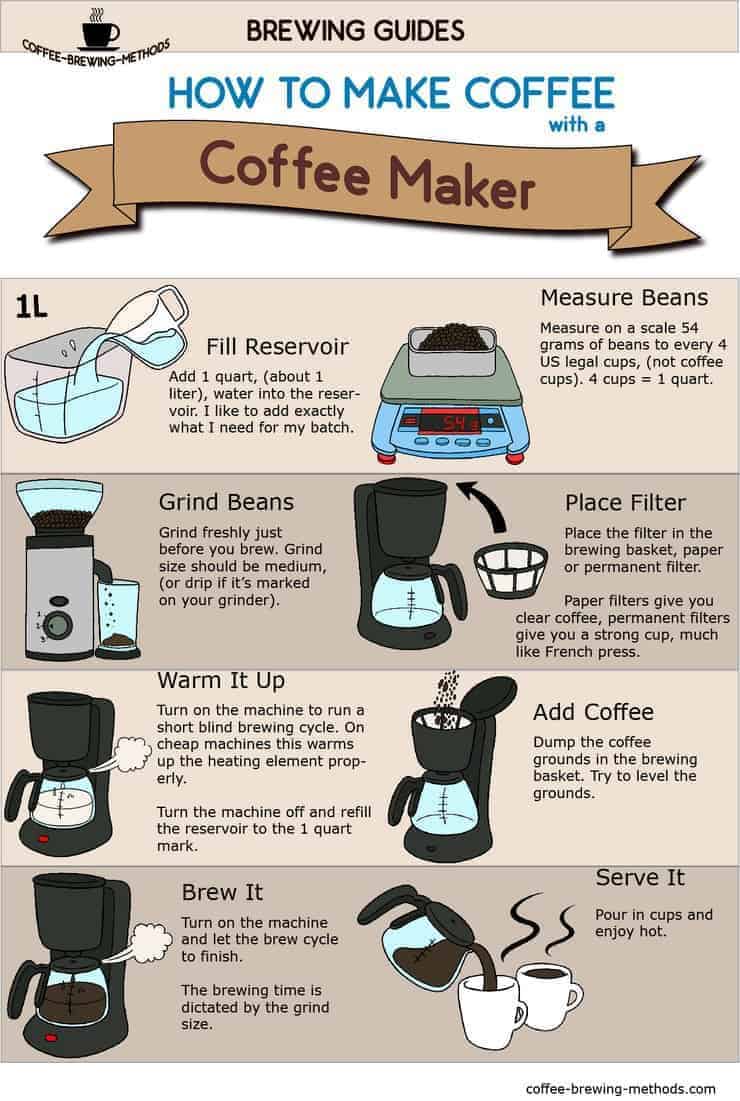
1. Clean the coffee maker
Empty the old grounds and rinse the filter basket. Wash the carafe with warm water and dish soap if it has coffee residue.
If the machine has mineral scale, run a cleaning cycle according to the manufacturer’s instructions. Some makers allow a vinegar solution, while others require a branded descaling product. Do not assume the same cleaner is safe for every machine.
Rinse the machine with fresh water after cleaning. A coffee maker that still smells like vinegar or cleaner needs more rinsing.
2. Use fresh coffee
Whole beans usually keep their flavor longer than pre-ground coffee because grinding exposes more surface area to air. For the best flavor, grind the beans just before brewing.
Choose coffee that has a clear roast date when possible. A sealed bag with only a “best by” date gives less information about freshness.
Store coffee in an airtight, opaque container at room temperature. Keep it away from heat, sunlight, steam, and strong odors. The refrigerator is not usually a good place for daily coffee storage because moisture and odors can affect the grounds.
3. Grind the coffee to medium size
Use a medium grind, similar in texture to table salt, for most automatic drip coffee makers.
- Too fine: Water moves slowly. The coffee may taste bitter, dry, or harsh.
- Too coarse: Water moves too quickly. The coffee may taste weak, sour, or thin.
- Medium: Water flows at a rate that usually gives balanced extraction.
Burr grinders tend to produce more even grounds than blade grinders. An even grind helps prevent some particles from over-brewing while others remain under-brewed.
4. Add the filter
Place the correct filter in the basket. Use the size and shape recommended for your machine.
If you notice a paper taste, rinse the paper filter with hot water before adding coffee. This also warms the basket. Be sure the filter sits flat and does not fold over the edge.
A reusable metal filter gives coffee more body because it lets more oils through. It may also allow fine particles into the cup. A paper filter produces a cleaner cup and holds back more sediment.
5. Measure the water
Use fresh, cold water. If your tap water tastes unpleasant on its own, the coffee will likely taste unpleasant too.
Measure the water in the coffee maker’s reservoir or with a separate measuring container. Do not fill beyond the maximum line.
For a balanced starting recipe, use:
- 30 grams of coffee for 500 mL of water
- 45 grams of coffee for 750 mL of water
- 60 grams of coffee for 1 liter of water
If you do not have a scale, one level tablespoon of ground coffee weighs about 5 grams, but the exact weight changes with grind size and roast. A scale gives more repeatable results.
6. Add the coffee and start brewing
Add the grounds to the filter and gently shake the basket so the bed is level. Do not press the coffee down.
Start the brew cycle. Avoid opening the lid or removing the carafe while the machine is running. Interrupting the flow can change how water moves through the grounds.
Many modern coffee makers control water temperature and spray patterns automatically. You usually cannot adjust these settings, so grind size and coffee-to-water ratio become the main controls.
7. Let the coffee finish dripping
Wait until the machine completes the brew cycle. The last drops can contain a high amount of extracted compounds, so removing the carafe early may change the taste and strength.
Once brewing is complete, discard the used grounds. Leaving wet grounds in the basket can create stale odors and encourage residue buildup.
8. Stir and serve
Coffee in a carafe can have different strengths from top to bottom. Stir the brewed coffee gently before serving.
Serve it soon after brewing. A thermal carafe can help hold flavor longer than a glass pot on a hot plate. If your machine uses a hot plate, prolonged heating can make the coffee taste flat or burnt.

The Best Coffee-to-Water Ratio
The best coffee ratio depends on taste, roast level, grind, and the machine. A reliable starting point is 1:16, which means one part coffee to 16 parts water by weight.
For example:
- 30 grams of coffee × 16 = 480 grams of water
- 45 grams of coffee × 16 = 720 grams of water
- 60 grams of coffee × 16 = 960 grams of water
Water and coffee are close enough in density for home calculations, so 1,000 grams of water is roughly 1 liter.
Adjust the strength without changing the grind first
If the coffee tastes too weak, add slightly more coffee. If it tastes too strong, reduce the coffee. Make small changes, such as 5 grams at a time.
Changing the coffee amount is often easier than changing grind size. Grind size affects extraction, not only strength.
| Result | First adjustment |
|---|---|
| Too weak but not sour | Add more coffee |
| Too strong but balanced | Use less coffee |
| Sour, sharp, or thin | Grind a little finer or use a longer brew |
| Bitter, dry, or harsh | Grind a little coarser or use a shorter brew |
| Flat or dull | Use fresher coffee and clean the machine |
Dark-roasted coffee often tastes stronger even when the coffee-to-water ratio is the same. You may prefer a slightly lower dose for a dark roast and a slightly higher dose for a light roast.
How Water Temperature and Brew Time Affect Flavor
A good drip coffee maker generally needs water hot enough to extract flavor but not so hot that the coffee tastes harsh. The Specialty Coffee Association uses a brewing water range of about 195°F to 205°F for many brewing methods.
Most automatic machines manage this for you. If your coffee maker produces lukewarm coffee, brews very slowly, or has heavy scale, cleaning or replacement may be needed.
Brew time varies by machine size, filter design, and dose. A full pot may take longer than a small batch. Do not judge the machine by time alone. Taste is the better guide, provided the coffee is brewed with a consistent recipe.
The main extraction signals are:
- Sour taste: The coffee may be under-extracted. Water did not remove enough flavor from the grounds.
- Bitter or dry taste: The coffee may be over-extracted. Water removed too many harsh compounds.
- Weak but pleasant taste: Increase the coffee dose.
- Strong but pleasant taste: Decrease the coffee dose.
- Burnt taste after brewing: The hot plate may be holding the coffee at high heat for too long.

How to Improve Coffee From an Older Coffee Pot
An older coffee maker can still make good coffee if it reaches a suitable temperature and moves water evenly through the grounds.
Start with a full cleaning cycle. Remove mineral scale, wash removable parts, and rinse the water tank. If the machine still brews lukewarm coffee or leaves part of the grounds dry, it may have a failing heater, pump, or spray head.
You can also improve results by brewing a smaller batch. Some machines perform better when the water level is closer to the middle of the reservoir rather than at the maximum line.
For a glass carafe model, preheat the carafe with hot water before brewing. Empty it before the brew cycle begins. This reduces heat loss during a small batch, though it will not fix a machine that cannot heat water properly.
Avoid “sneak-a-cup” features if they cause uneven dripping. These systems pause the flow so you can remove the carafe early. The first coffee may be stronger than the final coffee because the brew has not finished mixing.

Common Coffee Pot Mistakes
Small habits can make a large difference in the cup.
Using old grounds
Coffee loses aroma over time after grinding. Old grounds may taste flat even when the ratio is correct.
Filling the filter too high
Too many grounds can cause water to overflow or pass through the coffee unevenly. Use the machine’s maximum fill guidance.
Pressing down the grounds
Drip coffee makers are not espresso machines. Compressing the grounds can slow the flow and create bitter coffee.
Reusing coffee grounds
Used grounds have already released much of their soluble flavor. Reusing them usually produces thin, unpleasant coffee.
Leaving coffee on the hot plate
Heat can damage flavor over time. Move the coffee to a thermal carafe if you do not plan to drink it soon.
Ignoring the machine’s water tank
The water tank can collect mineral deposits and stale odors. Clean it as often as the manufacturer recommends.
Using boiling water in the reservoir
Do not pour boiling water into a standard coffee maker unless the manual specifically allows it. Use cool or room-temperature water so the machine can control the brewing temperature.
How to Clean a Coffee Pot
Clean the removable parts after each use. Rinse the carafe and filter basket, then allow them to dry fully.
Wipe the shower head and the area around the basket when coffee oils collect there. If the lid or reservoir is removable, wash it according to the manual.
Descale the internal water path when the manufacturer recommends it or when you notice:
- Slower brewing
- Strange noises
- A lower water level after brewing
- Lukewarm coffee
- White mineral flakes
- A sour or metallic smell
Use the cleaning product and dilution listed in the manual. After descaling, run fresh-water cycles until no cleaner smell remains.
Never mix vinegar with bleach or other cleaning products. Never immerse the electrical base in water. Unplug the machine before cleaning areas near electrical parts.

How to Choose Coffee for a Coffee Pot
Most coffees labeled for drip, filter, or automatic brewing work well in a coffee pot. The roast level changes flavor more than the brewing method does.
- Light roast: Brighter, more acidic, and often more floral or fruity
- Medium roast: Balanced flavor with moderate acidity and body
- Dark roast: Heavier, smokier, and more bitter-tasting
Arabica and robusta are common coffee species. Arabica often has a softer and more complex flavor, while robusta can add stronger bitterness and body. A blend may combine both.
The label may also describe the origin, processing method, or flavor notes. These details help you choose a flavor style, but they do not replace the need for fresh coffee and a suitable grind.
For a first attempt, choose a medium roast labeled for drip coffee. It gives you a clear baseline before you experiment with lighter or darker roasts.

A Simple Pro-Level Recipe
Use this recipe as a repeatable starting point:
- Clean the filter basket and carafe.
- Grind 60 grams of fresh coffee to a medium texture.
- Add 1 liter of fresh, cool water.
- Place the filter in the basket and level the grounds.
- Start the machine.
- Let the full cycle finish.
- Stir the coffee before serving.
- Taste it after it cools for a minute or two.
- Adjust the coffee dose before changing the grind.
If the coffee tastes sour, try a slightly finer grind. If it tastes bitter or dry, try a slightly coarser grind. Change only one variable at a time so you know what caused the improvement.

Frequently Asked Questions
How many scoops of coffee should I use for a full pot?
For a 12-cup coffee maker, start with about 70 to 75 grams of coffee if the machine’s cups are approximately 5 fluid ounces each. This equals about 60 fluid ounces of water, or roughly 1.8 liters. The exact amount depends on the machine’s cup size and your preferred strength.
If using tablespoons, start with about 14 to 15 level tablespoons. A scale is more accurate because spoon volume changes with the grind.
Should I use hot or cold water in a coffee maker?
Use cool or room-temperature water unless the machine manual says otherwise. The coffee maker is designed to heat the water during brewing. Adding boiling water may create a safety risk or interfere with the machine’s normal operation.
Can I make coffee without a coffee filter?
Only if the coffee maker is designed for a permanent reusable filter. Do not operate a standard machine without the required filter. Grounds may enter the brew basket, carafe, or machine’s internal parts.
Why does my coffee taste bitter?
Bitter coffee can result from over-extraction, very fine grounds, too much coffee, old coffee oils, or extended heating on a hot plate. Clean the machine first, then try a slightly coarser grind or reduce the brewing time if your machine allows it.
Why does my coffee taste weak?
Weak coffee may contain too much water, too little coffee, stale grounds, or a grind that is too coarse. Increase the coffee dose first. If the flavor is still thin or sour, use a slightly finer grind.
Is it safe to leave coffee in the coffee maker overnight?
It is better to empty the carafe and grounds after brewing. Coffee left on a hot plate can develop a burnt taste, while wet grounds can create stale odors. Wash the parts before making the next pot.
Can I use espresso grounds in a drip coffee maker?
You can, but espresso grounds are often finer than the grind recommended for drip brewing. The water may move too slowly, which can produce bitter coffee or overflow. Use a medium grind unless the coffee maker manual says otherwise.
Final Recommendation
For consistently good coffee, begin with fresh medium-ground coffee, clean water, a 1:16 coffee-to-water ratio, and a clean machine. Weigh the ingredients when possible. Then adjust one variable at a time based on taste.
The most useful next step is to brew a batch with 60 grams of coffee and 1 liter of water, write down the result, and make a small adjustment on the next pot. That simple habit turns guesswork into a repeatable recipe.
Research basis
This guide aligns with common drip-brewing practices and the Specialty Coffee Association’s published guidance on coffee-to-water ratios and brewing temperature. Machine-specific cleaning, filter size, and operating instructions should always come from the coffee maker’s manual.

One Comment