Blonde coffee can have more caffeine than dark coffee, but the roast color alone does not decide the caffeine level. In the United States, the biggest factors are the coffee bean type, serving size, brewing method, and how the coffee is measured.
A blonde roast may taste lighter and more acidic, yet it can contain about the same amount of caffeine as a dark roast. In some cases, blonde coffee has more caffeine by volume because its beans are denser. However, the difference is often small when you compare the same weight of coffee.

Blonde vs. dark roast: Which has more caffeine?
Blonde roast coffee often has slightly more caffeine when measured by scoop or volume. Dark roast coffee loses more moisture and becomes less dense during roasting, so a scoop may contain fewer coffee grounds by weight.
When you compare coffee by weight, the caffeine gap between blonde and dark roast is usually much smaller. Roasting can change caffeine slightly, but it does not remove most of the caffeine from the bean.
Why blonde roast can seem stronger
“Strong” can mean two different things:
- Strong flavor: A bold, smoky, bitter taste.
- Strong caffeine effect: A larger dose of caffeine.
Dark roast often tastes stronger because roasting creates deep, bitter flavors. Blonde roast can taste brighter and sharper, but that does not mean it has less caffeine. In fact, a blonde coffee may deliver more caffeine if you use the same scoop size.
A simple comparison
Imagine using one tablespoon of each roast:
- The blonde grounds may weigh slightly more.
- The dark grounds may be lighter because they lost more water during roasting.
- The heavier scoop may contain more coffee material and, therefore, slightly more caffeine.
If both coffees are weighed before brewing, the caffeine amounts may be closer.
The practical answer is simple: blonde roast is not automatically high-caffeine coffee, and dark roast is not automatically low-caffeine coffee.

Why roast level affects caffeine
Roasting changes the bean’s weight, size, color, flavor, and density. Caffeine is relatively stable during normal coffee roasting, so roast level has less effect on caffeine than many people assume.
Green coffee beans contain water. As they roast, they lose moisture and become lighter. Dark roasting also causes the beans to expand more. This means a dark bean may take up more space while weighing less.
That creates two ways to compare caffeine:
| Measurement method | Likely result |
|---|---|
| Same number of beans | Caffeine is often similar |
| Same weight, such as 20 grams | Caffeine is usually similar |
| Same scoop or tablespoon | Blonde roast may contain more caffeine |
| Same brewed drink from a coffee shop | Recipe and serving size decide the result |
Caffeine by bean
A single coffee bean may retain a similar amount of caffeine after roasting. The bean changes in size and weight, but caffeine does not disappear in proportion to those changes.
This is why the phrase “blonde roast has more caffeine” needs a condition. It may be true when the coffee is measured by volume, but it is not a universal rule for every coffee.
Caffeine by weight
If you weigh the same amount of blonde and dark coffee, the caffeine levels are often close. The exact amount depends on:
- Arabica or robusta beans
- The coffee’s growing region
- The blend
- The grind size
- The brewing method
- The amount of coffee used
- Brewing time and water temperature
Robusta beans generally contain more caffeine than Arabica beans. A dark roast made with robusta could have more caffeine than a blonde roast made entirely with Arabica beans.

Does blonde coffee at Starbucks have more caffeine?
Some blonde roast drinks at U.S. coffee chains do contain more caffeine than similar medium or dark roast drinks. Starbucks, for example, lists different caffeine amounts for its brewed coffee roasts.
That difference does not prove that all blonde roast coffee has more caffeine. Coffee shops may use different:
- Bean blends
- Coffee-to-water ratios
- Serving sizes
- Brewing systems
- Batch recipes
For example, a 16-fluid-ounce brewed coffee may have a different caffeine amount from another 16-fluid-ounce brewed coffee, even if both are labeled blonde roast.
The safest way to compare a coffee-shop drink is to check the company’s current nutrition information. Product recipes can change, and caffeine values may vary by store, brewing batch, and customization.
Is a blonde roast espresso stronger?
Not necessarily. Espresso is concentrated because it uses a small amount of water, but a standard espresso shot may contain less total caffeine than a large brewed coffee.
The caffeine in an espresso drink depends mainly on:
- Number of shots
- Dose of ground coffee
- Bean blend
- Shot size
- Extraction method
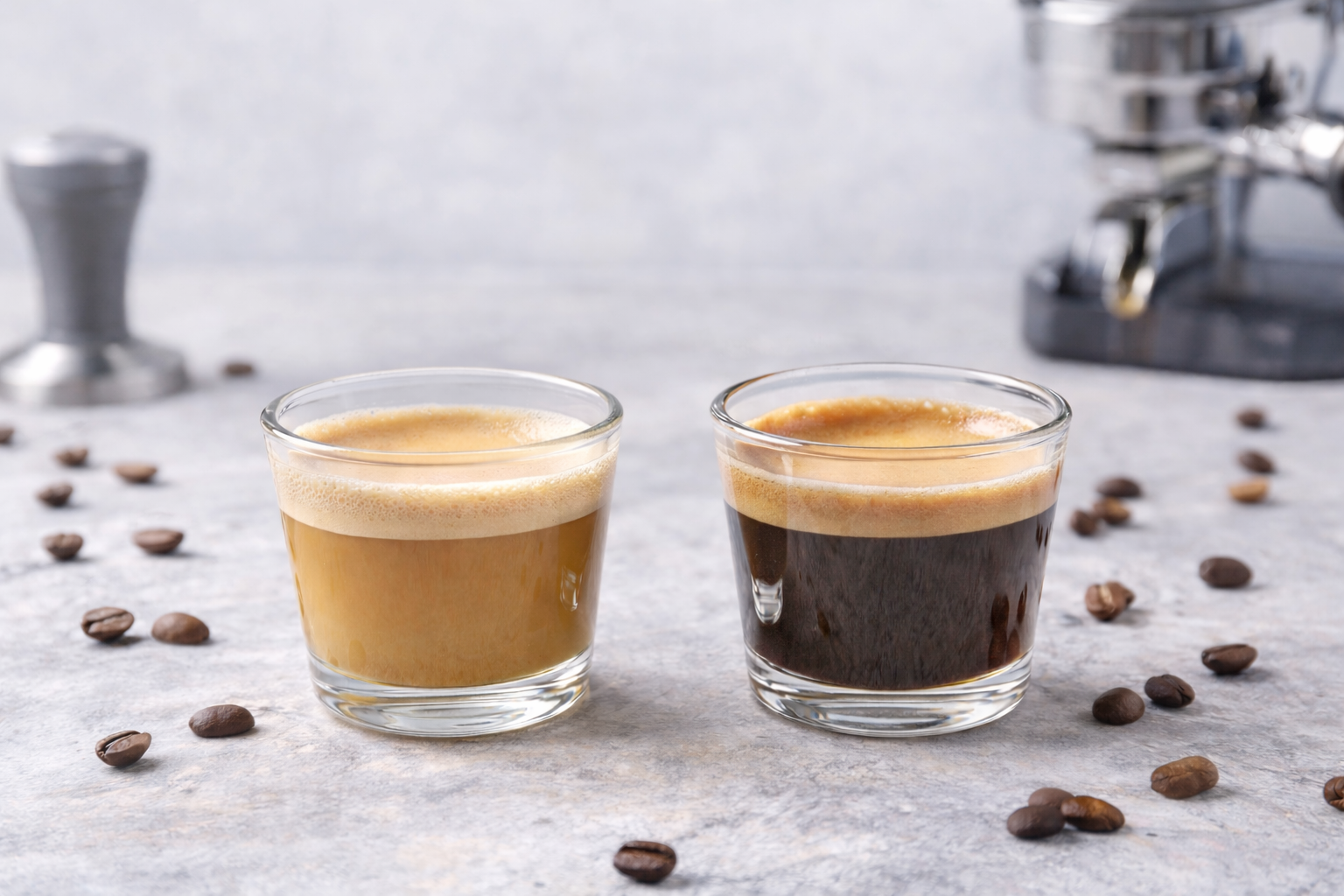
A blonde espresso may taste less bitter or more acidic than a dark espresso. Its flavor does not reliably predict its caffeine content.

How much caffeine is in blonde coffee?
A typical 8-fluid-ounce cup of brewed coffee contains about 80 to 100 milligrams of caffeine, but the actual amount can vary widely. The U.S. Food and Drug Administration says that up to 400 milligrams of caffeine per day is generally not linked with dangerous negative effects for most healthy adults.
That 400-milligram amount is not a personal target. Some people feel shaky, anxious, or have trouble sleeping after much less.
Estimated caffeine examples
The following figures are useful estimates, not fixed values:
| Coffee serving | Approximate caffeine |
|---|---|
| 8 fl oz brewed coffee | 80–100 mg |
| 12 fl oz brewed coffee | 120–150 mg |
| 16 fl oz brewed coffee | 160–250 mg |
| 1 fl oz espresso shot | About 60–75 mg |
| Decaf coffee, 8 fl oz | Usually 2–15 mg |
A large coffee-shop drink can contain much more caffeine than a small home-brewed cup. Always check the serving size before comparing labels.
A useful calculation
Suppose a coffee contains 90 milligrams of caffeine per 8 fluid ounces. A 16-fluid-ounce serving would contain about:
90 mg × 2 = 180 mg of caffeine
This is only a hypothetical calculation. The real value depends on the coffee and brewing recipe.

What determines caffeine more than roast color?
Roast color matters less than several other variables. If you want to estimate caffeine, check these factors first.
1. Bean species
Robusta coffee usually contains more caffeine than Arabica coffee. Some inexpensive blends and high-caffeine coffees use robusta to increase caffeine content.
A blonde Arabica roast may have less caffeine than a dark robusta roast. This is one reason roast color cannot answer the question by itself.
2. Serving size
A 16-ounce cup has more total caffeine than an 8-ounce cup if the brew strength is similar. “One cup” can be confusing because U.S. coffee labels may use an 8-fluid-ounce cup, while many mugs hold 12 to 16 fluid ounces.
3. Coffee dose
The more ground coffee used, the more caffeine may enter the drink. A strong brew made with 30 grams of coffee can contain more caffeine than a mild brew made with 18 grams, regardless of roast.
4. Brewing method
Cold brew, drip coffee, French press, pour-over, and espresso can produce different caffeine levels. Cold brew concentrate may be especially high in caffeine when served without enough dilution.
5. Grind size and extraction
A finer grind and longer contact time can extract more caffeine under some conditions. Water temperature and the brewing system also affect extraction.
6. Drinking speed
Drinking a large coffee quickly may make the caffeine effect feel stronger than sipping the same drink over several hours. The total caffeine may be unchanged, but the timing differs.
How to choose blonde coffee based on caffeine
Choose blonde coffee if you like its flavor and want a potentially higher caffeine amount from a scoop-based brew. Do not choose it solely because you assume every blonde roast has more caffeine.
Use this approach:
- Check the serving size. Compare 8, 12, or 16 fluid ounces rather than comparing “one cup.”
- Check the caffeine listing. A nutrition label or café menu is more useful than roast color.
- Ask about the bean blend. Robusta content can raise caffeine.
- Compare the coffee dose. More grounds usually mean more caffeine.
- Watch the add-ons. Energy drinks, chocolate, pre-workout products, and some medicines may also contain caffeine.
- Adjust for your response. Headaches, a racing heart, anxiety, and poor sleep can mean you need less.
If you want less caffeine, choose a smaller serving, half-caf coffee, or decaf. If you want more, look for a coffee that lists its caffeine content rather than relying on the words “blonde,” “light,” or “dark.”

Is blonde coffee safe to drink every day?
For most healthy adults, moderate caffeine intake is generally considered safe. The FDA cites 400 milligrams per day as an amount not generally associated with dangerous negative effects in healthy adults, though sensitivity differs.
People who are pregnant or breastfeeding should ask a health professional about an appropriate caffeine limit. The American College of Obstetricians and Gynecologists commonly references a limit of less than 200 milligrams per day during pregnancy, but individual guidance may differ.
Caffeine can also affect people with:
- Anxiety or panic symptoms
- Heart rhythm problems
- High sensitivity to stimulants
- Sleep disorders
- Gastroesophageal reflux symptoms
- Certain medication interactions
Possible signs that you had too much caffeine include:
- Shaking
- Nervousness
- Fast heartbeat
- Upset stomach
- Headache
- Trouble sleeping
Do not stop a prescribed medicine or use coffee to treat a health problem without medical advice. If you have chest pain, severe palpitations, fainting, or other urgent symptoms, seek medical care.

Common mistakes when comparing blonde and dark coffee
Mistake 1: Comparing taste instead of caffeine
Dark coffee often tastes more intense, but bitterness does not measure caffeine. Flavor comes from roast chemistry, bean origin, freshness, and brewing.
Mistake 2: Comparing scoops without weighing them
A scoop of blonde coffee and a scoop of dark coffee may not weigh the same. Use a kitchen scale for a fairer home comparison.
Mistake 3: Ignoring serving size
A “small” coffee at one café may hold 8 ounces, while a “small” coffee at another may hold 12 ounces. Compare fluid ounces and listed caffeine.
Mistake 4: Assuming espresso always has more caffeine
Espresso is concentrated, but a large brewed coffee may contain more total caffeine. Compare the full drink, not just the concentration.
Mistake 5: Treating “light roast” as a caffeine claim
Light roast describes color and roast level. It does not guarantee a specific caffeine amount.

Frequently asked questions
Does blonde roast coffee have more caffeine than dark roast?
It can, especially when both coffees are measured by scoop or volume. When measured by weight, the difference is usually small. Bean species, serving size, and brewing method often matter more.
Is blonde coffee stronger than dark coffee?
Blonde coffee may be stronger in caffeine in some recipes, but dark coffee usually tastes stronger because it has a bolder, more roasted flavor. Flavor strength and caffeine strength are different.
Does blonde espresso have more caffeine?
It may, depending on the bean blend and espresso recipe. The number of shots and the dose of coffee usually matter more than the espresso’s color.
Which coffee has the most caffeine?
Coffee made with robusta beans, a large serving, a high coffee dose, or a concentrated brewing method may have more caffeine. The label or café nutrition guide is the best source for a specific product.
Does decaf blonde coffee still contain caffeine?
Yes. Decaf coffee is not completely caffeine-free. An 8-ounce cup often contains a small amount, though the exact level varies by product and preparation.
Bottom line
Blonde coffee does not always have more caffeine, but it may contain slightly more when measured by scoop or volume. When the same weight of coffee is used, blonde and dark roasts are often close. The coffee species, serving size, recipe, and brewing method provide a better caffeine comparison than roast color alone.
For a reliable choice, check the listed caffeine amount and serving size. If the coffee does not provide that information, assume the caffeine can vary and adjust your portion based on how your body responds.