Introduction
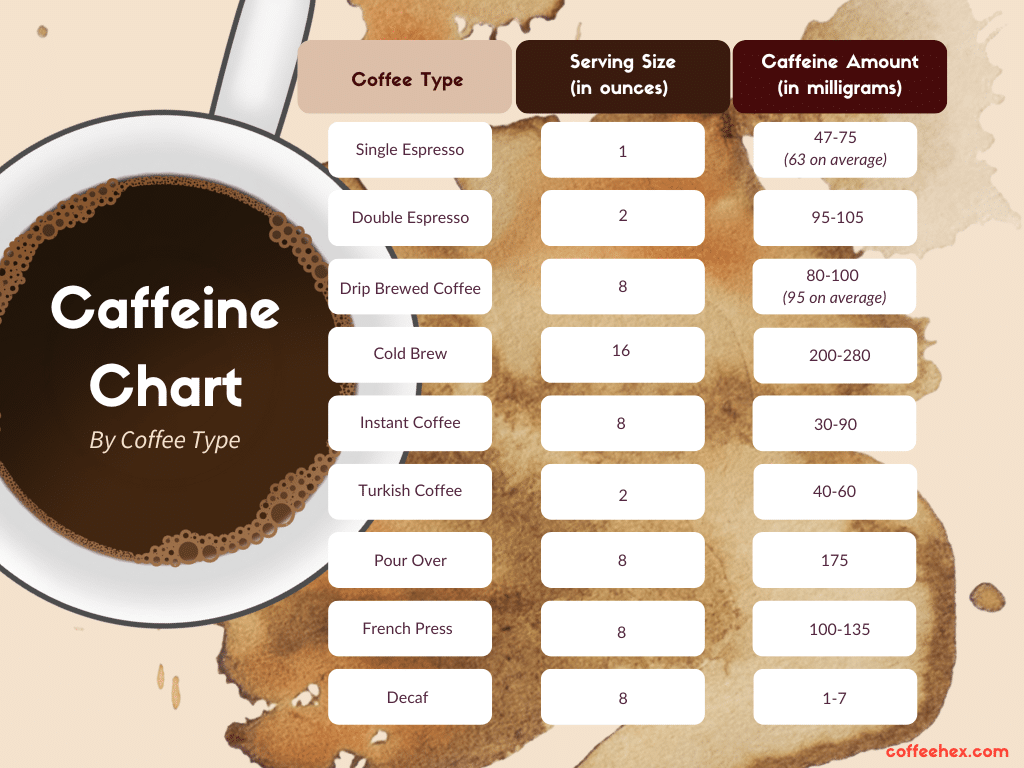
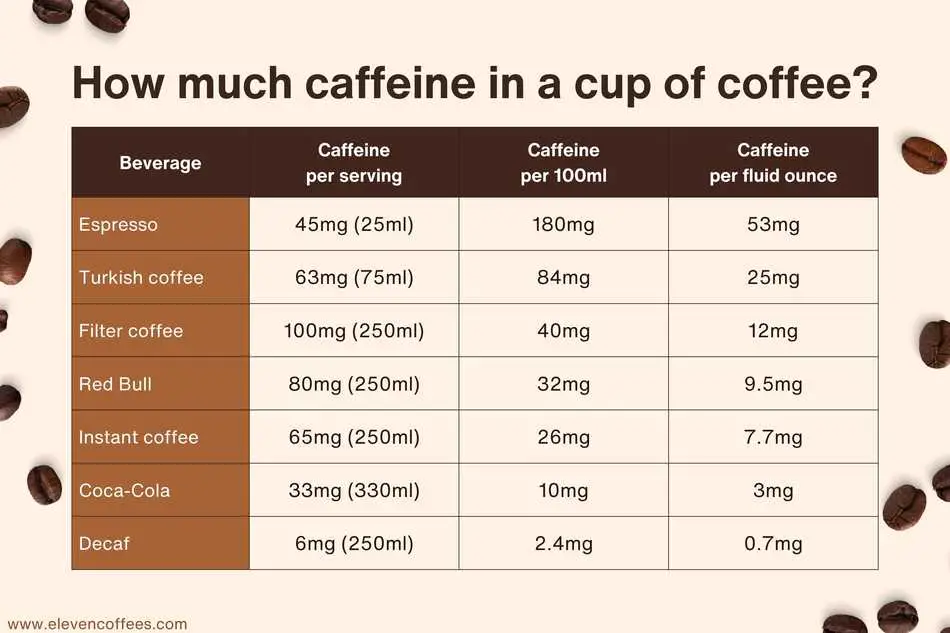
In the United States, an 8-fluid-ounce cup of brewed coffee typically contains about 80–100 milligrams (mg) of caffeine. However, the amount can vary significantly depending on the coffee type, brewing method, bean variety, serving size, and preparation strength.
A standard coffee mug is often larger than 8 fluid ounces. A 12-ounce serving may contain roughly 120–180 mg of caffeine, while a 16-ounce serving can reach 160–240 mg or more. Checking the serving size is essential because “one cup” can mean either a measured 8-ounce cup or a much larger café mug.
For most healthy adults, the U.S. Food and Drug Administration (FDA) says that up to 400 mg of caffeine per day is not generally associated with dangerous negative effects. Individual sensitivity varies, and certain people—including those who are pregnant, take specific medications, or have heart or anxiety conditions—may need less.

How Much Caffeine Is in an 8-Ounce Cup of Coffee?
An 8-fluid-ounce serving of regular brewed coffee usually contains 80–100 mg of caffeine, with about 95 mg often used as a practical estimate.
The amount is not fixed because coffee is a prepared food rather than a standardized medication. Two cups that look similar may contain different amounts because one may use more ground coffee, a darker or lighter roast, a different bean species, or a longer extraction time.
Typical caffeine amounts by coffee serving size
| Coffee serving | Approximate caffeine |
|---|---|
| 6 fl oz brewed coffee | 70–85 mg |
| 8 fl oz brewed coffee | 80–100 mg |
| 10 fl oz brewed coffee | 100–125 mg |
| 12 fl oz brewed coffee | 120–180 mg |
| 16 fl oz brewed coffee | 160–240 mg |
| 1 fl oz espresso shot | 60–75 mg |
| 2 fl oz double espresso | 120–150 mg |
| 8 fl oz decaf coffee | 2–15 mg |
These are general estimates, not guaranteed amounts. A strong 8-ounce coffee may contain more caffeine than a weaker 12-ounce coffee. Commercial coffee shops may also use different recipes for the same named size.
Why an American “cup” can be confusing
In recipes and nutrition data, a cup often means 8 fluid ounces. In American coffee makers, however, one marked “cup” may be only 5 or 6 fluid ounces. A coffee-shop “small” may be 8 or 12 ounces, depending on the business.
When estimating your caffeine intake:
- Measure the drink in fluid ounces.
- Check whether the coffee is regular, half-caf, or decaf.
- Look for a nutrition or caffeine statement from the manufacturer or café.
- Use the actual serving size rather than assuming every cup contains 8 ounces.

What Determines the Amount of Caffeine in Coffee?
The main factors are coffee quantity, bean type, roast, brewing method, and serving size. The amount of ground coffee used usually has a larger effect than the roast color alone.
Coffee-to-water ratio
Using more ground coffee for the same amount of water generally produces a drink with more caffeine. A lightly brewed coffee made with a small amount of grounds may contain less caffeine than a concentrated brew made with a larger dose.
For example, two 12-ounce coffees can differ substantially:
- Coffee A uses 18 grams of ground coffee and a relatively light extraction.
- Coffee B uses 30 grams of ground coffee and a stronger recipe.
Coffee B will generally deliver more caffeine, even if both drinks are served in identical cups.
Arabica and Robusta beans
Most coffee comes from either Arabica or Robusta beans. Robusta beans generally contain more caffeine by weight than Arabica beans. A blend containing Robusta may therefore have more caffeine than an Arabica-only coffee prepared in the same way.
The package may identify the bean type, but it often does not provide a precise caffeine amount. Without laboratory testing or a reliable manufacturer declaration, the exact total remains an estimate.
Light roast versus dark roast
Roast level affects bean density and flavor, but it does not provide a simple way to predict caffeine.
A common misconception is that light-roast coffee always contains much more caffeine than dark-roast coffee. In practice:
- If coffee is measured by weight, light and dark roasts may have relatively similar caffeine amounts.
- If coffee is measured by scoops or volume, lighter roasted beans are denser, so the same scoop may contain slightly more coffee by weight.
- Brewing recipe and serving size often matter more than roast color.
Choose a roast based on flavor unless the manufacturer provides a tested caffeine value.
Brewing method
Brewing method changes both concentration and serving size. Approximate ranges include:
| Coffee type | Typical serving | Approximate caffeine |
|---|---|---|
| Drip or automatic-brewed coffee | 8 fl oz | 80–100 mg |
| French press coffee | 8 fl oz | 80–110 mg |
| Pour-over coffee | 8 fl oz | 80–110 mg |
| Cold brew, ready to drink | 8 fl oz | 100–200 mg |
| Espresso | 1 fl oz | 60–75 mg |
| Instant coffee | 8 fl oz | 60–80 mg |
| Decaf brewed coffee | 8 fl oz | 2–15 mg |
Cold brew deserves special attention because it is often prepared as a concentrate. A ready-to-drink cold brew may have a moderate amount of caffeine, but an undiluted concentrate can contain much more. Follow the package’s dilution instructions and check the label when available.
Espresso has more caffeine per fluid ounce, but a typical espresso serving is much smaller than a mug of brewed coffee. A 1-ounce espresso may contain less total caffeine than an 8-ounce brewed coffee, even though espresso is more concentrated.

How Much Caffeine Is in Popular Coffee Drinks?
The caffeine in a coffee drink depends primarily on its coffee base and total size—not on the amount of milk, cream, foam, or flavored syrup.
A latte made with one espresso shot may contain less caffeine than a large brewed coffee. A larger latte with two shots may contain substantially more.
Common coffee drinks
| Drink | Common caffeine range |
|---|---|
| 8-ounce brewed coffee | 80–100 mg |
| 12-ounce brewed coffee | 120–180 mg |
| Americano with one espresso shot | 60–75 mg |
| Americano with two espresso shots | 120–150 mg |
| 8-ounce latte with one shot | 60–75 mg |
| 12-ounce latte with two shots | 120–150 mg |
| Cappuccino with one shot | 60–75 mg |
| Mocha with one shot | 60–75 mg |
| 8-ounce instant coffee | 60–80 mg |
| 8-ounce decaf coffee | 2–15 mg |
These ranges are illustrative. Coffee chains, independent cafés, and packaged beverage brands may use different shot sizes and recipes. Some coffee shops also use espresso shots that contain more or less caffeine than the estimates above.
Does adding milk reduce caffeine?
No. Adding milk, cream, or water does not remove a meaningful amount of caffeine. It only changes the drink’s volume and concentration.
For example, adding 6 ounces of milk to a coffee containing 95 mg of caffeine still leaves approximately 95 mg in the beverage. The drink may taste less intense, but its total caffeine content is essentially unchanged.
Does iced coffee have less caffeine?
Not necessarily. Iced coffee can contain the same or more caffeine than hot coffee, depending on the recipe. Ice dilutes the drink as it melts, but it does not remove caffeine.
An iced coffee made with a large amount of coffee concentrate may contain more caffeine than a smaller hot coffee. Compare the fluid ounces and listed caffeine amounts rather than relying on temperature or taste.

How Does Coffee Compare With Other Caffeinated Drinks?
Coffee is one of the largest sources of caffeine in the American diet, but the amount in a single serving overlaps with tea, soda, energy drinks, chocolate, and some medications.
| Beverage or product | Approximate caffeine |
|---|---|
| 8 fl oz brewed coffee | 80–100 mg |
| 8 fl oz black tea | 40–70 mg |
| 8 fl oz green tea | 20–45 mg |
| 12 fl oz caffeinated soda | 30–45 mg |
| 8.4 fl oz energy drink | About 80 mg |
| 16 fl oz energy drink | Often 150–300 mg |
| 1 oz dark chocolate | About 10–25 mg |
| Caffeine-containing pain reliever | Varies by product |
The product label is the best source for packaged drinks, supplements, and medications. Energy drinks can vary widely, and some contain added caffeine from ingredients such as guarana. The total caffeine listed on the label should account for the product’s declared caffeine sources, but consumers should still read serving-size instructions carefully.
A simple daily caffeine calculation
To estimate your intake, add the caffeine from each source:
- 8-ounce brewed coffee: 95 mg
- 12-ounce black tea: 45 mg
- 12-ounce caffeinated soda: 35 mg
- One serving of dark chocolate: 20 mg
Estimated daily total: 195 mg
This approach is more accurate than counting the number of caffeinated drinks because serving sizes differ.

How Much Caffeine Is Safe in a Day?
For most healthy adults, the FDA cites 400 mg of caffeine per day as an amount not generally associated with dangerous, negative effects. That is roughly equivalent to four 8-ounce cups of coffee, but it is not a universal target or guarantee of comfort.
A person may experience side effects at a lower amount, especially when caffeine is consumed quickly or late in the day. Common signs of excessive caffeine include:
- Restlessness or shakiness
- Irritability or anxiety
- Fast or pounding heartbeat
- Headache
- Nausea or stomach discomfort
- Trouble falling asleep or staying asleep
- Frequent urination
Pregnancy and caffeine
The American College of Obstetricians and Gynecologists states that moderate caffeine consumption—generally less than 200 mg per day during pregnancy—does not appear to be a major contributing factor in miscarriage or preterm birth. Because recommendations can depend on individual circumstances, pregnant individuals should discuss caffeine intake with their prenatal healthcare professional.
Children and teenagers
Children and adolescents may be more sensitive to caffeine. The American Academy of Pediatrics discourages caffeine consumption for children and teenagers, and the FDA advises that energy drinks are not appropriate for children and teens.
People with medical conditions or medication concerns
Caffeine may affect blood pressure, heart rhythm, anxiety, sleep, and gastrointestinal symptoms. It can also interact with some medications and supplements. Ask a healthcare professional or pharmacist for individualized advice if you have a heart condition, anxiety disorder, sleep disorder, are pregnant, or take medication that may interact with caffeine.
Seek urgent medical help for severe symptoms such as chest pain, fainting, severe vomiting, confusion, seizure, or a very rapid or irregular heartbeat after consuming caffeine.
How Late Should You Stop Drinking Coffee?
Caffeine can remain active for several hours, so drinking coffee late in the day may interfere with sleep even when you feel accustomed to it. A practical starting point is to avoid caffeine at least 6 hours before bedtime. People who are particularly sensitive may need a longer interval.
Track the timing rather than only the total amount. For example, 200 mg consumed at 7 a.m. may affect sleep differently from 200 mg consumed at 4 p.m.
If coffee seems to be affecting sleep:
- Move the final caffeinated serving earlier.
- Reduce the serving size before eliminating coffee entirely.
- Replace the afternoon drink with decaf or a caffeine-free beverage.
- Keep a brief record of caffeine timing, sleep quality, and symptoms.
- Speak with a healthcare professional if insomnia continues despite reasonable changes.
Decaf is not completely caffeine-free. Most decaffeinated coffee contains a small amount, often a few milligrams per serving.
How Can You Reduce Caffeine Without Withdrawal Symptoms?
Gradual reduction is usually easier than stopping suddenly, particularly for people who drink several servings every day. Abruptly stopping caffeine may cause headaches, fatigue, difficulty concentrating, irritability, or low mood.
A simple reduction plan is:
- Measure your current intake for two or three days.
- Reduce the largest serving by about one-quarter.
- Replace part of the regular coffee with decaf.
- Maintain the reduced amount for several days.
- Reduce again if needed.
For example, someone drinking three 8-ounce cups daily could switch to:
- Days 1–3: Two regular cups and one half-caf cup
- Days 4–6: One regular cup and two half-caf cups
- Days 7–9: Three decaf or low-caffeine cups
This example is not a medical requirement. Adjust the pace according to symptoms and personal needs. Drink water normally, maintain regular meals, and avoid replacing coffee with high-caffeine energy drinks.

Common Mistakes When Estimating Coffee Caffeine
The most common error is treating every serving as an 8-ounce cup. Other mistakes can also lead to a significant undercount.
Mistake 1: Counting mugs instead of ounces
A large home mug may hold 12–16 ounces. If it contains 150–200 mg of caffeine, counting it as one “cup” can make daily intake appear lower than it is.
Mistake 2: Assuming dark roast always contains more caffeine
Roast color is not a reliable indicator of total caffeine. The coffee dose, bean type, and brewing recipe usually provide more useful information.
Mistake 3: Forgetting coffee-based desserts and medications
Chocolate, tiramisu, caffeinated pain relievers, pre-workout products, tea, soda, and energy drinks can all add to the daily total.
Mistake 4: Assuming decaf means zero caffeine
Decaffeinated coffee contains much less caffeine than regular coffee, but it may still contain several milligrams per serving.
Mistake 5: Relying on taste
Bitter or strong-tasting coffee is not automatically higher in caffeine. Flavor intensity and caffeine content are related only indirectly.

Frequently Asked Questions
Is 200 mg of caffeine a lot?
For many healthy adults, 200 mg is below the FDA’s general daily limit of 400 mg. It can still cause side effects in sensitive people, especially when consumed quickly or later in the day. During pregnancy, 200 mg is commonly used as an upper daily guideline, so staying below that amount is generally advised unless a healthcare professional recommends otherwise.
Does coffee have more caffeine than espresso?
An espresso shot contains more caffeine per ounce, but an 8-ounce brewed coffee usually contains more total caffeine than one 1-ounce shot. A double espresso may contain more caffeine than a small brewed coffee.
How much caffeine is in decaf coffee?
An 8-ounce serving of decaf coffee commonly contains about 2–15 mg of caffeine, although the amount varies by brand, bean, and preparation method.
Does brewing coffee longer increase caffeine?
Longer contact time can extract more caffeine, but the final amount also depends on the coffee dose, grind size, water temperature, and total beverage volume. Brewing time alone cannot predict the exact caffeine content.
How much caffeine is too much at once?
There is no single amount that causes the same reaction in everyone. Taking a large dose quickly increases the likelihood of jitteriness, rapid heartbeat, nausea, and anxiety. Follow product serving instructions, avoid combining multiple concentrated caffeine products, and seek urgent care for severe symptoms.

Conclusion
A typical 8-ounce cup of brewed coffee contains about 80–100 mg of caffeine, but a large American coffee-shop serving may contain substantially more. The most useful factors to check are serving size, coffee dose, brewing method, and whether the drink includes regular, half-caf, or decaf coffee.
For most healthy adults, keeping total caffeine below 400 mg per day aligns with FDA general guidance. If you are pregnant, sensitive to caffeine, experiencing sleep or heart symptoms, or taking medication, a lower amount may be appropriate. Start by measuring the ounces in your usual drink and adding caffeine from all daily sources—not just coffee.