
Introduction
For home coffee makers in the United States, the best way to grind coffee beans is to use a burr grinder, grind only what you need immediately before brewing, and choose a grind size that matches your brewing method. Use a coarse grind for French press, a medium grind for drip coffee makers, a medium-fine grind for pour-over, and a fine grind for espresso.
The right grind controls how quickly water extracts flavor from coffee. Coffee ground too finely can taste bitter and harsh, while coffee ground too coarsely can taste weak, sour, or watery. Small adjustments to grind size often make a bigger difference than changing the coffee brand.
What You Need Before Grinding Coffee Beans
You can grind coffee with a blade grinder, burr grinder, or manual hand grinder. Each option produces a different level of consistency.
You will need:
- Whole coffee beans
- A coffee grinder
- A kitchen scale, if available
- Your preferred brewing equipment
- An airtight container for storing leftover beans
- A clean, dry work surface
A scale is helpful because coffee is best measured by weight rather than by volume. Whole beans vary in size and density, so a scoop of one coffee may weigh more or less than a scoop of another.
A practical starting point is about 1 gram of coffee for every 16 grams of water, often written as a 1:16 coffee-to-water ratio. For example:
- 20 grams of coffee requires approximately 320 grams of water.
- 30 grams of coffee requires approximately 480 grams of water.
- 60 grams of coffee requires approximately 960 grams of water.
This ratio is only a starting point. Use more coffee for a stronger cup or less coffee for a lighter cup, but adjust one variable at a time so you can identify what changed.
Burr grinder versus blade grinder
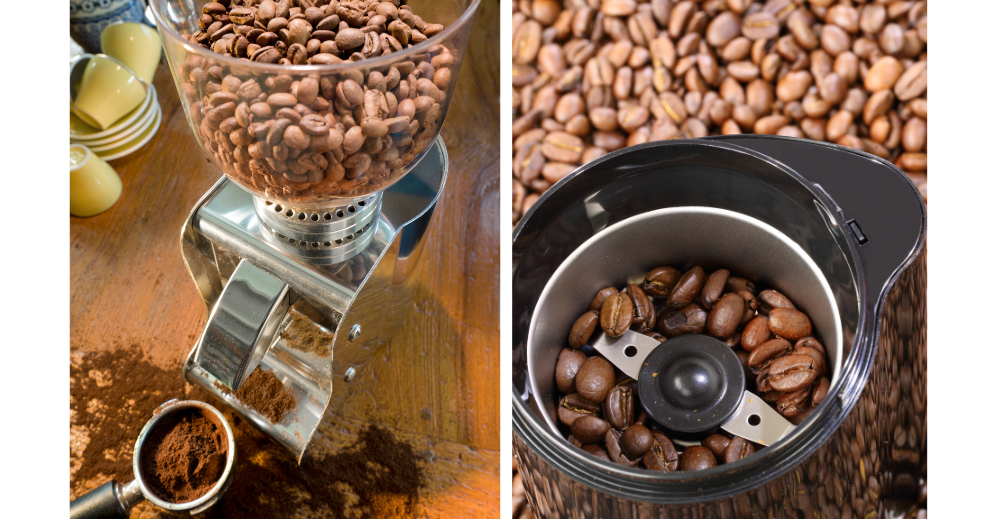
A burr grinder crushes coffee beans between two abrasive surfaces called burrs. It usually produces more evenly sized grounds, which helps water extract the coffee more consistently.
A blade grinder chops beans with a spinning blade. It tends to create a mixture of fine particles and larger pieces. The fine particles may overextract while the larger pieces underextract, making the coffee taste uneven.
A burr grinder is generally the better choice for drip coffee, pour-over, French press, and espresso. A blade grinder can still produce drinkable coffee if you use short pulses and shake the grinder between pulses to distribute the beans.
Manual and electric grinders
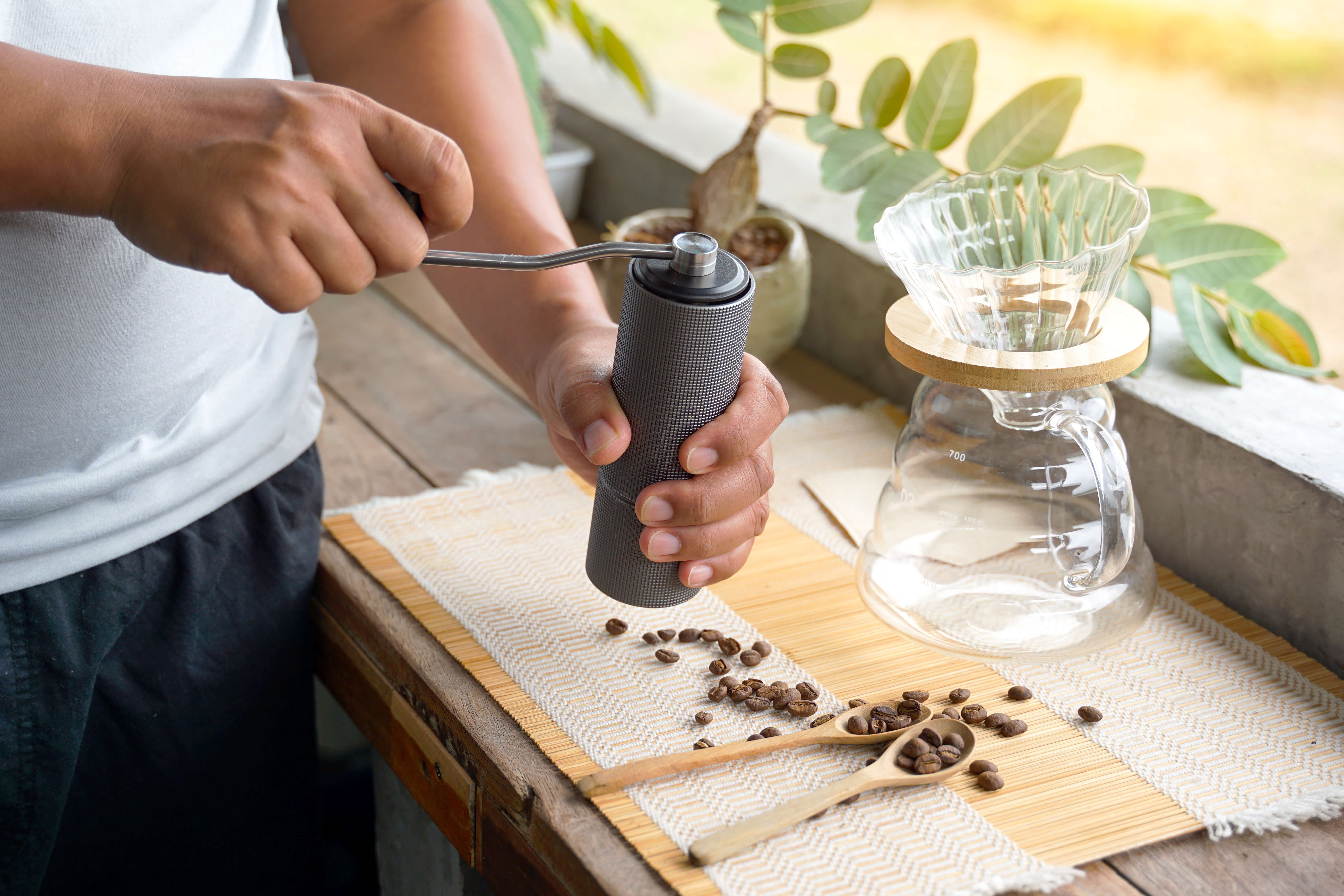
A manual burr grinder can provide good consistency and does not require electricity, but grinding may take longer. An electric burr grinder is more convenient for daily use and for preparing several servings.
For espresso, choose a grinder designed for espresso-level adjustment. Many basic grinders do not offer the fine, precise settings needed to dial in espresso properly.

Coffee Grind Sizes Explained
Coffee grind size refers to how large or small the particles are after grinding. The most useful categories are coarse, medium-coarse, medium, medium-fine, fine, and extra-fine.
| Grind size | Typical texture | Common brewing methods |
|---|---|---|
| Extra-coarse | Large, chunky pieces | Cold brew variations, some coffee cupping methods |
| Coarse | Similar to coarse sea salt | French press, percolator |
| Medium-coarse | Rough sand | Chemex and some flat-bottom brewers |
| Medium | Similar to table salt | Automatic drip coffee maker |
| Medium-fine | Fine sand | Pour-over, AeroPress variations |
| Fine | Powdery but still granular | Espresso, moka pot |
| Extra-fine | Very powdery | Turkish-style coffee |
These descriptions are approximate because grinder settings differ between brands and models. “Setting 10” on one grinder may not match “setting 10” on another.
Grind size for common U.S. brewing methods
Drip coffee maker
Start with a medium grind. The grounds should resemble table salt or fine sand. If the coffee tastes weak and sour, use a slightly finer grind. If it tastes bitter or dry, use a slightly coarser grind.
French press
Use a coarse grind. Large particles are easier to filter with a French press and reduce the amount of sediment in the cup. Very fine grounds can pass through the filter and may make the coffee muddy or overly bitter.
Pour-over coffee
Start with a medium-fine grind. The exact setting depends on the brewer, filter, dose, and pouring technique. A cone-shaped brewer often responds well to a medium-fine grind, while a flat-bottom brewer may work better with a medium or medium-fine setting.
Espresso
Use a fine grind. Espresso requires fine grounds because water passes through the compact coffee bed under pressure in a short period. Espresso grind settings often require very small adjustments.
Moka pot
Use a fine to medium-fine grind, but avoid powdery Turkish-style grounds. Overly fine coffee can restrict water flow and produce harsh flavors.
Cold brew
Use a coarse grind. Cold brew usually involves a long steeping period, so coarse grounds help slow extraction and make filtering easier.
Why grind size matters
Coffee extraction happens when water dissolves soluble compounds from ground coffee. Smaller particles expose more surface area to water and generally extract more quickly. Larger particles expose less surface area and extract more slowly.
This creates a basic adjustment rule:
- Coffee tastes sour, sharp, thin, or weak: Grind finer or extend the brew time.
- Coffee tastes bitter, harsh, dry, or overly strong: Grind coarser or shorten the brew time.
Taste can also be affected by water temperature, coffee freshness, brewing ratio, roast level, and brew time, so grind size is not the only variable.

How to Grind Coffee Beans Step by Step
1. Choose the brewing method
Decide whether you are making drip coffee, French press, pour-over, espresso, moka pot, or cold brew. The brewing method determines the starting grind size.
Do not grind all your beans to the same setting if you use multiple brewing methods. Espresso requires much finer grounds than French press coffee.
2. Measure the coffee beans
Measure the beans before grinding. A digital scale provides the most consistent results.
As a starting point, use approximately:
- 15 grams of coffee for 240 grams, or about 8 fluid ounces, of water
- 30 grams of coffee for 480 grams, or about 16 fluid ounces, of water
- 60 grams of coffee for 960 grams, or about 32 fluid ounces, of water
These amounts are examples rather than fixed rules. Coffee makers may use different cup measurements, so measuring water by weight or using the brewer’s actual capacity can improve consistency.
3. Set the grinder
Select the grind size recommended for your brewing method:
- Coarse for French press and cold brew
- Medium for drip coffee
- Medium-fine for many pour-over brewers
- Fine for espresso and moka pot
If your grinder has numbered settings, record the setting you use. This makes it easier to repeat a recipe or adjust it later.
4. Grind only what you need
Grind enough beans for one brew whenever practical. Ground coffee loses aromatic compounds faster than whole beans because more surface area is exposed to air.
Grinding immediately before brewing usually preserves more aroma than grinding several hours or days in advance. If you must pre-grind, store the grounds in a sealed container away from heat, moisture, and direct sunlight.
5. Check the grounds
Look for a reasonably consistent particle size. With a burr grinder, the grounds should mostly appear similar, although a small amount of fine dust and larger particles is normal.
With a blade grinder, use short pulses rather than running the motor continuously. Gently shake the grinder between pulses so the beans move through the blade more evenly. Avoid holding the blade grinder at one speed for a long period because this can generate heat and produce an inconsistent mixture.
6. Brew the coffee
Use the grounds immediately after grinding. Start with your chosen coffee-to-water ratio and the brewing time recommended for your method.
Keep the process consistent while you evaluate the result. Changing the grind, amount of coffee, water temperature, and brew time at the same time makes it difficult to identify the cause of a problem.
7. Taste and adjust
Taste the coffee after it has cooled enough to drink comfortably. If it tastes unbalanced, make one small adjustment:
- Make the grind finer if the coffee is weak, sour, or underdeveloped.
- Make the grind coarser if the coffee is bitter, dry, or harsh.
- Keep the grind the same and change the dose if the flavor strength is wrong but the balance is good.
- Check the brewing time if the grind adjustment does not solve the problem.
For espresso, change the grind gradually. Small adjustments can significantly change the time required for water to pass through the coffee puck.

How to Grind Coffee Without a Grinder
You can break coffee beans with a rolling pin, mallet, mortar and pestle, or food processor, but these methods usually produce less consistent grounds than a dedicated coffee grinder.
Rolling pin or heavy bottle
Place the beans in a sturdy, sealed plastic bag or between sheets of parchment paper. Crush them by pressing and rolling over the beans. Stop periodically to redistribute the pieces.
This method works best for a coarse grind, such as French press coffee. It is difficult to produce a uniform espresso grind this way.
Mortar and pestle
Add a small amount of beans to the mortar and crush them with the pestle. Use a twisting motion rather than only pounding. Work in small batches and inspect the grounds frequently.
A mortar and pestle can produce a usable coarse or medium grind, but the result depends heavily on technique.
Food processor
A food processor can chop beans, but it generally produces uneven particles. Use short pulses and shake the bowl between pulses if the design allows it. Clean the appliance thoroughly afterward because coffee oils and particles can affect later food preparation.
Do not use a blender or food processor if the manufacturer’s instructions prohibit grinding dry ingredients. Follow the appliance’s safety guidance.

How to Fix Coffee That Tastes Wrong
The taste of brewed coffee provides useful clues, but no single flavor diagnosis is perfect. Roast level, coffee origin, water quality, and brewing equipment all influence the result.
| Coffee problem | Possible cause | First adjustment |
|---|---|---|
| Sour, sharp, or thin | Underextraction; grind too coarse or brew too quickly | Grind slightly finer |
| Bitter, dry, or harsh | Overextraction; grind too fine or brew too long | Grind slightly coarser |
| Weak but not sour | Too little coffee or too much water | Increase the coffee dose |
| Strong but balanced | Correct extraction with a high dose | Use less coffee if desired |
| Muddy or gritty | Grounds too fine or filter allowing sediment through | Grind coarser or use a finer filter |
| Inconsistent flavor | Uneven grounds or inconsistent technique | Use a burr grinder and weigh ingredients |
| Stale or flat aroma | Old beans or excessive exposure to air | Use fresher beans and grind immediately before brewing |
Change one variable at a time
If a cup tastes sour, do not immediately change the grind, water temperature, dose, and brew time together. Start by making the grind slightly finer. Brew again using the same dose and water amount.
If the next cup is still sour, consider extending the brew time or checking whether the water is hot enough for your equipment. If it becomes bitter, reverse part of the adjustment.
Consider the roast level
Dark-roasted coffee often develops bitter or smoky flavors more easily when overextracted. A slightly coarser grind or shorter brew time may work better.
Light-roasted coffee can taste sharp or acidic when underextracted. A slightly finer grind, longer brew time, or higher brewing temperature may help reveal more sweetness, depending on the brewing method.
Check the water
Coffee is mostly water, so water quality affects the final cup. Strong chlorine odors, unusual mineral content, or very soft or very hard water can change flavor and extraction.
Use clean, fresh water that tastes good on its own. If you use filtered water, replace the filter according to the manufacturer’s instructions.

Coffee Grinder Cleaning and Maintenance
Clean the grinder regularly to remove old coffee particles and oils. Residue can contribute stale flavors and may interfere with the grinder’s performance.
For routine maintenance:
- Unplug an electric grinder before cleaning it.
- Brush loose grounds from the burrs or grinding chamber.
- Empty and wipe the hopper.
- Follow the manufacturer’s instructions for removing burrs or other parts.
- Do not immerse electrical components in water.
- Reassemble the grinder only when all washable parts are completely dry.
Avoid using rice in a grinder unless the manufacturer specifically approves it. Hard foods can place stress on grinder components, and rice may not remove oily residue effectively.
For a manual grinder, brush out remaining grounds and wipe removable parts as directed by the manufacturer. Do not apply water to parts that are not designed to be washed.
Common Coffee-Grinding Mistakes
Grinding too far in advance
Pre-ground coffee is convenient, but it loses freshness faster than whole beans. For better aroma, grind immediately before brewing.
Using the wrong grind size
The most common mistake is using fine coffee in a French press or coarse coffee in an espresso machine. Match the grind to the contact time and pressure of the brewing method.
Filling a blade grinder too much
An overloaded grinder cannot move the beans evenly. Grind in smaller batches and pulse the motor.
Changing several variables at once
If you change the grind, dose, water, and brew time simultaneously, you may improve or worsen the cup without knowing why. Adjust one factor at a time.
Ignoring grinder calibration
Burrs wear over time, and different grinders use different grind-size scales. Treat numbered settings as reference points, not universal measurements.
Storing beans in the wrong place
Keep whole beans in an airtight, opaque container at room temperature. Avoid heat, moisture, and direct sunlight. Refrigeration can expose coffee to condensation and food odors when the container is opened repeatedly. Freezing can work for longer-term storage when beans are sealed in moisture-resistant portions, but repeated thawing and refreezing should be avoided.

Frequently Asked Questions
Is it better to grind coffee beans fresh?
Yes. Grinding immediately before brewing generally preserves more aroma than grinding coffee well in advance because ground coffee has more surface area exposed to oxygen. Fresh grinding cannot correct poor beans or an unsuitable brew method, but it can improve aroma and flavor clarity.
How long should I grind coffee beans?
The time depends on the grinder, bean quantity, and desired grind size. Use the grinder’s setting as the primary control rather than relying on seconds alone. For blade grinders, short pulses help reduce uneven grinding and excess heat.
Can I grind coffee beans in a blender?
You can, if the blender manufacturer permits dry ingredients, but the result is usually less consistent than coffee ground with a burr grinder. Use short pulses, work with a small amount, and clean the blender thoroughly.
Should espresso beans be ground differently from regular coffee beans?
Espresso beans are not required to be a special type of coffee bean. The key difference is the grind: espresso is brewed with a fine grind and a machine that forces water through compacted coffee under pressure. The beans may be roasted for espresso, but any coffee can technically be prepared as espresso if the equipment and recipe are adjusted appropriately.
Can I grind coffee beans the night before?
Yes, but the coffee may lose some aroma by the next morning. Store the grounds in an airtight container away from heat and moisture, and grind as close to brewing time as possible for the freshest result.
Conclusion
To grind coffee beans correctly, choose a burr grinder when possible, measure the beans, select a grind size suited to your brewing method, and grind immediately before making coffee. Start with coarse grounds for French press, medium grounds for drip coffee, medium-fine grounds for pour-over, and fine grounds for espresso.
Use taste as your guide. Sour or weak coffee usually needs a finer grind or more extraction, while bitter or dry coffee usually needs a coarser grind or less extraction. Record your grind setting and coffee-to-water ratio so you can repeat the cups you enjoy.
3 Comments