Introduction
Yes, you can eat coffee beans, especially roasted coffee beans, but they are much more concentrated in caffeine than brewed coffee and may cause digestive discomfort if you eat too many. A small amount is generally tolerated by healthy adults, while whole beans can be hard, bitter, and difficult to chew.
For people in the United States, the main issue is not whether coffee beans are technically edible—it is how much caffeine and fiber you consume at once. The U.S. Food and Drug Administration (FDA) says that up to 400 milligrams of caffeine per day is generally not associated with dangerous negative effects for most healthy adults. However, caffeine sensitivity varies, and the caffeine content of individual coffee beans is not standardized.

What Happens When You Eat a Coffee Bean?
Eating a coffee bean gives you the bean’s natural compounds directly instead of extracting some of them into water. A brewed cup of coffee contains caffeine and other soluble compounds, but the coffee grounds remain behind. When you eat the whole bean, you consume both the soluble compounds and the bean’s fibrous material.
A coffee bean is actually the seed of a coffee fruit, often called a coffee cherry. It is not a bean in the same botanical sense as a kidney bean or black bean. Coffee seeds are usually processed, dried, and roasted before they are sold for eating or brewing.
The main effects of eating coffee beans may include:
- Increased alertness from caffeine
- A bitter, roasted flavor
- A temporary energy boost
- Possible stomach irritation
- Increased heart rate or shakiness in caffeine-sensitive people
- More fiber than you would get from drinking filtered coffee
Coffee beans also contain naturally occurring antioxidants, including chlorogenic acids. Roasting changes the levels and balance of these compounds. Although coffee contains potentially beneficial compounds, eating beans should not be treated as a supplement or a substitute for a balanced diet.
Do coffee beans contain more caffeine than coffee?
A whole bean does not necessarily contain more total caffeine than the same bean used to make coffee. The difference is that eating the bean allows you to consume nearly all of the caffeine present in it, while brewing transfers only part of the bean’s compounds into water.
The amount of caffeine in one bean varies according to:
- Species, such as Arabica or Robusta
- Bean size and density
- Roast level
- Growing conditions
- Processing method
- Whether the bean is whole or broken
- The number of beans eaten
Because of that variation, counting beans is not a precise way to measure caffeine intake.
Is It Safe to Eat Roasted Coffee Beans?
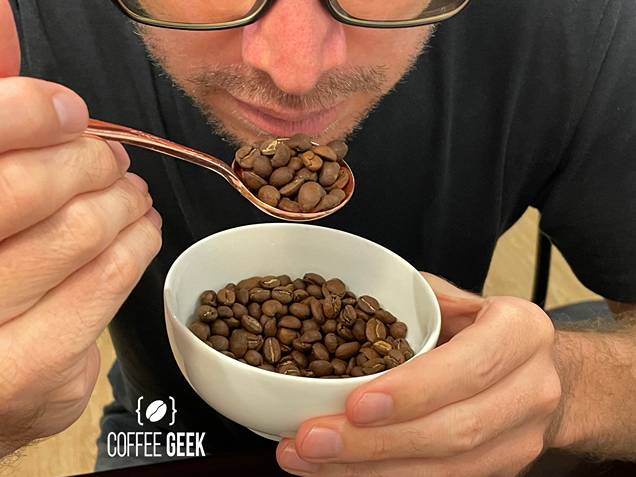
For most healthy adults, eating a small number of plain roasted coffee beans is generally safe. Roasted beans are commonly used in chocolate-covered coffee products, desserts, snack mixes, and confectionery items.
That does not mean unlimited quantities are harmless. A handful of beans can deliver a substantial amount of caffeine, particularly if the beans are small, dense, or made from Robusta coffee, which generally contains more caffeine than Arabica coffee.
Roasted coffee beans versus raw green coffee beans
| Type of coffee bean | Can you eat it? | What to expect |
|---|---|---|
| Roasted whole bean | Yes | Hard, bitter, crunchy, and relatively concentrated in caffeine |
| Green coffee bean | Technically yes | Very hard, grassy, bitter, and difficult to chew |
| Chocolate-covered bean | Yes, in moderation | Adds sugar, fat, calories, and possibly more caffeine from chocolate |
| Ground coffee | Technically edible | Gritty and more likely to irritate the stomach |
| Moldy, damp, or damaged bean | No | Discard it because spoilage or contamination may be present |
Green coffee beans have not gone through roasting. They are usually harder and less pleasant to eat than roasted beans. Green coffee extracts sold in supplements are also different from eating a whole green bean because extracts may provide a concentrated dose.
The greatest practical concern with either type is usually caffeine dose, not toxicity from the bean itself. Still, raw beans can be especially difficult to chew and may pose a choking risk for young children.

How Many Coffee Beans Can You Eat?
There is no universal safe number of coffee beans because caffeine levels differ from bean to bean. The safest approach is to treat whole beans as a concentrated caffeine source and keep your total caffeine intake in mind.
For context, the FDA identifies 400 mg of caffeine per day as an amount generally not linked to dangerous negative effects for most healthy adults. That is a population-level guideline, not a target or guarantee of safety. Some people experience side effects at much lower amounts.
Possible signs that you have consumed too much caffeine include:
- Restlessness or nervousness
- Shaking or tremors
- Insomnia
- Headache
- Fast or pounding heartbeat
- Nausea
- Stomach upset
- Frequent urination
- Anxiety
A practical portion approach
If you are unfamiliar with eating coffee beans, start with one or two plain roasted beans, wait to see how you feel, and avoid combining them with other concentrated caffeine sources. Do not use a fixed bean count as a substitute for a product’s caffeine information.
Check the label when eating packaged products, especially:
- Chocolate-covered espresso beans
- Energy snacks
- Caffeinated trail mixes
- Coffee-flavored candies
- Caffeine-containing supplements
A product can contain caffeine from both coffee and chocolate. Eating several servings may push your total intake much higher than expected.

Are Coffee Beans Bad for Your Stomach?
Coffee beans can cause stomach discomfort because they contain caffeine, acids, oils, and insoluble fiber. Eating the whole bean also places more solid material in the digestive tract than drinking filtered coffee.
You may be more likely to experience discomfort if you:
- Have acid reflux or gastroesophageal reflux disease
- Have a sensitive stomach
- Eat beans on an empty stomach
- Eat a large portion quickly
- Are sensitive to caffeine
- Consume chocolate-covered beans with high fat or sugar content
Potential digestive effects include heartburn, nausea, bloating, abdominal discomfort, and changes in bowel movements. Coffee itself does not affect everyone in the same way, so a person who tolerates brewed coffee may still find whole beans unpleasant.
If coffee beans consistently cause pain, vomiting, severe diarrhea, or significant reflux, stop eating them and discuss the symptoms with a health care professional. Severe or persistent symptoms should not be explained away as ordinary caffeine sensitivity.

How to Eat Coffee Beans More Safely
If you choose to eat coffee beans, use a small portion and select a product intended for food use.
- Choose clean, food-grade beans. Use beans from a sealed food package or a reputable coffee product. Avoid beans that smell musty, show visible mold, or have been exposed to moisture.
- Start with a small amount. One or two beans is a cautious starting point for an adult who already tolerates caffeine.
- Chew carefully. Whole beans are hard. Eat slowly to reduce the risk of choking or damaging a tooth.
- Avoid eating them close to bedtime. Caffeine can remain active for several hours and interfere with sleep.
- Track other caffeine sources. Include coffee, tea, soda, energy drinks, chocolate, pre-workout products, and medications that contain caffeine.
- Do not give them to small children. Whole beans can be a choking hazard, and children are more vulnerable to excessive caffeine.
- Stop if you develop symptoms. Palpitations, severe anxiety, vomiting, or intense stomach pain are reasons to stop consuming caffeine and seek appropriate medical advice.
Grinding the beans does not make the caffeine disappear. It may make them easier to swallow, but it can also encourage you to consume a larger amount quickly.

Who Should Avoid Eating Coffee Beans?
Some people should avoid whole coffee beans or ask a health professional how much caffeine is appropriate for them.
Pregnant or breastfeeding people
The American College of Obstetricians and Gynecologists commonly advises limiting caffeine during pregnancy to less than 200 mg per day. Because coffee beans vary in caffeine content and are easy to underestimate, eating whole beans may make tracking intake more difficult.
People who are breastfeeding should also consider their total caffeine intake and how it may affect them or their infant. Individual guidance is appropriate, particularly if a baby appears unusually restless or has difficulty sleeping.
Children and teenagers
Children and adolescents may be more sensitive to caffeine. Whole coffee beans also present a choking hazard. The American Academy of Pediatrics discourages caffeine for children, and Health Canada recommends limits for children and adolescents based on body weight. Parents and caregivers should avoid giving children coffee beans, chocolate-covered espresso beans, or caffeinated supplements.
People with heart or anxiety conditions
Caffeine can worsen palpitations, jitteriness, and anxiety in some people. If you have a heart rhythm condition, uncontrolled high blood pressure, panic symptoms, or another condition affected by stimulants, ask your clinician before consuming concentrated caffeine.
People taking certain medications
Caffeine may interact with some medicines or make their side effects more noticeable. Ask a pharmacist or clinician if you take prescription stimulants, certain heart medicines, or medications that affect sleep or anxiety.

Coffee Beans Compared With Brewed Coffee
Eating coffee beans and drinking coffee are not equivalent experiences. The best option depends on whether you want flavor, convenience, caffeine, or easier portion control.
| Option | Main advantage | Main limitation |
|---|---|---|
| Whole roasted beans | Strong flavor and crunchy texture | Difficult to measure caffeine and may irritate the stomach |
| Brewed coffee | Easier to portion and dilute | Caffeine still varies by serving and preparation |
| Decaffeinated coffee beans | Coffee flavor with much less caffeine | Not completely caffeine-free |
| Chocolate-covered beans | Sweet snack with coffee flavor | Adds sugar, calories, and caffeine from chocolate |
| Green coffee products | Used in some supplements | Extracts may be concentrated and are not the same as whole beans |
Brewed coffee is generally easier to monitor because the serving size and product label provide more useful information. Whole beans may be appealing as a snack, but they offer less predictable caffeine control.
Decaffeinated beans are not entirely caffeine-free. If you need to avoid caffeine completely, check the product information and ask a health professional when medically necessary.
Common Mistakes to Avoid
The most common mistake is assuming that one coffee bean always equals a fixed amount of caffeine. It does not. Bean size, type, roast, and processing all matter.
Other mistakes include:
- Eating a large handful without checking the product’s caffeine content
- Forgetting that chocolate-covered beans contain caffeine from both ingredients
- Eating coffee beans late at night
- Giving whole beans to a child
- Assuming “natural” means caffeine-free or risk-free
- Using coffee beans to replace a meal
- Eating beans that were stored improperly
- Ignoring palpitations, severe nausea, or other concerning symptoms
If someone consumes a very large amount of caffeine and develops severe symptoms—such as chest pain, confusion, repeated vomiting, seizure, or a very rapid or irregular heartbeat—contact emergency services in the United States. For a suspected poisoning, contact Poison Control at 1-800-222-1222.

Frequently Asked Questions
Can you eat coffee beans straight from the bag?
Yes, if they are clean, food-grade roasted beans. They will be hard and bitter, and you should eat only a small amount while accounting for your total caffeine intake.
Are chocolate-covered coffee beans safe?
They can be safe in moderation for healthy adults, but they contain caffeine from the coffee bean and chocolate. The coating also adds sugar and calories. Check the serving size and avoid them if you need to restrict caffeine.
Do coffee beans give you more energy than coffee?
They may provide a more concentrated dose per bite because you consume the whole bean. However, the actual caffeine amount depends on the bean and portion size. They do not create energy in the nutritional sense; caffeine mainly increases alertness and reduces perceived fatigue temporarily.
Can eating coffee beans help you lose weight?
Eating coffee beans is not a reliable or recommended weight-loss method. Caffeine may have short-term effects on appetite or energy expenditure, but whole beans can add calories when coated in chocolate or sugar. Sustainable weight management depends on overall diet, activity, sleep, and medical factors.
Can dogs eat coffee beans?
No. Keep coffee beans, coffee grounds, brewed coffee, and chocolate-covered beans away from dogs and other pets. Caffeine can be toxic to animals. Contact a veterinarian or an animal poison-control service promptly if a pet consumes them.

Key Takeaways
- Yes, people can eat coffee beans, especially roasted beans intended for food use.
- Whole beans deliver caffeine directly and may be more difficult to portion than brewed coffee.
- Start with a very small amount and monitor your reaction.
- The FDA’s general adult caffeine limit is up to 400 mg per day, but sensitivity varies.
- Pregnant people should generally keep caffeine below 200 mg per day, according to ACOG guidance.
- Children, pets, and people with caffeine-sensitive health conditions should avoid coffee beans or seek professional guidance.
- Chocolate-covered beans may contain more caffeine and calories than expected.
Conclusion
You can eat a coffee bean, but moderation matters. Plain roasted beans are generally edible for healthy adults, yet their caffeine concentration, hard texture, and possible effects on the stomach make them less predictable than brewed coffee. If you decide to try them, choose a clean food-grade product, begin with one or two beans, chew carefully, and include all other caffeine sources in your daily total.
For children, pets, pregnancy, heart conditions, anxiety, medication interactions, or symptoms of excessive caffeine, avoiding whole coffee beans or getting personalized advice is the safer choice.