
For a standard drip coffee maker in the United States, start with 1 to 2 level tablespoons of ground coffee for every 6 fluid ounces of water. A reliable middle point is 1½ tablespoons per 6-ounce coffee-maker cup.
That means a 12-cup American coffee maker usually needs about 18 tablespoons of ground coffee, or roughly 90 to 110 grams. Check your machine’s manual, because many U.S. coffee makers count a “cup” as 5 fluid ounces, not the 8-ounce cup used on nutrition labels.
The best amount depends on the coffee roast, grind, filter, water, and your taste. Use the guide below to find a balanced starting point without wasting coffee.

The quick coffee-to-water ratio
The simplest rule is to measure coffee against the water in the machine, not against the number of mugs you plan to fill.
| Coffee maker size | Water using a 5-fl oz machine cup | Ground coffee to start |
|---|---|---|
| 4-cup maker | 20 fl oz | 6–8 tablespoons |
| 5-cup maker | 25 fl oz | 7½–10 tablespoons |
| 8-cup maker | 40 fl oz | 12–16 tablespoons |
| 10-cup maker | 50 fl oz | 15–20 tablespoons |
| 12-cup maker | 60 fl oz | 18–24 tablespoons |
These amounts use 1½ to 2 tablespoons per 5-ounce coffee-maker cup. For a less strong brew, use the lower number. For a bold brew, use the higher number.
A useful weight-based target is 55 to 65 grams of coffee per liter of water. This follows the general strength range used in specialty coffee brewing standards. A kitchen scale gives more consistent results than a spoon because ground coffee can vary in weight.
A simple starting formula
Use this formula for most automatic drip machines:
Ground coffee needed = water in liters × 55 to 65 grams
Examples:
- 1 liter of water: 55–65 grams of coffee
- 1.25 liters of water: 69–81 grams
- 1.5 liters of water: 83–98 grams
- 1.77 liters, or a typical U.S. 12-cup pot: 97–115 grams
If you do not have a scale, use about 1 level tablespoon for every 3 to 4 fluid ounces of water. This is only an estimate because a tablespoon of coffee may hold more or less depending on the grind and roast.
What does a “cup” mean on a coffee maker?
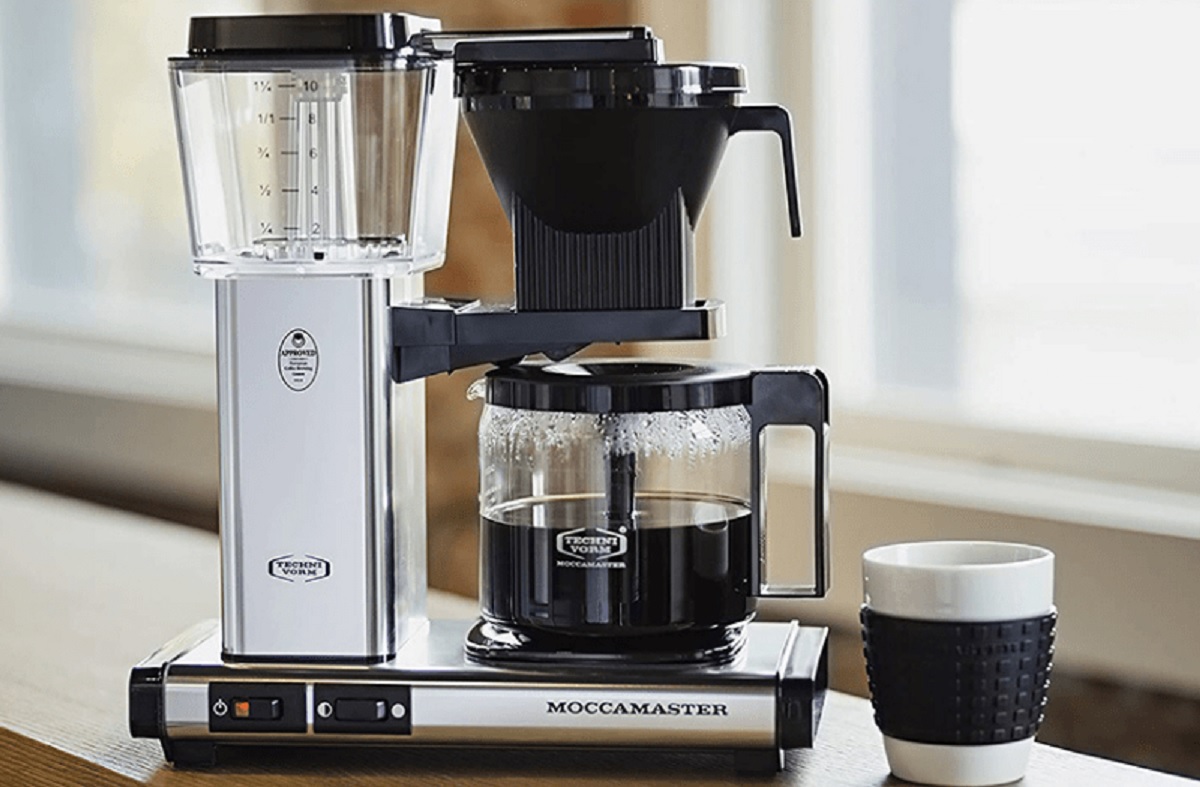
A coffee-maker cup usually means 5 fluid ounces in the United States, although some machines use a different measurement. A normal household mug often holds 8 to 12 fluid ounces.
For example, a 12-cup coffee maker may hold:
- 60 fluid ounces if each machine cup is 5 ounces
- 72 fluid ounces if each machine cup is 6 ounces
- More or less if the manufacturer uses a special reservoir scale
Look at the marks on the water tank or glass carafe. Those marks show how much water the machine is designed to brew.
Do not measure a full 8-ounce mug and assume it equals one coffee-maker cup. If you fill the reservoir to the “6-cup” line, use the coffee amount for six machine cups, even if the finished coffee fills fewer large mugs.
Why the carafe may not fill to the same level
some water stays behind in the coffee grounds, filter, and machine. The brewing process also produces less liquid than the starting water volume.
So, if you add 60 fluid ounces of water, you should not expect exactly 60 fluid ounces of finished coffee. The coffee-maker markings normally account for this design.

How much coffee for a 12-cup coffee maker?
For a typical U.S. 12-cup drip coffee maker, use:
- 18 tablespoons for a lighter cup
- 20 to 21 tablespoons for a balanced starting point
- 24 tablespoons for a stronger pot
- About 100 to 115 grams for a precise measurement
A standard coffee scoop often holds 2 tablespoons. That means a 12-cup machine may need about 9 to 12 level scoops, depending on the scoop size and desired strength.
Many coffee scoops are labeled “1 cup,” but that label may refer to a coffee-maker cup rather than an 8-ounce serving. Read the scoop and machine instructions together.
If your coffee tastes weak at 18 tablespoons, add coffee in small steps. Increase the next batch by 1 or 2 tablespoons, rather than doubling the amount at once.

How much coffee for different coffee maker sizes?
Use the machine’s water marks as your guide. The table below assumes a 5-ounce coffee-maker cup.
| Machine setting | Water volume | Mild coffee | Medium coffee | Strong coffee |
|---|---|---|---|---|
| 4 cups | 20 fl oz | 6 tbsp | 7 tbsp | 8 tbsp |
| 6 cups | 30 fl oz | 9 tbsp | 10–11 tbsp | 12 tbsp |
| 8 cups | 40 fl oz | 12 tbsp | 14 tbsp | 16 tbsp |
| 10 cups | 50 fl oz | 15 tbsp | 17–18 tbsp | 20 tbsp |
| 12 cups | 60 fl oz | 18 tbsp | 20–21 tbsp | 24 tbsp |
These figures are starting points, not fixed laws. Dark-roast coffee often tastes stronger even when it contains the same amount of grounds. Light-roast coffee may taste sharper or more acidic and may need a slightly different recipe.
If your machine has a 6-ounce cup scale, use about 1½ tablespoons per machine cup for a balanced starting point.

How to measure coffee correctly
For the most consistent pot, measure both the water and coffee carefully.
- Check the machine’s cup size. Read the marks on the carafe or water tank.
- Fill the reservoir with fresh, cold water. Use the amount needed for the number of cups you want.
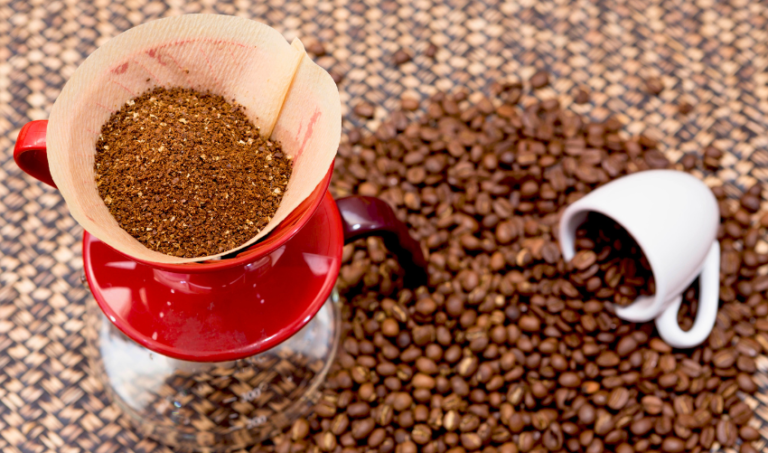
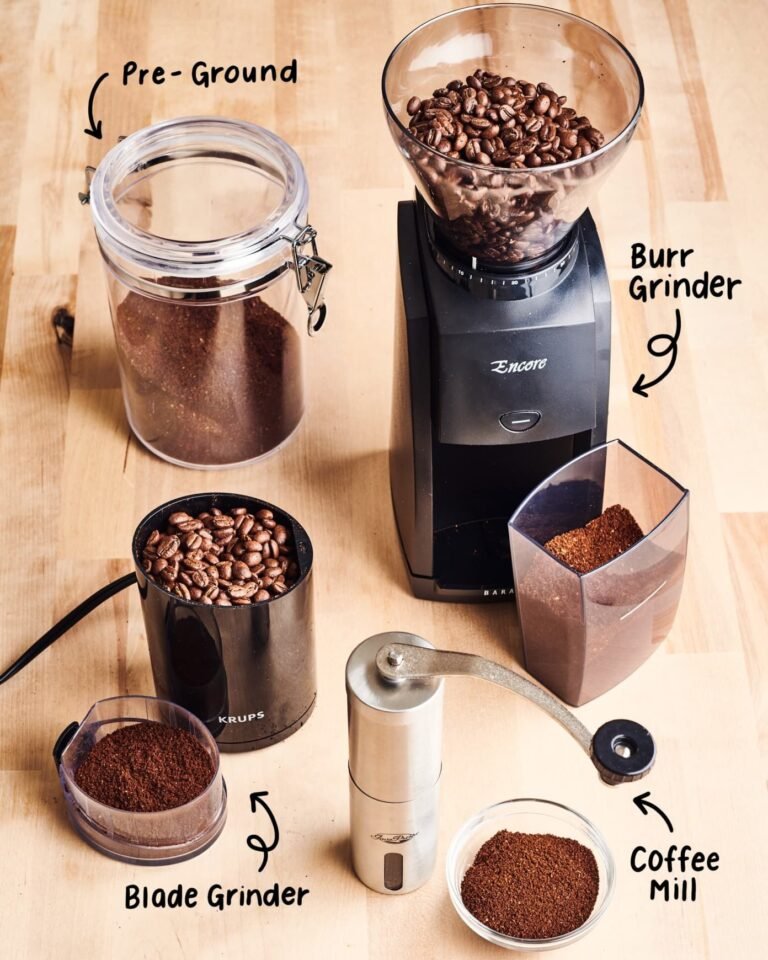
- Use medium-ground coffee. This grind suits most automatic drip coffee makers.
- Measure level tablespoons or scoops. Do not pack the grounds down.
- Place the filter correctly. Use the filter size recommended by the machine.
- Brew the coffee. Keep the lid closed during the cycle.
- Taste the result. Adjust the coffee amount before changing several variables at once.
A scale is the best tool when you want repeatable results. Weigh the beans before grinding or weigh the grounds after grinding. A ratio of 1 gram of coffee to about 15–18 grams of water is a useful range for drip coffee.
For example, if your machine uses 1,500 grams of water, try:
- 83 grams for a lighter brew
- 90 grams for a balanced brew
- 100 grams for a stronger brew
Water weighs close to 1 gram per milliliter, so 1,500 milliliters of water is about 1,500 grams.
How coffee strength changes the amount you use
Add more coffee when the brewed coffee tastes thin, watery, or bland. Use less when it tastes harsh, bitter, or too heavy.
Coffee strength is not the same as extraction. Strength describes how concentrated the drink tastes. Extraction describes how much flavor the water removes from the grounds.
Changing the coffee amount mainly changes strength. Changing the grind, water temperature, or brew time can change extraction.
If the coffee tastes weak
Try these checks:
- Add 1–2 tablespoons more coffee.
- Confirm that the filter is not too large for the basket.
- Use fresh coffee.
- Check that the machine is brewing all the water.
- Avoid using an extra-large mug as the measurement for a machine cup.
If the coffee is weak but also sour, the grind may be too coarse or the machine may not be extracting enough flavor. More coffee can make the drink stronger, but it may not fix the underlying brewing problem.
If the coffee tastes bitter
Try these changes:
- Reduce the coffee slightly.
- Use a medium grind instead of a very fine grind.
- Avoid leaving brewed coffee on a hot plate for a long time.
- Clean mineral buildup from the machine.
- Try a lighter roast if you dislike dark, smoky flavors.
Do not use an extremely fine grind in a standard drip machine. It can slow the flow of water and produce an over-extracted, bitter cup.
Does roast level change how much coffee to use?
Yes, but not always by a large amount.
Light-roast beans are denser than dark-roast beans because dark roasting removes more moisture and causes the beans to expand. If you measure by scoops, the same volume of light-roast coffee may weigh more than dark-roast coffee.
For this reason, weight is more reliable than volume. If you use tablespoons, begin with the same amount and adjust by taste. You may prefer slightly less dark roast because its flavor can seem more intense, while light roast may benefit from a little more coffee or a finer grind.
The type of bean also matters. Arabica and robusta coffees, flavored coffee, decaf coffee, and blends can all taste different at the same dose.
Does grind size affect the right amount?
Yes. Use a medium grind for most automatic drip coffee makers.
A grind that is too coarse can make coffee taste weak or sour because water passes through it too quickly. A grind that is too fine can make coffee taste bitter and may slow the brew.
Keep the dose steady while testing the grind. If you change the coffee amount and grind at the same time, it becomes hard to know what fixed the problem.
For pre-ground coffee, choose coffee labeled for drip, automatic drip, or flat-bottom filter brewing. Espresso-ground coffee is usually too fine for a standard coffee maker.
Tablespoons, scoops, and grams: which measure is best?
Grams are best for repeatable results. Tablespoons are convenient, but they are less exact.
A rough guide is:
- 1 level tablespoon: about 5–7 grams
- 1 level 2-tablespoon scoop: about 10–14 grams
- 100 grams: about 15–20 tablespoons
The actual weight depends on the bean, roast, grind, and how tightly the grounds sit in the spoon. A heaping spoon can contain much more coffee than a level spoon.
When a recipe says “one scoop,” check the scoop’s volume. Some scoops hold 1 tablespoon, while others hold 2 tablespoons. The word “scoop” alone is not a precise measurement.
Common mistakes when measuring coffee
The most common mistake is treating the machine’s cup mark as an 8-ounce cup. This can lead to too little coffee and a weak pot.
Other mistakes include:
- Using a heaping spoon each time
- Changing coffee, water, and grind at the same time
- Filling the basket above its safe capacity
- Using coffee that has lost much of its aroma
- Using a dirty machine with mineral buildup
- Leaving coffee on the hot plate until it tastes burnt
- Adding coffee based on mug size instead of reservoir volume
- Assuming dark roast always contains more caffeine
A clean machine can improve flavor as much as a small change in the recipe. Follow the manufacturer’s cleaning instructions, especially if the machine has a built-in filter, thermal carafe, or special brew setting.
Coffee maker measurement cheat sheet
Use this quick guide when you want a simple answer:
- 1 5-ounce machine cup: 1½–2 tablespoons
- 2 machine cups: 3–4 tablespoons
- 4 machine cups: 6–8 tablespoons
- 6 machine cups: 9–12 tablespoons
- 8 machine cups: 12–16 tablespoons
- 10 machine cups: 15–20 tablespoons
- 12 machine cups: 18–24 tablespoons
For a balanced first batch, choose the middle of each range. Taste the coffee and adjust by one tablespoon at a time.
If you prefer precise brewing, use 55–65 grams of coffee per liter of water and record the result. Your notes can include the coffee brand, roast, grind, water amount, coffee weight, and taste. This turns guesswork into a repeatable recipe.
Frequently asked questions
Is one tablespoon of coffee enough for one cup?
It may be enough for a mild brew, but many people prefer 1½ to 2 tablespoons per 5–6 fluid ounces of water. A level tablespoon can also hold different amounts depending on the grind, so use taste or weight to refine the recipe.
How much coffee do I use for 4 cups?
For a typical U.S. coffee maker, use about 6 to 8 tablespoons of ground coffee for the 4-cup line. Start with 7 tablespoons for a medium-strength pot.
How much coffee do I use for 8 cups?
Use about 12 to 16 tablespoons for the 8-cup line on a standard 5-ounce-per-cup machine. Begin with 14 tablespoons if you want a balanced brew.
Can I use coffee beans instead of ground coffee?
Yes. Grind the beans to a medium texture just before brewing. Measure the grounds after grinding, or weigh the beans before grinding. Use the same total coffee weight either way.
Does adding more coffee make coffee stronger?
Usually, yes. More grounds create a more concentrated drink, but they cannot correct every problem. If the coffee is sour, bitter, stale, or poorly extracted, adjust the grind, freshness, water, or machine cleaning as well.
Final recommendation
For a U.S. automatic drip coffee maker, begin with 1½ tablespoons of medium-ground coffee per 5-ounce machine cup. For a typical 12-cup pot, that is about 18 tablespoons, or roughly 100 grams.
Use more for a bold cup and less for a mild one. For the most consistent result, measure water by the carafe markings and coffee by weight, then adjust only one part of the recipe at a time.

One Comment