For most pour-over coffee, start with 60 grams of coffee per 1,000 grams of water. This is a 1:16 coffee-to-water ratio.
That means:
- 15 grams of coffee for 240 grams of water
- 18 grams of coffee for 288 grams of water
- 20 grams of coffee for 320 grams of water
- 25 grams of coffee for 400 grams of water
- 30 grams of coffee for 480 grams of water
For a typical coffee setup in a U.S. kitchen, 20 grams of coffee and 320 grams of water is a useful starting point for one large mug. Use a scale for the most repeatable results.

The Best Starting Ratio for Pour-Over Coffee
The best starting point is usually 1 gram of coffee for every 15 to 17 grams of water. Coffee drinkers often write this as a ratio, such as 1:15, 1:16, or 1:17.
A 1:16 ratio is a balanced middle point:
Coffee dose × 16 = water weight
For example:
- 15 grams of coffee × 16 = 240 grams of water
- 20 grams of coffee × 16 = 320 grams of water
- 25 grams of coffee × 16 = 400 grams of water
Water weight and water volume are close enough for everyday brewing because 1 gram of water is about 1 milliliter. Still, weighing both coffee and water gives better control than using a scoop or measuring cup.
Which ratio should you use?
| Ratio | Flavor effect | Good starting point for |
|---|---|---|
| 1:15 | Stronger and fuller | Darker roasts or milk drinks |
| 1:16 | Balanced | Most light and medium roasts |
| 1:17 | Lighter and more delicate | Bright coffees or large brews |
These ratios are starting points, not strict rules. Bean size, roast level, grind size, filter type, and pouring style all affect the final cup.
A common professional brewing reference uses about 55 grams of coffee per liter of water, with an accepted range around that level. Home pour-over recipes often fall near this range, especially when using ratios from 1:15 to 1:17.

Pour-Over Coffee Gram Chart
Use this chart when you want a quick answer without doing the math.
| Water | Coffee at 1:15 | Coffee at 1:16 | Coffee at 1:17 |
|---|---|---|---|
| 200 g | 13 g | 12.5 g | 12 g |
| 240 g | 16 g | 15 g | 14 g |
| 300 g | 20 g | 19 g | 18 g |
| 320 g | 21 g | 20 g | 19 g |
| 400 g | 27 g | 25 g | 24 g |
| 500 g | 33 g | 31 g | 29 g |
| 600 g | 40 g | 38 g | 35 g |
| 1,000 g | 67 g | 63 g | 59 g |
The values are rounded to make home brewing easier. If your recipe uses 320 grams of water, start with 20 grams of coffee. If you want a stronger cup, use about 21 grams. For a lighter cup, use about 19 grams.
How much coffee is in a standard U.S. cup?
A U.S. measuring cup holds 8 fluid ounces, or about 237 milliliters. In coffee brewing, however, people often call a 10- to 12-ounce mug a “cup.”
For one 8-ounce serving, try:
- 15 grams of coffee
- 240 grams of water
- A 1:16 ratio
For one 12-ounce mug, try:
- 22 to 23 grams of coffee
- 350 to 370 grams of water
- A 1:16 ratio
The brewed coffee weighs less than the water you pour because the grounds hold some water. This is normal. A 320-gram brew may produce roughly 270 to 290 grams of coffee, depending on the coffee bed and filter.

How to Calculate the Right Coffee Dose
You can calculate the coffee dose in two simple ways.
When you know the water amount
Divide the water weight by your chosen ratio:
Coffee grams = water grams ÷ ratio
Example:
- Water: 400 grams
- Ratio: 1:16
- Calculation: 400 ÷ 16 = 25 grams
Use 25 grams of coffee.
When you know the coffee amount
Multiply the coffee dose by the ratio:
Water grams = coffee grams × ratio
Example:
- Coffee: 18 grams
- Ratio: 1:16
- Calculation: 18 × 16 = 288 grams
Use 288 grams of water.
A quick mental method
For a 1:16 recipe, multiply the coffee dose by 10, then add half of that amount and a little more.
For example, 20 grams of coffee:
- 20 × 10 = 200
- Half of 20 = 10
- Add another 10
- Total = 320 grams of water
A scale still gives better accuracy, but this method helps when you need a fast estimate.

How to Brew Pour Over With the Correct Amount
You need four basic items:
- Pour-over dripper
- Paper filter
- Fresh coffee beans
- Digital scale
- Kettle and hot water
A gooseneck kettle can make pouring easier, but it is not required.
Step 1: Choose the coffee dose
Start with 20 grams of coffee for a medium-to-large mug. Grind the beans to a medium-fine texture, often similar to table salt.
Step 2: Measure the water
Measure 320 grams of water for a 1:16 ratio. Heat it to about 195°F to 205°F, or 90°C to 96°C.
Dark roasts may taste better with slightly cooler water. Light roasts often need more heat to extract enough flavor.
Step 3: Rinse the paper filter
Place the filter in the dripper and rinse it with hot water. This can reduce paper taste and warm the brewer.
Discard the rinse water before adding coffee.
Step 4: Add and level the grounds
Place the ground coffee in the filter. Give the dripper a gentle shake so the coffee bed is level.
A flat bed helps water pass through the grounds more evenly.
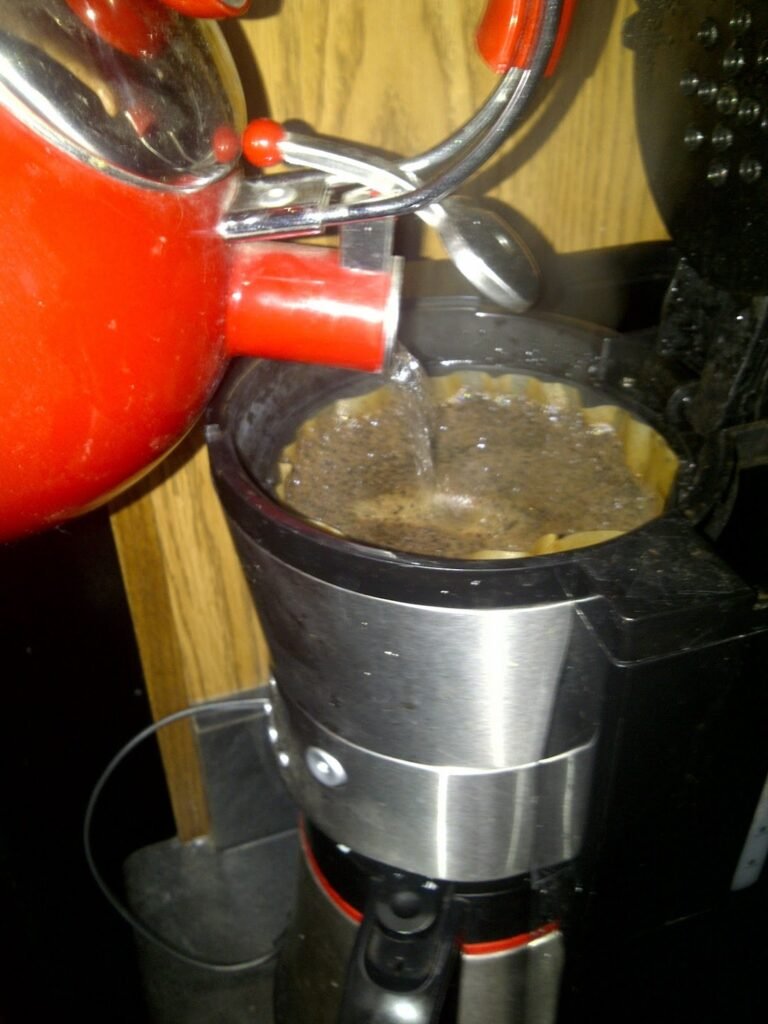
Step 5: Bloom the coffee
Pour about 40 to 60 grams of water over the grounds. Make sure all the coffee is wet.
Wait 30 to 45 seconds. This first pour lets trapped gas escape. Fresh coffee may rise and foam during the bloom.
Step 6: Finish the pour
Pour the remaining water in slow, controlled circles. For a 20-gram dose and 320 grams of water, you might use:
- Bloom to 50 grams
- Pour to 160 grams
- Pour to 240 grams
- Finish at 320 grams
You do not need to copy this exact pattern. Keep the coffee bed wet and avoid pouring hard against the paper.
Step 7: Check the brew
A total brew time of about 2½ to 4 minutes can work well for many pour-over brewers. The correct time depends on the dripper, grind, dose, filter, and coffee.
Taste the coffee after it cools for a few minutes. Flavor matters more than time alone.

How to Adjust the Grams for Taste
The amount of coffee changes strength. Grind size and brew time change extraction.
This difference matters:
- Strength means how concentrated the drink tastes.
- Extraction means how much flavor the water removes from the grounds.
Adding more coffee usually makes the drink stronger. Grinding finer usually increases extraction and can make the cup taste more developed.
If the coffee tastes weak
Try one change at a time:
- Use a stronger ratio, such as 1:15
- Add 1 to 2 grams of coffee
- Use less water
- Grind slightly finer if the coffee also tastes sour or thin
Do not change every variable at once. You may lose track of what fixed the problem.
If the coffee tastes too strong
Try:
- A weaker ratio, such as 1:17
- 1 to 2 fewer grams of coffee
- More water after brewing
- A slightly coarser grind if the cup tastes bitter or dry
Adding hot water after brewing can lower strength without changing the extraction that already took place.
Use flavor as your guide
| Taste | Possible cause | First adjustment |
|---|---|---|
| Sour, sharp, or thin | Under-extraction | Grind finer or use hotter water |
| Bitter, harsh, or dry | Over-extraction | Grind coarser or use cooler water |
| Weak but pleasant | Too little strength | Use more coffee or less water |
| Strong but pleasant | Too much strength | Use less coffee or more water |
| Uneven, both sour and bitter | Uneven flow | Improve pouring and level the bed |
These are clues, not guaranteed diagnoses. Coffee can taste sour because of the bean itself, and some bitterness may come from a dark roast rather than the recipe.

Does Roast Level Change the Amount of Coffee?
Roast level can change how much coffee you need, but the effect is usually smaller than many people expect.
Light-roasted coffee is often dense and firm. It may need a finer grind, hotter water, or a longer brew to release enough flavor.
Dark-roasted coffee is more brittle and often extracts faster. It may taste better with a coarser grind, slightly cooler water, or a 1:16 to 1:17 ratio.
Start with the same weight for either roast. For example, use 20 grams of coffee and 320 grams of water. Then adjust by taste.
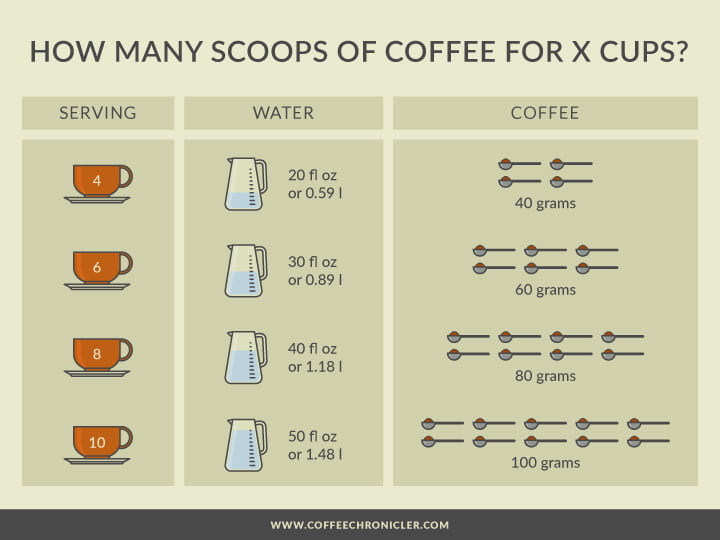
Do not measure beans by scoops when switching roast levels. A scoop holds volume, but different beans have different densities. The same scoop can contain different weights.
How Grind Size, Water, and Filters Affect the Dose
The coffee dose is only one part of a pour-over recipe.
Grind size
A finer grind exposes more surface area to water. This often increases extraction and slows the brew.
A coarser grind allows water to pass more quickly. This can reduce extraction and make the cup taste thin if it becomes too coarse.
Make small changes. One or two clicks on a grinder may be enough.
Water temperature
Hotter water usually extracts flavor faster. Cooler water extracts more slowly.
A practical range is 195°F to 205°F. Start near the middle, then adjust based on the roast and taste.
Water quality
Very hard or heavily treated water can mute flavor. Water with a strong smell or taste can also affect the cup.
Use clean drinking water. If you use filtered water, keep the mineral content consistent so your recipe stays repeatable.
Filter and dripper shape
A thick paper filter may slow the brew. A thin filter may allow faster flow.
Flat-bottom and cone-shaped brewers also behave differently. A recipe that works in a V-shaped cone may need a different grind or pour pattern in a flat-bottom brewer.
Because of these differences, the same dose can brew well in one dripper and poorly in another.
Common Pour-Over Mistakes
Most poor pour-over results come from measurement or flow problems, not from using the “wrong” number of grams.
Using a scoop instead of a scale
Scoops measure volume. Coffee beans vary in size and density.
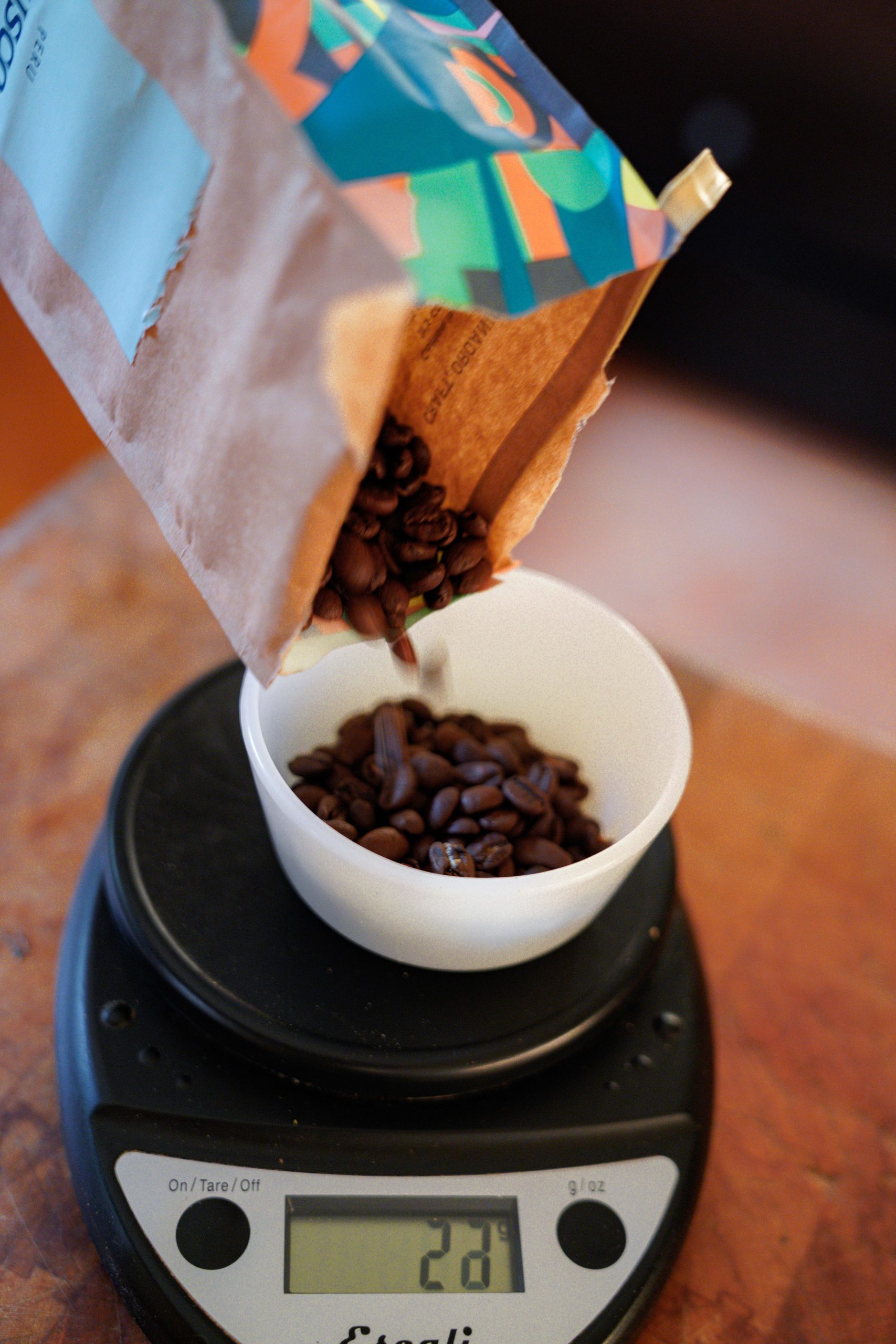
Better approach: weigh the beans before grinding. Weigh the water as you pour.
Confusing fluid ounces with coffee ounces
A U.S. fluid ounce measures volume. A coffee recipe written in ounces may mean water weight, liquid volume, or cup size.
Better approach: use grams for both coffee and water.
Changing the ratio and grind at the same time
If you change two variables, you cannot tell which one caused the result.
Better approach: change the ratio first if the coffee is too strong or weak. Change grind size when the flavor suggests an extraction issue.
Pouring too fast
A fast pour can cause water to rush through part of the coffee bed. Other grounds may remain dry.
Better approach: pour in controlled circles and keep the bed evenly wet.
Ignoring the coffee age
Very fresh coffee releases a lot of gas. This can make the bed foam and slow the brew.
Better approach: let the coffee rest after roasting, follow a longer bloom, and judge the cup by taste.
Chasing an exact brew time
Time is useful, but it is not the final goal.
Better approach: use time to spot changes. Let taste decide whether the recipe needs adjustment.

A Simple Recipe to Start With
Use this recipe if you want one clear starting point:
- Coffee: 20 grams
- Water: 320 grams
- Ratio: 1:16
- Water temperature: 200°F
- Grind: Medium-fine
- Bloom: 50 grams for 30 to 45 seconds
- Total brew time: About 3 to 4 minutes
If the coffee tastes sour and thin, grind a little finer. If it tastes bitter and dry, grind a little coarser.
If the flavor is good but the drink is too strong, use 330 to 340 grams of water next time. If it is too weak, use 20 to 21 grams of coffee or reduce the water.

Frequently Asked Questions
Is 15 grams of coffee enough for pour over?
Yes. Use about 240 grams of water with 15 grams of coffee at a 1:16 ratio. This makes a small serving of roughly 8 U.S. fluid ounces before accounting for water left in the grounds.
How many grams of coffee do I need for two cups?
For two small servings, use about 30 grams of coffee and 480 grams of water. For two larger mugs, use 40 grams of coffee and 640 grams of water.
Large batches may need a coarser grind or a different pour pattern because a deeper coffee bed drains more slowly.
Can I use tablespoons instead of grams?
You can, but the result will be less precise. One level tablespoon may hold roughly 5 to 7 grams of ground coffee, depending on grind size and density.
For repeatable coffee, a scale is better than a tablespoon.
Should I weigh coffee before or after grinding?
Weigh the beans before grinding. If some grounds stay in the grinder, weigh the ground coffee again and adjust if needed.
The key is to know how much coffee reaches the filter.
Is a 1:15 ratio stronger than a 1:17 ratio?
Yes. A 1:15 ratio uses more coffee for the same amount of water, so the brewed coffee is usually more concentrated.
A 1:17 ratio uses less coffee and usually tastes lighter. It may still taste rich if the coffee is well extracted.
How many grams of coffee are in a 12-ounce pour over?
For a 12-ounce U.S. mug, use about 22 to 23 grams of coffee with 350 to 370 grams of water at a 1:16 ratio.
The exact amount depends on how full you want the mug and how much coffee your filter retains.
Conclusion
Start your pour-over recipe with 20 grams of coffee for 320 grams of water. That 1:16 ratio works as a balanced baseline for many coffees and brewers.
Use 1:15 for a stronger cup and 1:17 for a lighter cup. Weigh both ingredients, keep the grind and pour steady, and change one variable at a time. The best recipe is the one that produces a cup you enjoy.