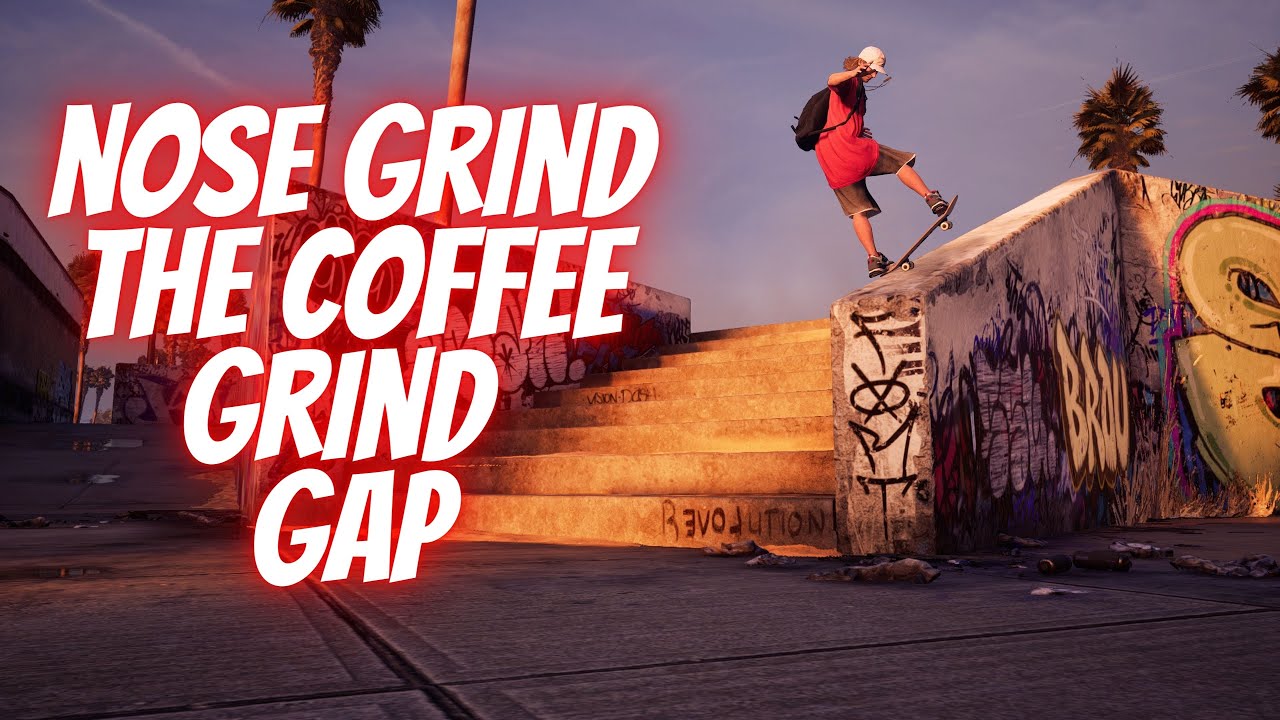
To nose grind the Coffee Grind Gap in Skate 3, approach the gap with enough speed, ollie before the edge, and hold the right stick toward the nose of the board while you clear the gap. Keep the stick held until the grind registers, then release it and land safely.
The challenge is less about a huge ollie and more about timing. You need to start the nose grind over the correct part of the gap, not too early or too late.

What You Need Before Trying the Coffee Grind Gap
You need three things:
- A clear run-up
- Enough speed to cross the gap
- A clean line toward the grind surface
The Coffee Grind Gap challenge normally requires a nose grind, not a simple ollie or a regular grind. In a nose grind, the front of the skateboard rests on the ledge or rail while the rear wheels stay lifted.
The exact button layout can change with your control scheme, console, or game settings. On the standard Skate 3 controls, the right stick controls most grind tricks. Pushing the right stick toward the nose of the board selects the nose-grind motion.
Before attempting the gap, check that:
- Your skater starts far enough away to build speed.
- The camera gives you a clear view of the landing.
- You are lined up with the ledge or grind zone.
- You have enough room to land after the gap.
A poor approach often looks like a trick problem, but it is usually a speed or alignment problem.
Skate 3 Controls for a Nose Grind
The basic sequence is:
- Push toward the gap to gain speed.
- Crouch by pulling the left stick down.
- Release or flick the left stick up to ollie.
- As the board rises, push the right stick toward the nose.
- Keep the right stick in that position as you reach the ledge.
- Release the trick input before landing.
- Use the left stick to guide the board toward the landing.
On the standard control layout, the nose-grind input is usually:
- Regular stance: Push the right stick up.
- Switch stance: The visual direction may feel reversed, so watch the board rather than relying only on the stick direction.
The key point is to use the right stick while you are airborne. If you push it too early, you may perform a different trick before the board reaches the ledge. If you push it too late, the board may miss the grind zone.

Step-by-Step Method
1. Start with a straight approach
Begin on a line that points directly toward the part of the gap where the grind must begin. Avoid a sharp turn just before the obstacle.
A straight approach gives you better control over:
- Speed
- Board angle
- Ollie height
- Landing direction
If the game keeps giving you a regular grind, your approach may be too far to one side.
2. Build steady speed
Push several times before the gap, but do not sprint so fast that you lose control. You need enough speed to pass over the gap and reach the landing.
A useful test is to ride toward the obstacle without trying the trick. If you cannot comfortably clear the distance with a normal ollie, add more speed or move your starting point farther back.
3. Ollie before the edge
Crouch with the left stick, then flick it up to pop the board. Ollie early enough for the board to rise before reaching the grind surface.
Do not wait until the front wheels are already at the edge. Late ollies often cause one of three failures:
- The board clips the near edge.
- The nose reaches the ledge too low.
- The skater lands short of the far side.
The best pop point is usually a short distance before the beginning of the grind zone. Adjust this distance after watching one failed attempt.
4. Select the nose grind in the air
As soon as the board is airborne, push the right stick toward the nose. Keep the input steady rather than flicking it repeatedly.
You should see the front of the board move toward the ledge. The rear wheels should lift as the nose makes contact.
If the game displays the trick name, look for Nosegrind or Nose Grind. A 5-0, crooked grind, or regular grind will not satisfy a nose-grind challenge.
5. Hold the grind across the required section
Keep the board aligned with the ledge while the skater slides across it. Small steering changes with the left stick can help, but large movements may pull the board off the grind.
Do not release the right stick as soon as the board touches the ledge. The game may need the nose grind to travel across a set distance before it counts.
6. Release and prepare for the landing
Release the grind input near the end of the ledge. Then guide the board toward the landing with the left stick.
Aim to land with both trucks level. A nose-heavy landing can cause a slam, especially if the landing slopes down or if you release the trick too late.

The Best Timing for the Trick
The most reliable timing is:
| Phase | Input | Goal |
|---|---|---|
| Approach | Push forward | Build controlled speed |
| Pop | Left stick down, then up | Start the ollie |
| Trick | Right stick toward the nose | Select the nose grind |
| Slide | Hold the trick input | Stay on the grind surface |
| Landing | Release and steer | Land beyond the gap |
Think of the move as three separate actions:
- Ollie over the gap
- Place the nose on the grind surface
- Exit into the landing
Trying to do all three at once often makes the timing feel random. Separate each phase and the challenge becomes easier to repeat.
Why the Nose Grind Is Not Registering
If the challenge does not count, identify what happened during the attempt. The visual result usually points to the cause.
You performed a regular grind
Symptom: The board locks onto the ledge, but the game shows a standard grind.
Likely cause: The right stick was not pushed toward the nose at the correct time.
Fix: Ollie first, then push the right stick toward the nose while airborne. Do not hold a neutral or side input.
You landed on the ledge but did not grind
Symptom: The board touches the edge and immediately falls.
Likely cause: You reached the ledge with too little height, too much angle, or poor alignment.
Fix: Start the ollie slightly earlier. Approach more straight-on and add a little speed.
You missed the gap completely
Symptom: The skater clears the first edge but lands before the far side.
Likely cause: The approach speed is too low, or the ollie began too late.
Fix: Move farther back, gain more speed, and pop before the edge.
You grind but fall before the challenge completes
Symptom: The nose grind begins, but the skater drops before reaching the end.
Likely cause: You released the input too soon or drifted away from the ledge.
Fix: Hold the nose-grind input longer and use smaller steering movements.
The game gives you a different nose trick
Symptom: The game shows a crooked grind, nose slide, or another trick.
Likely cause: The board was rotated or angled during the ollie.
Fix: Keep the approach straight. Avoid unnecessary body rotation until the grind is locked in.

A Simple Practice Method
If the challenge feels inconsistent, practice the parts separately.
Practice the approach
Ride toward the gap several times without attempting a grind. Learn the correct pop point and note where the skater lands.
Practice the nose grind nearby
Find a shorter ledge and perform a nose grind without crossing a gap. This helps you learn the right-stick timing.
Combine the two actions
Once the approach and grind feel familiar, return to the Coffee Grind Gap. Use the same speed and pop point from your practice runs.
Use the replay camera
After a failed attempt, check whether:
- The nose reached the ledge first
- The rear wheels stayed lifted
- The skater traveled far enough
- The landing was beyond the gap
A replay often shows that the trick was correct but started at the wrong point.
Regular Stance and Switch Stance
Your stance changes how the trick feels. A regular nose grind and a switch nose grind are still nose grinds, but the board may respond differently depending on the direction of travel.
For the easiest attempt:
- Use your natural stance.
- Approach in the direction that gives you the clearest view.
- Avoid switch unless the challenge or line requires it.
- Watch the board animation instead of memorizing one stick direction.
If you are unsure which way to push the right stick, test the input on a nearby ledge. The correct input should lift the rear of the board and place the nose down.
Camera and Line Choice
The camera can make the challenge easier or harder. A low or angled view may hide the exact moment when the nose reaches the ledge.
Try to use a camera angle that shows:
- The full run-up
- The pop point
- The grind surface
- The far landing
A centered camera is often more useful than a dramatic side view. You do not need the most stylish angle; you need to see the board clearly.
If the gap has more than one possible line, choose the route with the widest landing. A slightly longer line is often easier than a short line that demands perfect alignment.
Common Mistakes to Avoid
Popping too close to the edge
This leaves too little time to set the nose grind. Start the ollie before the board reaches the gap.
Holding the wrong stick
The left stick controls movement and steering. The right stick selects the trick. Mixing them up can turn a planned nose grind into an ollie or a different grind.
Rotating during the ollie
A body rotation can change the board angle and prevent the nose from meeting the ledge squarely. Keep the board straight until the grind begins.
Using too much speed
More speed is not always better. Excess speed can make the skater overshoot the landing or slide off the ledge.
Releasing the input too soon
A brief nose touch may look right but may not meet the challenge requirement. Hold the grind until the game recognizes the full move.
Ignoring stance
The same stick motion may feel different in regular and switch. Confirm the animation instead of assuming the input failed.
What Counts as a Successful Attempt?
A successful Coffee Grind Gap attempt should show:
- A clean ollie before the gap
- The front of the board contacting the grind surface
- The rear wheels lifted during the trick
- A visible nose-grind trick label or score
- Enough grind distance to satisfy the challenge
- A controlled landing on the far side
If the challenge still does not complete, repeat the trick with a slightly earlier pop and a straighter line. Small timing changes usually solve the issue faster than changing the entire approach.
Can You Complete It With a Different Grind?
No. A regular grind, 5-0, boardslide, or nose slide may look similar, but the game checks the trick type. The challenge requires a nose grind.
A nose slide is especially easy to confuse with a nose grind. In a nose slide, the underside of the board slides on the ledge. In a nose grind, the nose and front truck area support the trick while the rear wheels remain raised.
Is the Challenge Easier With Speed Wobble or Hardcore Mode Off?
Yes, for many players. A more forgiving physics setting can make it easier to maintain balance and recover from small alignment errors. However, the core timing remains the same.
If you are learning the trick, use the setting that gives you the most control. Once the trick works consistently, you can retry it under stricter settings if the game requires that condition.
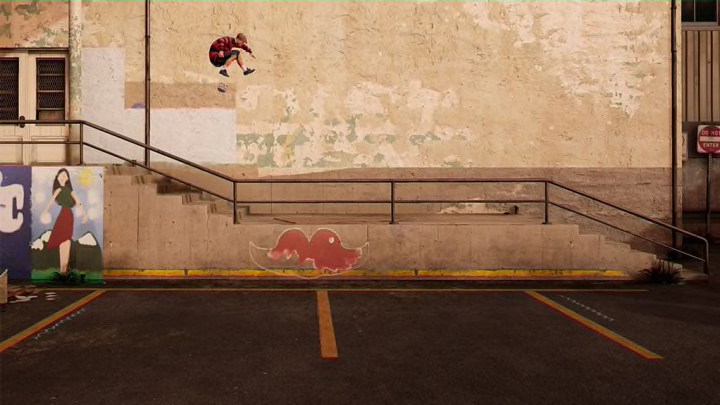
Quick Troubleshooting Checklist
Before your next attempt, check these points:
- Are you using the standard control layout?
- Are you approaching in a straight line?
- Do you have enough speed to clear the gap?
- Are you popping before the edge?
- Are you pushing the right stick toward the nose while airborne?
- Are you holding the grind long enough?
- Are you releasing the input before landing?
- Is the camera showing the full gap?
- Are you using regular stance when possible?
Change only one variable at a time. If you change speed, camera, stance, and pop point together, it becomes hard to know what fixed the problem.
Frequently Asked Questions
What button does a nose grind use in Skate 3?
On the standard controls, perform an ollie with the left stick, then push the right stick toward the nose of the board while airborne. Control settings can change the exact feel, so confirm your layout in the options menu.
Do I need to grind the entire Coffee Grind Gap?
You need to grind far enough for the game to recognize the challenge. A quick touch may not count. Hold the nose grind until the skater reaches the required section, then release for the landing.
Why do I keep doing a nose slide instead?
You may be landing the underside of the board on the ledge instead of placing the front truck and nose into a grind position. Approach more squarely and select the nose-grind input immediately after the ollie.
What is the best speed for the Coffee Grind Gap?
Use enough speed to clear the distance, but avoid going so fast that you overshoot the landing. Start with a moderate run-up and add speed only if you land short.
Can I do the challenge in switch stance?
You may be able to, depending on the challenge setup and line. Regular stance is usually simpler for learning because the board movement feels more familiar. If switch produces a different trick, check the visual input direction and your control settings.
Final Answer
The easiest way to nose grind the Coffee Grind Gap is to approach straight, build moderate speed, ollie before the edge, and push the right stick toward the nose while airborne. Hold the input through the grind, then release it before landing.
If it fails, adjust the pop point first. An early, straight ollie fixes most missed nose grinds.