
If you are in the United States and do not have a coffee grinder, you can grind whole coffee beans in a food processor. The best method is to use short pulses, small batches, and frequent shakes. This gives you a usable grind for drip coffee, a French press, or cold brew.
A food processor will not make grounds as even as a burr coffee grinder. Still, it can work well in a pinch. The key is to avoid running the blade for too long. Long runs create heat and a mix of fine powder and large pieces.

Can You Grind Coffee Beans in a Food Processor?
Yes, you can grind coffee beans in most standard food processors. The sharp blade breaks the beans into smaller pieces. It does not grind them as evenly as a burr grinder, but the result is suitable for many brewing methods.
A food processor works much like a blade coffee grinder. It cuts and smashes the beans instead of crushing them between two controlled surfaces. This is why the grounds vary in size.
A food processor is most useful when:
- You need coffee now.
- You only make coffee from time to time.
- You need a coarse grind for a French press or cold brew.
- You do not want to buy another kitchen tool.
Check the food processor manual before use. Some models may have limits on hard or dry foods. Also, make sure the bowl, lid, and blade are clean and dry.
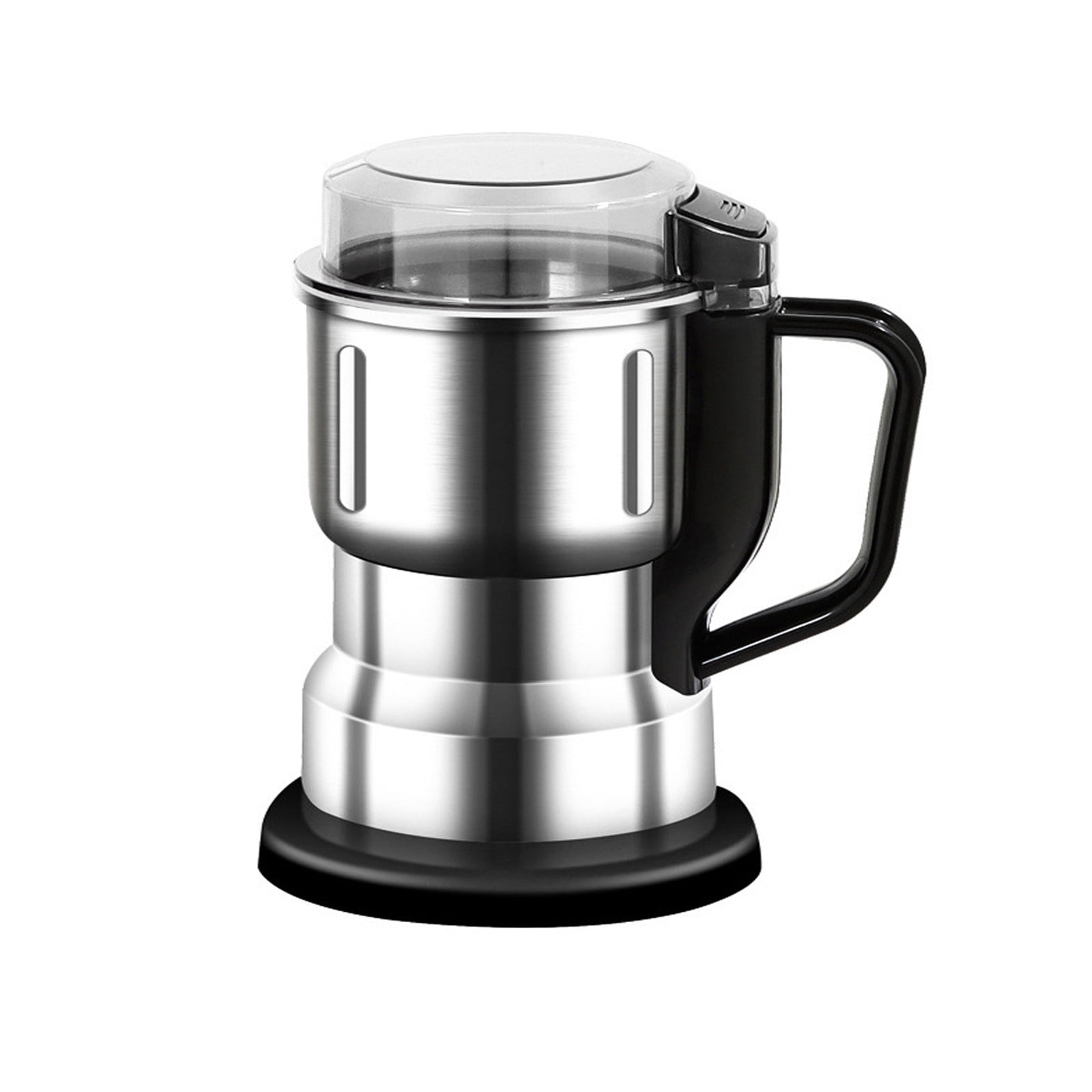
What You Need Before You Start
Gather the following items:
- Whole coffee beans
- A clean, dry food processor
- The standard chopping blade
- A dry spoon or spatula
- An airtight container
- A kitchen scale, if you want more precise results
Do not use a wet bowl. Moisture can make coffee grounds stick to the sides. It can also affect the flavor and make cleanup harder.
Use the regular metal chopping blade unless your manual says otherwise. Do not use a dough blade or a plastic mixing blade. These parts may not cut the beans well.
Start with a small batch. A half cup of beans is a practical starting point for many full-size food processors, but the right amount depends on the bowl size. Do not fill the bowl to the top. Leave enough room for the beans to move.
If your food processor is very small, use less. If the batch is too large, the beans may sit in one layer and fail to move through the blade.

How to Grind Coffee in a Food Processor
Follow these steps for the most even result possible.
1. Measure the beans
Measure only the beans you plan to use. Freshly ground coffee loses aroma faster than whole beans, so grinding just before brewing is best.
If you do not have a scale, use a measuring spoon or cup. Keep the amount small enough for the beans to move freely around the bowl.
2. Add the beans to the bowl
Place the beans in the dry food processor bowl. Lock the blade and lid in place before turning on the machine.
Keep your hands away from the blade. The blade can remain sharp even when the processor is unplugged.
3. Use short pulses
Press the pulse button for about one second. Stop, then pulse again.
Use around 8 to 15 short pulses as a starting point. The exact number depends on the coffee type, batch size, blade shape, and machine power.
Do not hold the button down. A continuous run can create uneven grounds and warm the coffee.
4. Shake the bowl between pulses
After several pulses, unplug the processor and gently shake the bowl. This helps move larger pieces toward the blade.
If needed, use a dry spatula to scrape coffee from the sides. Unplug the food processor first. Never place a utensil into a running machine.
5. Check the grind
Open the lid and inspect the coffee. Look for a fairly even mix that suits your brewing method.
Some variation is normal. A food processor may leave a few large pieces along with fine particles. If the pieces are too large, pulse two or three more times.
6. Transfer the grounds
Pour the grounds into your brewer or an airtight container. Tap the bowl gently to remove loose grounds.
Clean the bowl soon after use. Coffee oils can leave a strong smell, especially in plastic bowls.
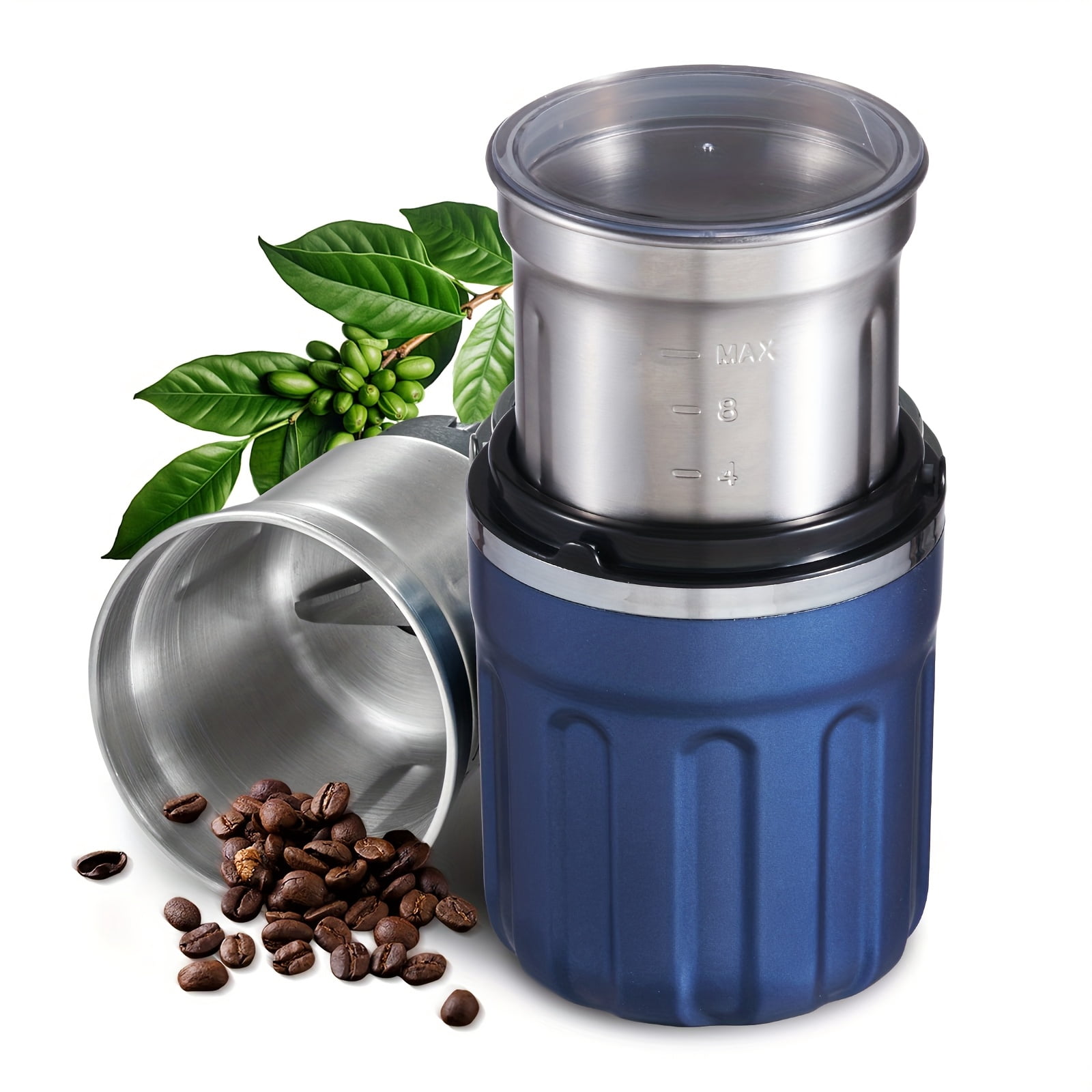
How Long Should You Grind Coffee in a Food Processor?
There is no single time that works for every food processor. Short pulses work better than one long run.
Use this table as a starting guide:
| Brewing method | Target grind | Food processor approach |
|---|---|---|
| Cold brew | Coarse | Use fewer pulses and stop while large pieces remain |
| French press | Coarse | Pulse until the beans look like coarse crumbs |
| Drip coffee maker | Medium | Use more pulses and check often |
| Pour-over | Medium-fine | Possible, but hard to make even |
| Espresso | Fine | Not recommended in a food processor |
These descriptions are visual guides, not exact measurements. The grounds should look more like the target size than like flour.
For drip coffee, aim for a texture similar to rough sand. For a French press, the pieces should be larger and more distinct. For cold brew, use an even coarser texture.
Avoid trying to make espresso-fine coffee in a food processor. Very fine grounds are difficult to produce evenly. Large pieces may cause weak coffee, while excess powder can make the drink bitter and muddy.
How to Get a More Even Coffee Grind
A few simple changes can improve the result.
Use smaller batches
A smaller batch gives the blade more room to move the beans. It also makes it easier to inspect the coffee between pulses.
If you need a large amount of coffee, grind it in several batches. This takes more time but usually gives a more even result.
Shake the bowl often
The blade sits at the bottom of the bowl. Large pieces may rise while small pieces fall near the blade. Shaking helps mix the coffee and reduces this problem.
Always stop and unplug the processor before shaking or opening it.
Pulse instead of blending
Pulsing gives you control. It also limits the amount of heat created by the motor and blade.
Do not use a high-speed blend setting unless your manual specifically recommends it for dry ingredients.
Grind only what you need
Fresh grounds have more aroma than grounds that sit for days. Grind enough for one brew session when possible.
Use beans with a similar size
Very different bean sizes can break at different rates. A uniform batch of beans may produce a slightly more consistent result.
Dark-roasted beans can be more brittle than light-roasted beans. They may break into smaller pieces faster, so check the grind early.

Matching the Grind to Your Coffee Maker
The best grind depends on how water moves through the coffee.
Drip coffee makers
Use a medium grind. Grounds that are too fine may slow the flow and make the coffee bitter. Grounds that are too coarse may produce weak coffee.
Because a food processor creates mixed particle sizes, taste is the best guide. If the coffee tastes sharp or thin, use a slightly finer grind next time. If it tastes harsh or dry, use fewer pulses.
French press
Use a coarse grind. Larger grounds are easier to separate with the press filter.
A very fine grind can pass through the mesh. It may also create a cloudy cup with extra sediment.
Cold brew
Use a coarse grind. Cold brew usually sits in water for many hours, so very fine grounds can make the drink overly strong or gritty.
Strain the finished coffee well. A paper filter can remove more fine particles than a metal mesh filter.
Pour-over coffee
A medium-fine grind is often used for pour-over brewing. A food processor may make this grind uneven.
You can still try it, but watch the water flow. If the water drains very slowly, the grounds may be too fine. If it runs through quickly, the grounds may be too coarse.
Espresso
A food processor is a poor choice for espresso. Espresso needs a very fine and even grind. Uneven grounds can cause water to pass through some areas too quickly and other areas too slowly.
For espresso, use an espresso-capable burr grinder.

Food Processor vs. Coffee Grinder
A food processor can solve a short-term problem, but a coffee grinder offers better control.
| Feature | Food processor | Blade coffee grinder | Burr coffee grinder |
|---|---|---|---|
| Grind consistency | Low to moderate | Low to moderate | High |
| Best use | Occasional coffee | Small batches | Regular brewing |
| Control | Pulse-based | Time-based | Measured settings |
| Coarse grind | Usually workable | Usually workable | Very good |
| Fine grind | Uneven | Uneven | Better control |
| Cleanup | More parts | Simple | Varies by model |
A blade coffee grinder is often smaller and easier to store. A burr grinder costs more, but it gives you control over particle size.
Choose a food processor if convenience matters most and you already own one. Choose a burr grinder if you brew coffee often, use pour-over or espresso, or care about repeatable flavor.

Common Problems and How to Fix Them
The grounds are very uneven
Possible cause: The batch is too large, or the beans were not mixed during grinding.
Fix: Use less coffee. Pulse in short bursts. Stop and shake the bowl several times.
The coffee tastes bitter
Possible cause: Too many fine particles, too much coffee, or too long a brew time.
Fix: Use fewer pulses and aim for a coarser grind. You can also reduce the brew time or use less coffee.
The coffee tastes weak
Possible cause: The grind is too coarse, the brew time is too short, or you used too little coffee.
Fix: Add a few more pulses for a slightly finer grind. Keep the same brewing method while changing only one variable at a time.
The food processor smells like coffee
Possible cause: Coffee oils remain in the bowl, lid, or blade area.
Fix: Wash the removable parts with warm water and dish soap if the manual allows it. Wipe the motor base with a damp cloth. Do not place the motor base in water.
Coffee is stuck under the blade
Possible cause: Static, oil, or very fine particles.
Fix: Unplug the machine before removing the blade. Use a dry brush or paper towel for loose grounds. Handle the blade carefully.
The machine struggles to run
Possible cause: Too many beans or a processor that is not designed for dry, hard foods.
Fix: Stop the machine. Check the manual. Reduce the batch size, or use a proper coffee grinder instead.

Coffee Grinding Safety Tips
Food processors have fast, sharp blades. Follow these basic safety rules:
- Read the manual for your exact model.
- Keep the bowl locked during operation.
- Keep hands and utensils away from the blade.
- Unplug the machine before opening, shaking, or scraping it.
- Do not add water to the beans.
- Do not use a damaged bowl, lid, or blade.
- Stop if the motor smells hot or the machine makes an unusual sound.
- Let the machine cool if the motor becomes warm.
- Keep children away while the processor is running.
- Clean and dry the bowl before storing it.
Coffee beans are hard. Repeatedly processing large amounts may place extra stress on the motor and blade. For frequent coffee grinding, a dedicated grinder is the better long-term tool.

How to Store Ground Coffee
Use the grounds soon after grinding. Place unused coffee in an airtight container and keep it in a cool, dry cabinet away from light and heat.
Avoid storing coffee in the refrigerator. Coffee can absorb odors from nearby food, and temperature changes may cause condensation.
For the best flavor, store whole beans and grind them just before brewing. If you must store ground coffee, use a clean container with a tight seal and keep the amount small.
Do not store coffee in the food processor bowl. The bowl may not seal well, and coffee odors can remain in the plastic.

Key Takeaways
- A food processor can grind coffee beans in an emergency or for occasional use.
- Use short one-second pulses instead of a long continuous run.
- Shake the bowl between pulses for a more even grind.
- Use coarse grounds for a French press or cold brew.
- A medium grind works best for many drip coffee makers.
- Do not rely on a food processor for espresso.
- Check the food processor manual before grinding dry, hard foods.
- A burr grinder gives more even and repeatable results.
Frequently Asked Questions
Can I grind coffee beans without a coffee grinder?
Yes. A food processor, blender, mortar and pestle, or rolling pin can break coffee beans into smaller pieces. A food processor is usually faster, but none of these methods gives the same control as a burr grinder.
Should I use the food processor blade or a special attachment?
Use the standard chopping blade unless your food processor manual says otherwise. A dough blade may not cut the beans properly.
Can I grind coffee and spices in the same food processor?
Yes, but strong spice oils can affect the taste of coffee. Clean the bowl, lid, and blade well before grinding coffee. If you often grind spices, a separate grinder may help prevent flavor transfer.
Can I grind coffee beans in a blender instead?
You can, but the result may be just as uneven. A blender jar can also make it harder to move the beans around the blade. Use short pulses and a small batch if your blender manual permits dry ingredients.
Can I grind coffee beans ahead of time?
Yes, but the coffee will lose aroma faster than whole beans. For better flavor, grind just before brewing. If you grind ahead, use an airtight container and keep it in a cool, dry place.
What should I do if my food processor cannot grind the beans?
Do not force the machine. Stop if the motor struggles, overheats, or smells unusual. Use a smaller batch only if the manual allows it. Otherwise, use pre-ground coffee or a dedicated grinder.
Conclusion
You can grind coffee in a food processor by using small batches, short pulses, and frequent checks. The method works best for coarse and medium grinds, such as those used for French press, cold brew, and drip coffee.
The result will be less even than coffee made with a burr grinder. Still, careful pulsing can produce a useful brew. Start with a small batch, adjust the grind by taste, and follow the safety instructions for your food processor.

One Comment