
For most espresso made in the United States, use 18 to 20 grams of finely ground coffee for a double shot. A traditional single shot often uses 7 to 9 grams, while a larger triple basket may take 20 to 22 grams or more.
The right amount depends on your portafilter basket, coffee recipe, and espresso machine. The gram count refers to the dry coffee grounds, not the liquid espresso in your cup.

Quick Answer: Espresso Coffee Dose by Shot Size
A typical espresso dose in the U.S. falls into these ranges:
| Espresso type | Dry coffee dose | Typical liquid yield |
|---|---|---|
| Traditional single | 7–9 grams | 20–30 grams |
| Modern single | 9–12 grams | 18–30 grams |
| Double shot | 16–20 grams | 32–40 grams |
| Modern specialty double | 18–20 grams | 36–45 grams |
| Triple shot | 20–24 grams | 40–50 grams |
These are practical ranges, not universal rules. The basket size sets the main limit. A basket marked “18 g” is designed to hold about 18 grams of coffee, though the best dose can vary by coffee and basket design.
Many American cafés serve a double espresso as the standard shot. That is why 18 grams is a useful starting point for home espresso.
A simple starting recipe is:
- 18 grams of coffee grounds
- 36 grams of espresso
- 25 to 30 seconds of extraction time
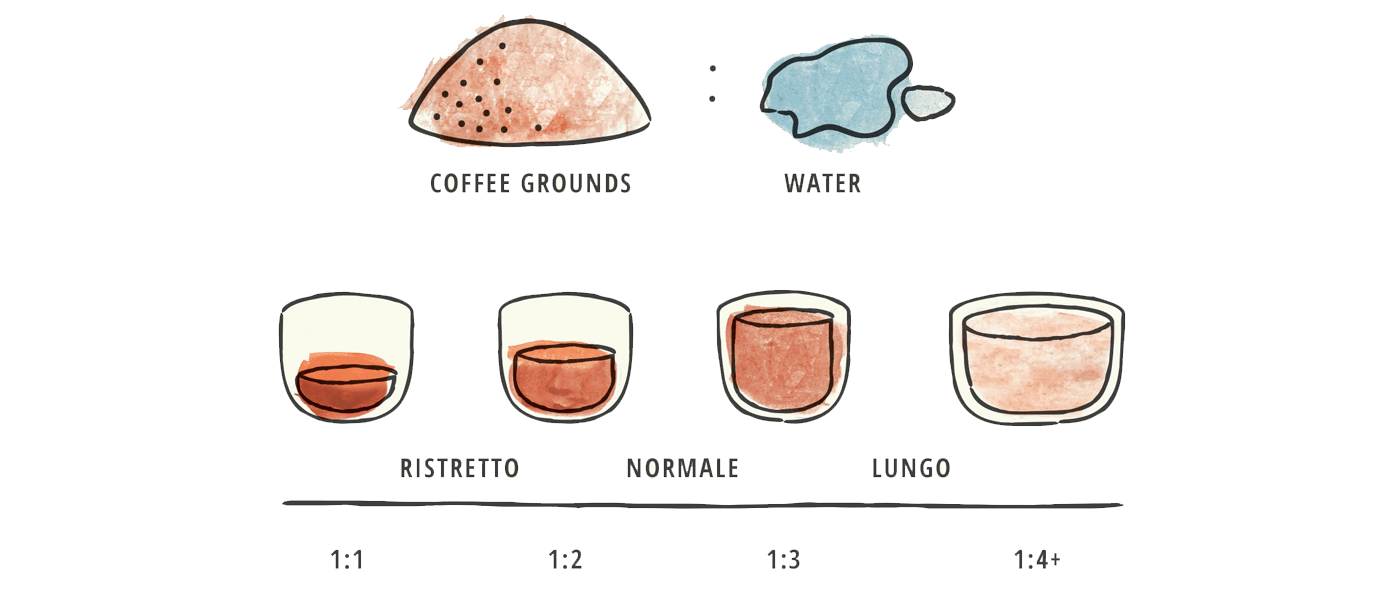
This is a 1:2 brew ratio. It means the finished espresso weighs twice as much as the dry coffee dose.
What Does “Grams of Coffee” Mean?
“Grams of coffee” usually means the weight of the dry, ground coffee placed in the portafilter. It does not mean the weight of the liquid espresso.
For example, an 18-gram espresso recipe uses:
- 18 grams of whole coffee beans or ground coffee
- Water forced through the coffee puck
- About 36 grams of liquid espresso in the cup
The liquid weighs more because it contains water. Some dissolved coffee compounds also move into the drink, but most of the final weight comes from water.
A fluid ounce and a gram are not the same measurement. A U.S. fluid ounce measures volume, while a gram measures weight. Crema can also make espresso look larger than it really is by volume.
For consistent results, weigh both the dose and the final drink. Volume alone can be misleading.
How Many Grams Are in a Single Espresso?
A traditional single espresso uses about 7 grams of coffee. In many modern U.S. cafés and home setups, a single basket may hold 9 to 12 grams instead.
The term “single shot” is not perfectly standardized. Some machines include a small single basket, while others use larger baskets that produce a stronger or more modern single serving.
For a traditional 7-gram recipe, a 1:2 ratio would produce about 14 grams of espresso. For a 10-gram recipe, the same ratio would produce about 20 grams of espresso.
The basket label is more useful than the word “single.” If the basket says 10 grams, begin near that dose and adjust from there.

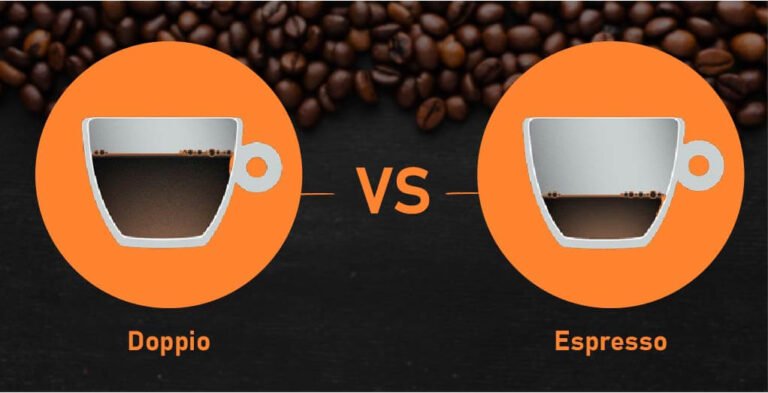
How Many Grams Are in a Double Espresso?
A double espresso commonly uses 16 to 20 grams of coffee, with 18 grams being a popular starting point.
Many U.S. espresso machines come with a double basket designed for about 18 grams. A 1:2 recipe would then produce approximately 36 grams of espresso.
Here is a sample recipe:
- Dose: 18 grams
- Yield: 36 grams
- Brew time: 25–30 seconds
- Brew ratio: 1:2
This recipe is only a starting point. Dark roasted coffee may taste better with a shorter ratio, such as 1:1.5. Light roasted coffee may need a longer ratio, such as 1:2.5, to taste balanced.
Taste matters more than hitting one exact number.
How to Measure Coffee for espresso
a small digital coffee scale is the most reliable way to measure espresso. Choose a scale that reads in 0.1-gram steps and fits under your cup and portafilter.
Follow these steps:
- Place the empty portafilter on the scale.
- Press the tare button to set the display to zero.
- Grind coffee into the basket.
- Check the dose.
- Remove or add coffee until you reach the target weight.
- Distribute the grounds evenly.
- Tamp with level, steady pressure.
- Place the portafilter in the machine.
- Start the shot and stop it at the target yield.
- Taste the espresso and adjust the grind if needed.
Do not rely on the grinder timer alone. The same timer setting can produce a different dose as beans age, the grinder warms up, or the grind size changes.
A scale also helps you find errors. If you aim for 18 grams but receive 15 grams, the problem may be the grinder timer or retention inside the grinder.

Use the Portafilter Basket as Your Guide
The basket size should determine your target dose.
| Basket label | Starting dose |
|---|---|
| 7 g | 7 grams |
| 10 g | 9–10 grams |
| 14 g | 13–14 grams |
| 18 g | 17–18 grams |
| 20 g | 19–20 grams |
| 22 g | 21–22 grams |
Basket labels are approximate. Coffee density differs by roast level and bean type, so two coffees can fill the same basket at different weights.
After tamping, the puck should not press hard against the shower screen. If the coffee puck touches the screen, the dose may be too high. If the puck looks very low and the shot runs quickly, the dose may be too low, the grind may be too coarse, or the basket may be larger than expected.
The best dose is the one that fits the basket and produces a balanced cup.
Coffee Dose, Brew Ratio, and Espresso Yield
Espresso recipes use three connected numbers:
- Dose: the dry coffee grounds
- Yield: the liquid espresso
- Time: how long the shot takes to brew
The brew ratio is calculated like this:
Brew ratio = liquid espresso yield ÷ dry coffee dose
For example:
- 18 grams of coffee
- 36 grams of espresso
- 36 ÷ 18 = 2
- Final ratio: 1:2
Common starting ratios include:
| Style | Dose | Yield | Ratio |
|---|---|---|---|
| Ristretto | 18 g | 27 g | 1:1.5 |
| Standard espresso | 18 g | 36 g | 1:2 |
| Lungo-style shot | 18 g | 45–54 g | 1:2.5 to 1:3 |
These names can vary between cafés and regions. The ratio gives you a clearer recipe than “one shot” or “two ounces.”
A shot that tastes sour may need a finer grind, a longer extraction, or a higher yield. A shot that tastes bitter or dry may need a coarser grind, a shorter extraction, or a lower yield.
Change one variable at a time so you can identify what helped.

Does More Coffee Make Espresso Stronger?
More coffee increases the dose, but it does not automatically make espresso taste better or contain more caffeine in a simple, predictable way.
If you increase the dose while keeping the basket and yield the same, the coffee bed becomes deeper. Water may flow more slowly, and the shot may become stronger or more concentrated.
However, adding too much coffee can cause problems:
- The portafilter may not lock in properly.
- The puck may touch the shower screen.
- Water may find weak paths through the coffee.
- Extraction may become uneven.
- The espresso may taste harsh or dry.
Coffee strength also depends on the amount of water and the amount of coffee dissolved during brewing. A larger dose generally contains more total caffeine, but the exact amount varies by bean, roast, grind, and extraction.
The U.S. Food and Drug Administration says that up to 400 milligrams of caffeine per day is generally not associated with dangerous negative effects for most healthy adults. Individual sensitivity, pregnancy, medications, and health conditions can change that limit. A typical 1-ounce espresso often contains about 60 to 65 milligrams of caffeine, but actual amounts vary.

Why Espresso Dose Changes From Coffee to Coffee
The same gram dose can behave differently with different beans. Roast level, bean density, age, grind size, and basket shape all affect the shot.
Roast level
Dark-roasted beans are less dense by weight and often produce more volume for the same mass. They may extract more easily and can taste bitter if brewed too long.
Light-roasted beans are usually denser and may need a finer grind, hotter water, or a longer ratio. They can taste sour or sharp when under-extracted.
Coffee freshness
Very fresh coffee releases more carbon dioxide. This gas can slow water flow and make extraction less stable. Coffee that is much older may produce a flat shot with weak crema, though crema is not a complete measure of quality.
Grind size
Grind size has a major effect on flow:
- A finer grind usually slows the shot.
- A coarser grind usually speeds it up.
Adjust the grind before making large changes to the dose.
Basket shape
Precision baskets and standard baskets may hold different amounts even when their labels look similar. A tall basket can support a deeper coffee bed than a shallow one.
For this reason, use the basket that matches your recipe instead of forcing a dose into a smaller basket.
Common Espresso Dosing Mistakes
Confusing beans with grounds
The weight stays nearly the same when whole beans are ground, but coffee can be lost in the grinder. Weigh the ground coffee in the portafilter when possible.
Measuring by tablespoons
A tablespoon can hold different weights depending on grind size and bean density. It is fine for a rough estimate, but not for repeatable espresso.
Using a full scoop
Scoop sizes are not standardized. A scoop that holds 7 grams of one coffee may hold 6 or 8 grams of another.
Chasing a fixed brew time
A 25-second shot is a useful reference, not a guarantee of good flavor. Taste, yield, and flow all matter.
Ignoring the basket rating
Overfilling a basket can cause contact with the shower screen. Underfilling it can create a shallow puck that is hard to extract evenly.
Changing dose and grind together
If you change both at once, you may not know which change affected the result. Start with the basket’s recommended dose, then adjust grind size first.

A Simple Espresso Recipe to Start With
For a standard double espresso, try this recipe:
- Use an 18-gram basket.
- Grind 18 grams of coffee.
- Aim for 36 grams of liquid espresso.
- Begin with a medium-fine espresso grind.
- Watch the shot for roughly 25–30 seconds.
- Taste it after it cools briefly.
- Make small grind adjustments.
Use a finer grind if the shot runs too fast and tastes sour or thin. Use a coarser grind if it runs too slowly and tastes bitter, dry, or burnt.
If the coffee tastes balanced, sweet, and clear, keep the recipe even if the exact time differs from the usual target.
Frequently Asked Questions
Is 7 grams enough for one espresso?
Yes. Seven grams is a traditional single-shot dose. Many modern espresso baskets use 9–12 grams for a single, so check the basket size before choosing the dose.
Is 18 grams of coffee one or two shots?
In most modern U.S. espresso setups, 18 grams is used for a double espresso. The number of “shots” depends on the café’s recipe and serving convention.
How many grams of coffee are in a 2-ounce espresso?
The liquid volume does not tell you the dry dose. A 2-ounce serving may use 14, 18, or 20 grams of coffee, depending on the recipe. Weigh the grounds to know the dose.
How many grams of coffee are in a latte?
A latte can use one or two espresso shots. It may contain about 7–12 grams of coffee with one shot or 16–20 grams with a double shot. Milk does not change the amount of coffee used.
Can I make espresso without a scale?
Yes, but a scale makes the process much more consistent. Without one, use the basket’s fill level and adjust the grind by taste, but expect more variation from shot to shot.
Conclusion: Start With 18 Grams for a Double Shot
For most home espresso machines in the United States, 18 grams of coffee is a dependable starting dose for a double espresso. Use 7–9 grams for a traditional single, or follow the dose printed on your basket.
Measure the dry coffee by weight, target about twice that weight in liquid espresso, and adjust the grind based on taste and flow. The best espresso dose is not one universal number. It is the dose that fits your basket and produces a balanced cup.

One Comment