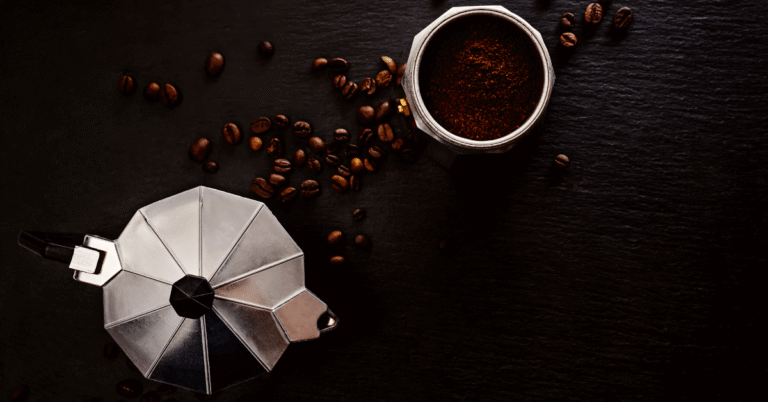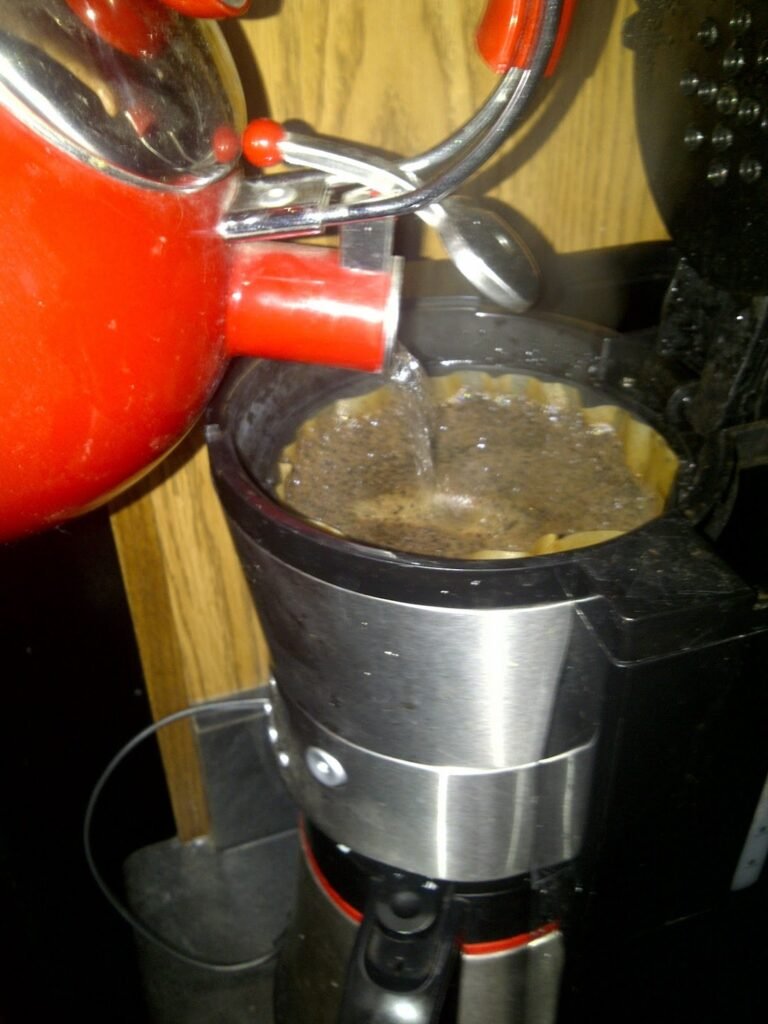
For a standard U.S. coffee maker, use 8 to 10 tablespoons of ground coffee for 8 cups of coffee. This usually means about 40 fluid ounces of water, because most American coffee makers count a “cup” as 5 fluid ounces, not 8 fluid ounces.
For a stronger brew, use up to 12 tablespoons. For a lighter brew, start with 6 to 8 tablespoons. If you have a kitchen scale, use about 60 to 70 grams of ground coffee for 8 coffee-maker cups.

What Does “8 Cups of Coffee” Mean?
In the United States, an 8-cup coffee maker usually makes about 40 fluid ounces of brewed coffee. Its built-in cup markings often use 5-ounce servings.
That is different from a standard U.S. measuring cup, which holds 8 fluid ounces. As a result:
| Coffee maker setting | Approximate water volume |
|---|---|
| 1 coffee-maker cup | 5 fl oz |
| 4 coffee-maker cups | 20 fl oz |
| 6 coffee-maker cups | 30 fl oz |
| 8 coffee-maker cups | 40 fl oz |
| 10 coffee-maker cups | 50 fl oz |
| 12 coffee-maker cups | 60 fl oz |
An 8-cup coffee maker may therefore produce about five 8-ounce mugs. Some water also stays in the coffee grounds and filter, so the final amount in your pot may be slightly lower.
The main measurement to remember
For 8 coffee-maker cups, begin with:
- 8 tablespoons for mild coffee
- 10 tablespoons for medium-strength coffee
- 12 tablespoons for strong coffee
- 60 to 70 grams for a measured, repeatable brew
These amounts assume medium-ground coffee and a standard drip coffee maker.

How Much Coffee Should You Use for 8 Cups?
The best starting point is 10 level tablespoons of ground coffee for 8 cups. This gives many American coffee drinkers a balanced cup without making the brew too weak or too bitter.
A standard coffee scoop often holds 2 tablespoons. That means 10 tablespoons equals about 5 coffee scoops.
Use this quick guide:
| Preferred strength | Ground coffee | Approximate scoops |
|---|---|---|
| Light | 6–8 tbsp | 3–4 scoops |
| Medium | 8–10 tbsp | 4–5 scoops |
| Strong | 10–12 tbsp | 5–6 scoops |
| Measured starting point | 60–70 g | Depends on scoop size |
Tablespoons can vary because coffee grounds have different sizes and densities. A tablespoon of dark-roast coffee may weigh less than a tablespoon of dense light-roast coffee. For the most consistent result, weigh the coffee.
A useful coffee-to-water ratio
A common brewing range is about 1 gram of coffee for every 15 to 18 grams of water. The Specialty Coffee Association describes a similar brew-strength range around 55 grams of coffee per liter of water, with room for adjustment.
For 8 coffee-maker cups:
- 40 fluid ounces of water equals about 1.18 liters.
- At 55 grams per liter, you need about 65 grams of coffee.
- At a stronger 1:16 ratio, you need about 74 grams.
- In spoon measurements, that is often roughly 10 to 12 tablespoons, depending on the grounds.
The ratio gives you a better guide than a tablespoon alone because it accounts for the full amount of water.

How to Make 8 Cups of Drip Coffee
Follow these steps for a reliable first batch.
1. Measure 40 fluid ounces of cold water
Fill the coffee maker to its 8-cup line. If your machine does not have cup markings, measure about 40 fluid ounces, or 5 U.S. cups of water.
Use fresh, cold water. Water that has been sitting in the machine or a container can pick up stale flavors.
2. Add 8 to 10 tablespoons of ground coffee
Start with 10 level tablespoons for a medium brew. Place the coffee in a clean paper filter or the machine’s reusable filter.
Do not pack the grounds down. Packed coffee can slow the flow of water and lead to uneven extraction.
3. Use the right grind size
Drip coffee makers usually work best with a medium grind. The grounds should look somewhat like coarse sand.
- Grounds that are too fine may make coffee bitter or cause a slow brew.
- Grounds that are too coarse may produce thin, weak coffee.
- Uneven grounds can create a mix of sour and bitter flavors.
4. Brew and serve soon after brewing
Start the machine and let the full cycle finish. Stir the coffee in the carafe before pouring if the machine fills it in stages. This helps mix the stronger coffee from the first part of the brew with the lighter coffee from the end.
For the best flavor, serve the coffee soon after brewing. A warming plate can make coffee taste burnt if it sits for a long time.
5. Adjust the next batch
Taste the coffee after it cools enough to drink.
- If it tastes thin or weak, add 1 to 2 tablespoons next time.
- If it tastes harsh or bitter, reduce the amount slightly.
- If it tastes sour despite having enough coffee, check the grind, water temperature, and brewing time.

Coffee Measurements for 8 Cups
The table below gives practical conversions for a standard U.S. drip coffee maker.
| Amount | Approximate equivalent |
|---|---|
| 8 coffee-maker cups | 40 fl oz of water |
| 40 fl oz | 5 standard U.S. measuring cups |
| 8 tbsp | 4 standard 2-tbsp scoops |
| 10 tbsp | 5 standard 2-tbsp scoops |
| 12 tbsp | 6 standard 2-tbsp scoops |
| 60–70 g | Common medium-strength range |
| 8 brewed cups | Usually about 5 full 8-oz mugs |
Tablespoons versus coffee scoops
Coffee scoops are not always the same size. Many hold 2 tablespoons, but some hold 1 tablespoon or more than 2 tablespoons.
Check the scoop or measure it once with a tablespoon. If your scoop holds 2 tablespoons, use:
- 4 scoops for a lighter brew
- 5 scoops for a medium brew
- 6 scoops for a stronger brew
Whole beans versus ground coffee
If you use whole beans, measure about the same weight before grinding:
- 60 to 70 grams of whole beans for a medium 8-cup batch
- Grind the beans immediately before brewing
- Use a medium grind for most drip machines
Measuring by volume after grinding can be less consistent because the grounds may settle differently.

What Changes the Amount of Coffee You Need?
Your ideal amount depends on more than the number on the coffee maker.
Roast level
Light, medium, and dark roasts do not all weigh the same by volume. Dark-roast beans lose more moisture during roasting and are often less dense.
This means two tablespoons of different coffees may have different weights. A scale removes much of this difference.
Roast level also affects flavor. Dark coffee can taste stronger even when its measured caffeine content is not necessarily higher. If dark coffee tastes harsh, reduce the dose slightly or use a coarser grind.
Grind size
Grind size controls how quickly water moves through the coffee.
- Fine grounds expose more surface area and extract faster.
- Coarse grounds extract more slowly.
- Medium grounds are a good starting point for drip coffee.
If the coffee tastes bitter and dry, the grounds may be too fine, the coffee dose may be too high, or the water may be extracting for too long. If it tastes sour and weak, the grounds may be too coarse or the dose may be too low.
Water quality
Coffee is mostly water, so water quality can change the taste. Very hard water may leave mineral buildup in the machine and create a flat or bitter flavor. Strongly chlorinated water can also affect the cup.
Filtered tap water is a practical choice for many homes. Avoid distilled water for regular brewing unless the machine maker specifically recommends it, because water with almost no minerals can produce dull-tasting coffee.
Coffee maker design
An “8-cup” label is not perfectly standardized across brands. The markings on the water tank are the most useful guide for that machine.
Some machines use 4-ounce cups. Others use 5 ounces or slightly more. If the coffee maker manual lists a different cup size, follow that information instead of assuming the machine uses 40 fluid ounces.

Why Your 8 Cups May Taste Weak or Bitter
Coffee strength and coffee extraction are related but not identical.
Strength describes how concentrated the brewed coffee is. Extraction describes how much flavor material the water removes from the grounds. Adding more coffee increases strength, but changing the grind or brew time changes extraction.
If the coffee tastes weak
Try these checks:
- Confirm that the machine is filled to the 8-cup line.
- Increase the dose from 8 to 10 tablespoons.
- Use a medium grind rather than an extra-coarse grind.
- Check that the filter is sitting flat in the basket.
- Use fresh coffee; old grounds may taste flat.
Do not solve every weak-cup problem by adding more coffee. If the grind is too coarse or the machine does not brew hot enough, extra grounds may not fix the main issue.
If the coffee tastes bitter
Try these changes:
- Reduce the dose by 1 tablespoon.
- Use a slightly coarser grind.
- Do not leave the coffee on a hot plate for a long time.
- Clean mineral buildup from the coffee maker.
- Try a lighter roast if the flavor remains harsh.
A dirty machine can hold old coffee oils and minerals. Follow the manufacturer’s cleaning instructions and rinse the machine well after descaling.
If the coffee tastes sour
Sour coffee often points to under-extraction. Use a slightly finer grind, add a small amount of coffee, or check whether the machine is brewing normally.
If the coffee maker finishes very quickly, the grounds may be too coarse or the water may be passing through too fast. If it takes much longer than usual, the filter or basket may be clogged.

Common Mistakes When Measuring Coffee for 8 Cups
Mistake 1: Treating a coffee-maker cup as 8 ounces
An 8-cup coffee maker usually does not make 64 fluid ounces. In the U.S., its “8 cups” often means about 40 fluid ounces.
Mistake 2: Using heaping tablespoons
A heaping tablespoon can hold much more coffee than a level tablespoon. Use level spoons when following a recipe.
Mistake 3: Confusing a serving with a mug
A coffee maker’s cup may be 5 fluid ounces, while a home mug may hold 10 to 16 ounces. The number of mugs you fill will usually be lower than the number shown on the machine.
Mistake 4: Changing several variables at once
If you change the coffee amount, grind, water, and roast at the same time, you will not know what improved the flavor. Adjust one variable at a time.
Mistake 5: Ignoring the machine’s manual
Coffee makers differ in cup size, filter design, and brewing method. If the manual gives a specific coffee amount, use it as the starting point.

Frequently Asked Questions
Is 8 tablespoons of coffee enough for 8 cups?
Yes. Eight tablespoons can make a balanced or lighter batch, depending on the coffee and your taste. For a medium brew, 10 tablespoons is a useful starting point.
How many scoops of coffee do I need for 8 cups?
If one coffee scoop holds 2 tablespoons, use about 5 scoops for medium-strength coffee. Use 4 scoops for lighter coffee or 6 scoops for stronger coffee.
How much coffee do I need for 8 cups in a Keurig or pod machine?
A single-serve pod machine does not use the same measurement as a drip coffee maker. The number of pods depends on the pod size and the selected water volume. Follow the pod maker’s recommended serving size, and avoid brewing a large mug from one small pod if the result tastes weak.
Does 8 cups of coffee equal 8 mugs?
Usually not. Eight coffee-maker cups often equal about 40 fluid ounces, which fills roughly five 8-ounce mugs. Large mugs may reduce that number further.
How long does brewed coffee stay good?
Coffee is usually best soon after brewing. If it must sit, use an insulated carafe instead of leaving it on a hot warming plate. Heat can make the flavor taste stale or burnt over time.

Key Takeaways
- Use 8 to 10 tablespoons of ground coffee for 8 standard U.S. coffee-maker cups.
- Start with 10 tablespoons for a medium-strength brew.
- Use about 40 fluid ounces of water, since a coffee-maker cup is often 5 fluid ounces.
- For greater accuracy, measure 60 to 70 grams of coffee.
- Use a medium grind for most drip coffee makers.
- Adjust the coffee amount one tablespoon at a time.
- Check your machine’s manual because cup sizes vary by brand.
Conclusion
For most American drip coffee makers, the simplest answer is 10 level tablespoons of ground coffee for 8 cups. That usually means 40 fluid ounces of water and produces about five regular 8-ounce mugs.
Start there, then adjust to taste. Use 8 tablespoons for a lighter brew, 12 tablespoons for a stronger brew, or a kitchen scale for the most reliable results.