
At a kitchen counter in the United States, a coffee grinder turns whole beans into particles that water can brew. It does this with either rotating blades or two grinding surfaces called burrs. The size, shape, and spread of those particles affect how fast water extracts flavor from the coffee.
A blade grinder chops beans in a rough, uneven way. A burr grinder crushes and shears beans between two surfaces, then sends particles out through a set gap. That gap controls the grind size.
The short answer is simple: a coffee grinder works by breaking roasted coffee beans into smaller pieces, while its design controls particle size, heat, static, and consistency.

What Happens Inside a Coffee Grinder?
A coffee grinder uses a motor to turn a blade or burr. The moving part applies force to whole beans until they break into smaller particles. The particles then leave the grinding area through an opening or chute.
The basic process has four steps:
- You place whole beans in the hopper or grinding chamber.
- A motor spins the blade or burr.
- The grinding surface breaks the beans apart.
- Ground coffee exits into a container or portafilter.
The result is not one uniform powder. Even a good grinder creates a range of particle sizes. This range is called the particle-size distribution.
Large particles are often called boulders. Very small particles are called fines. The balance between these particles affects extraction, flow, and taste.
Why coffee beans break apart
Roasted coffee beans are brittle. Roasting removes much of the bean’s moisture and changes its internal structure. When pressure or impact reaches the bean, it cracks into pieces.
A grinder may break beans through:
- Compression: Pressing the bean between two surfaces.
- Shearing: Slicing or tearing the bean along a sharp edge.
- Impact: Striking the bean with a fast-moving blade or surface.
- Friction: Rubbing particles against a rough surface.
Burr grinders rely mostly on compression and shearing. Blade grinders rely mostly on impact.
The grinding method matters because it changes how evenly the bean breaks. More even particles usually make brewing easier to control.

How Do Burr Coffee Grinders Work?
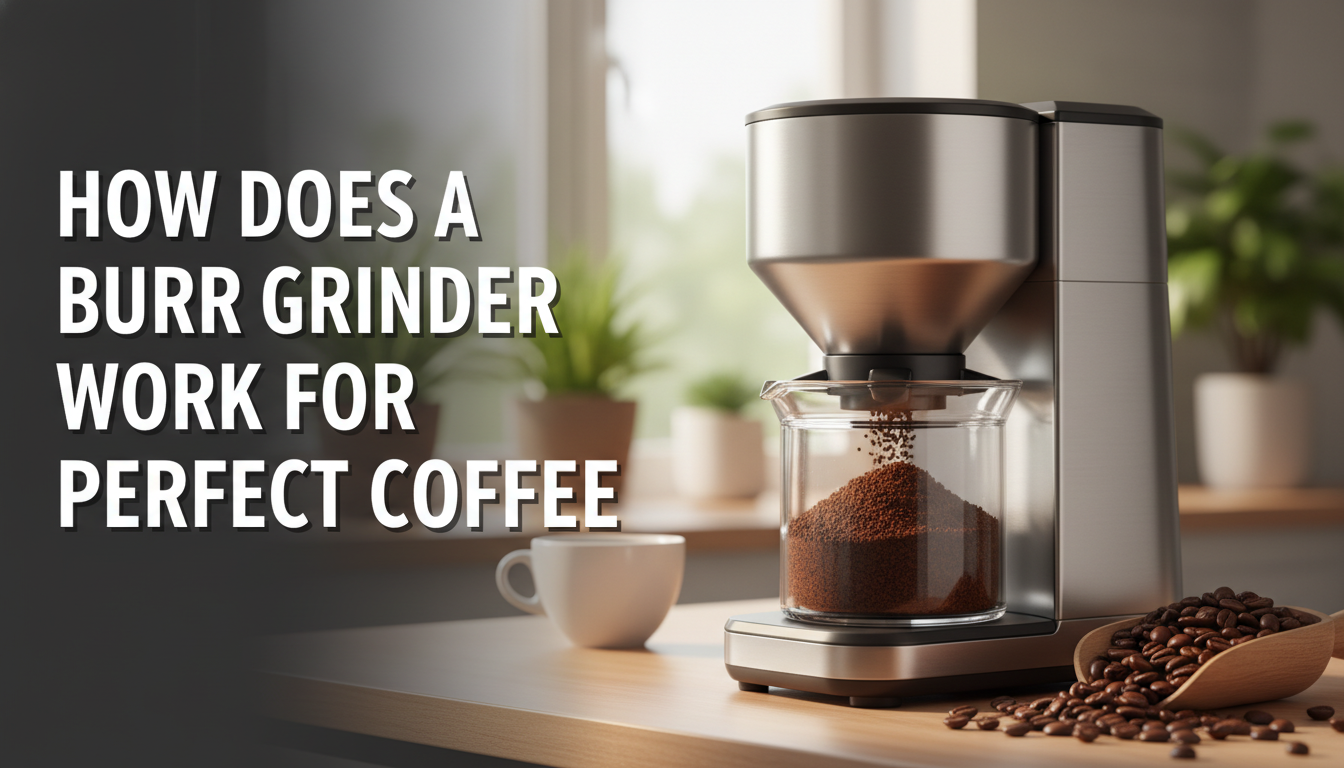
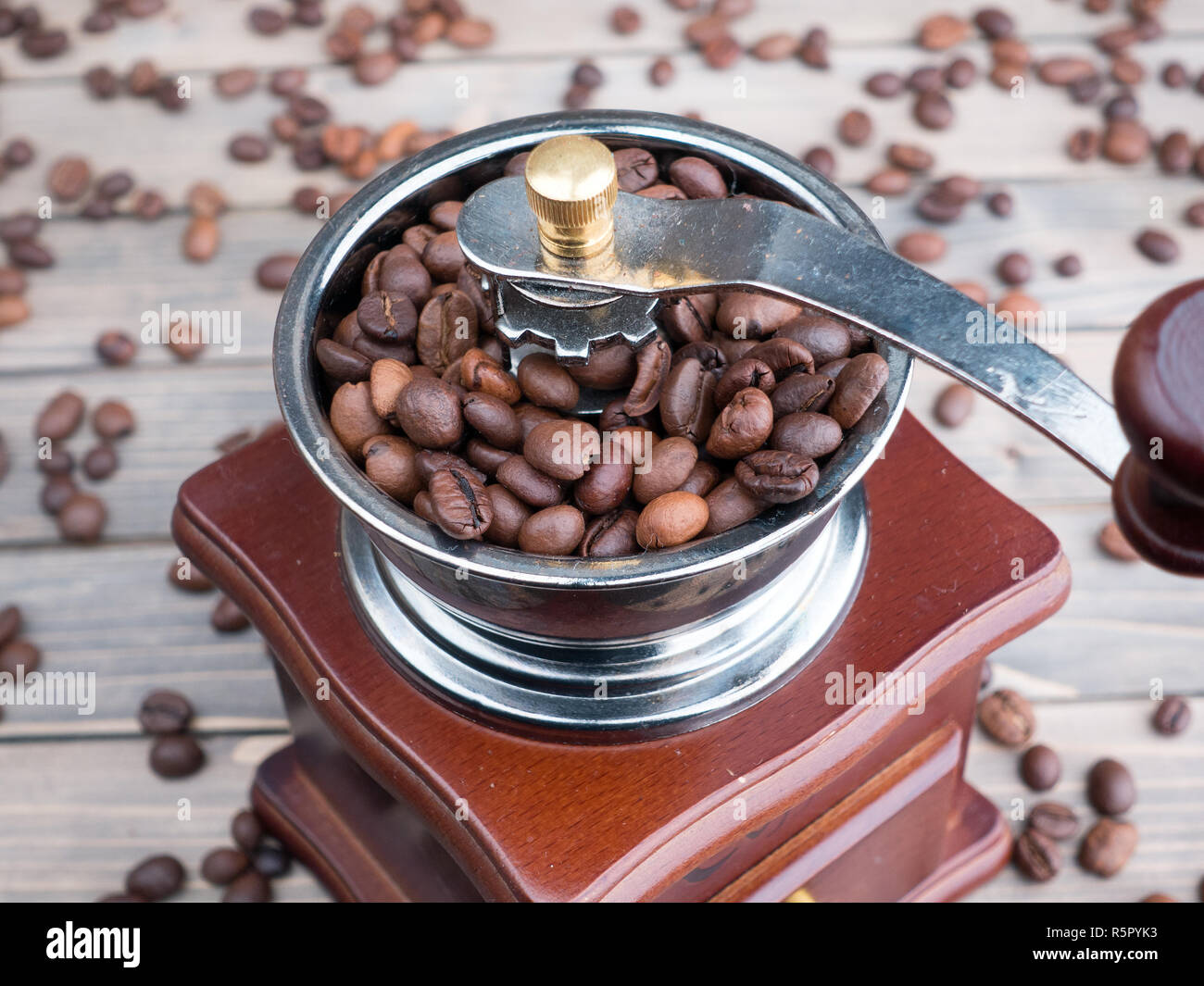
A burr coffee grinder uses two burrs with cutting teeth or grinding surfaces. One burr turns, while the other stays still or moves only when you adjust the setting.
Beans enter the space between the burrs. The burrs first crack the beans, then reduce the pieces as they move toward the outer edge. Ground coffee leaves through the gap between the burrs.
This design gives you direct control over grind size. A smaller gap produces finer coffee. A larger gap produces coarser coffee.
Conical and flat burrs
Most burr grinders use one of two burr shapes.
| Burr type | How it works | Common traits |
|---|---|---|
| Conical burrs | One cone-shaped burr turns inside a ring-shaped burr | Often used in home grinders; usually runs at lower speed |
| Flat burrs | Two flat discs face each other | Common in commercial and specialty grinders; may offer strong particle control |
Neither design is automatically best for every coffee drinker. Burr shape, alignment, motor speed, burr size, materials, and grinder design all affect performance.
The role of the burr gap
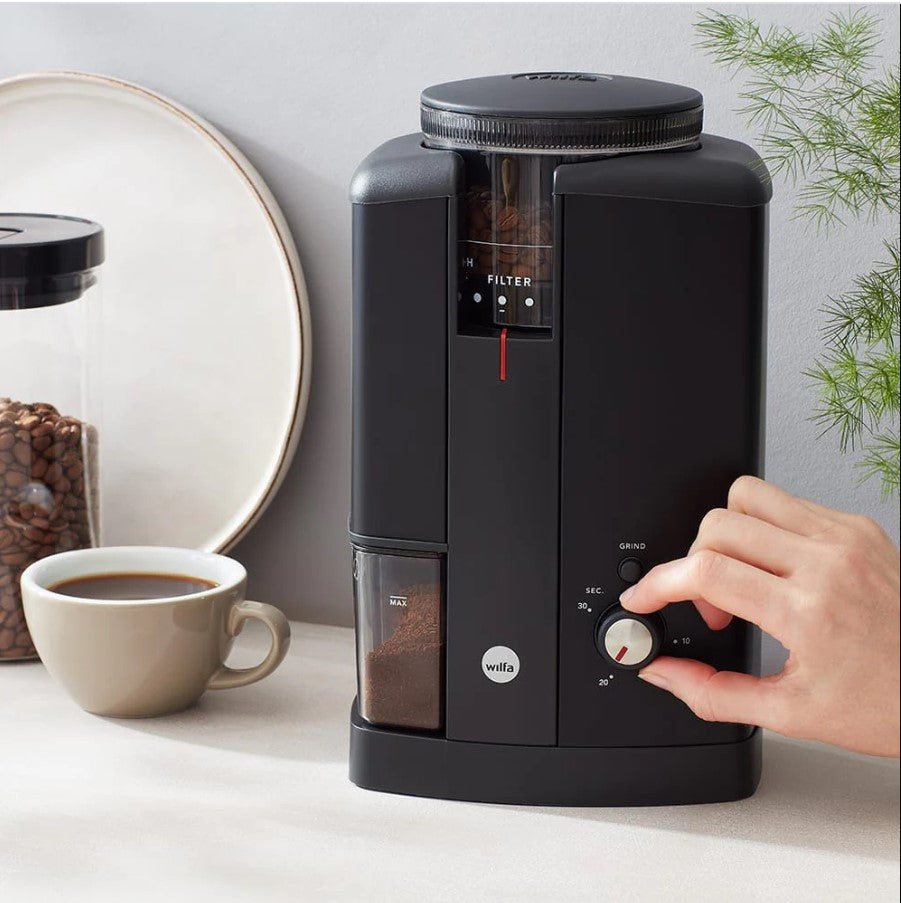
The burr gap is the space that determines the approximate grind size. Many grinders let you change this gap with a dial, collar, lever, or digital control.
A coarse setting leaves a wider gap. A fine setting brings the burrs closer together.
The setting does not guarantee one exact particle size. Coffee beans vary in density, roast level, moisture, and brittleness. The grinder also creates some fines and larger particles at every setting.
Why burr grinders usually produce more even coffee
A burr grinder guides beans through a controlled grinding path. It does not simply throw beans around a chamber. This often produces a narrower particle-size range than a blade grinder.
That difference is useful because particles extract at different rates:
- Fines extract quickly.
- Medium particles extract at a moderate rate.
- Large particles extract slowly.
If a grind contains too many fines and boulders, some parts of the coffee may taste bitter while other parts taste sour or weak.

How Do Blade Coffee Grinders Work?
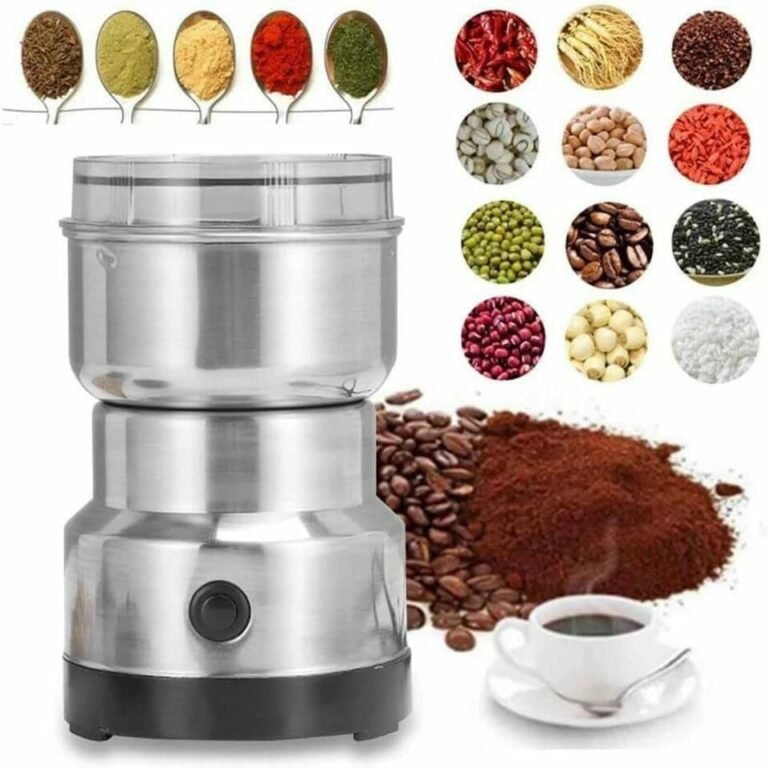
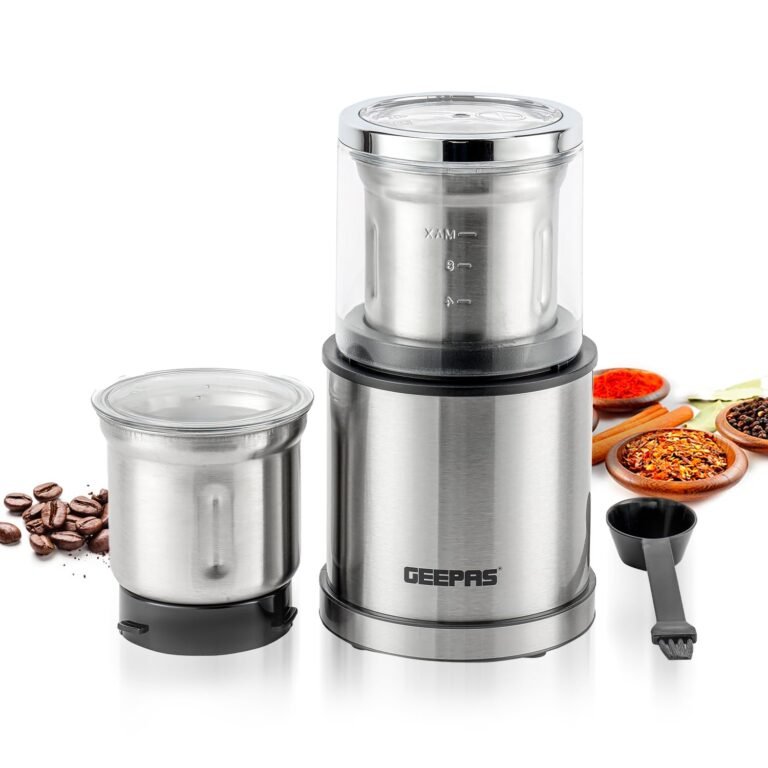
A blade grinder uses one or more sharp blades that spin in a small chamber. The blades strike the beans and break them into pieces.
The longer you run the grinder, the smaller the average pieces become. A short pulse creates a coarse mix. Longer grinding creates a finer mix.
However, time alone does not create a precise grind size. Blade grinders do not have burrs that set a fixed gap. The beans bounce around the chamber, so some pieces may receive many impacts while others receive few.
What a blade grinder does well
A blade grinder can be useful when:
- You already own one.
- You brew coffee only from time to time.
- You need a low-cost way to grind fresh beans.
- You use a method that is less sensitive to particle variation.
- You pulse the grinder and check the grounds often.
Short pulses can reduce the chance of producing excess heat. Shaking the grinder gently between pulses may help move larger pieces toward the blades, but unplug the grinder before touching or clearing the chamber.
Limits of a blade grinder
Blade grinders often create an uneven mix. That can make it harder to repeat a recipe from one brew to the next.
They can also create heat through fast blade movement and friction. Heat is not the only cause of flavor loss, and short home grinding sessions may not create a serious problem. Still, excess heat can reduce control and may affect aroma.
A blade grinder is not useless. It simply gives you less control over the final particle distribution.

How Does Grind Size Change Coffee Flavor?
Grind size changes how much surface area the coffee gives to the water. Fine grounds expose more surface area. Coarse grounds expose less.
This changes the speed of extraction.
- Fine coffee usually extracts faster.
- Coarse coffee usually extracts more slowly.
If the coffee tastes sour, sharp, thin, or grassy, it may be under-extracted. A finer grind, longer brew time, hotter water, or a higher coffee-to-water contact can increase extraction.
If it tastes bitter, dry, harsh, or hollow, it may be over-extracted. A coarser grind, shorter brew time, cooler water, or less contact can reduce extraction.
These are useful starting points, not fixed rules. Water chemistry, coffee freshness, roast level, dose, brewing method, and agitation also affect taste.
General grind settings by brewing method
| Brewing method | Typical grind range | Why |
|---|---|---|
| Turkish coffee | Very fine, powder-like | The grounds remain in the cup |
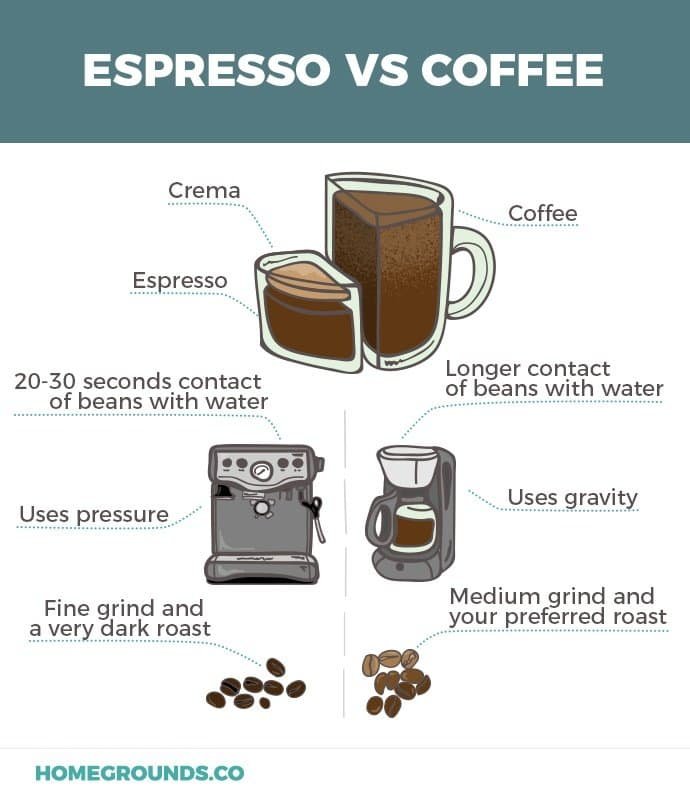
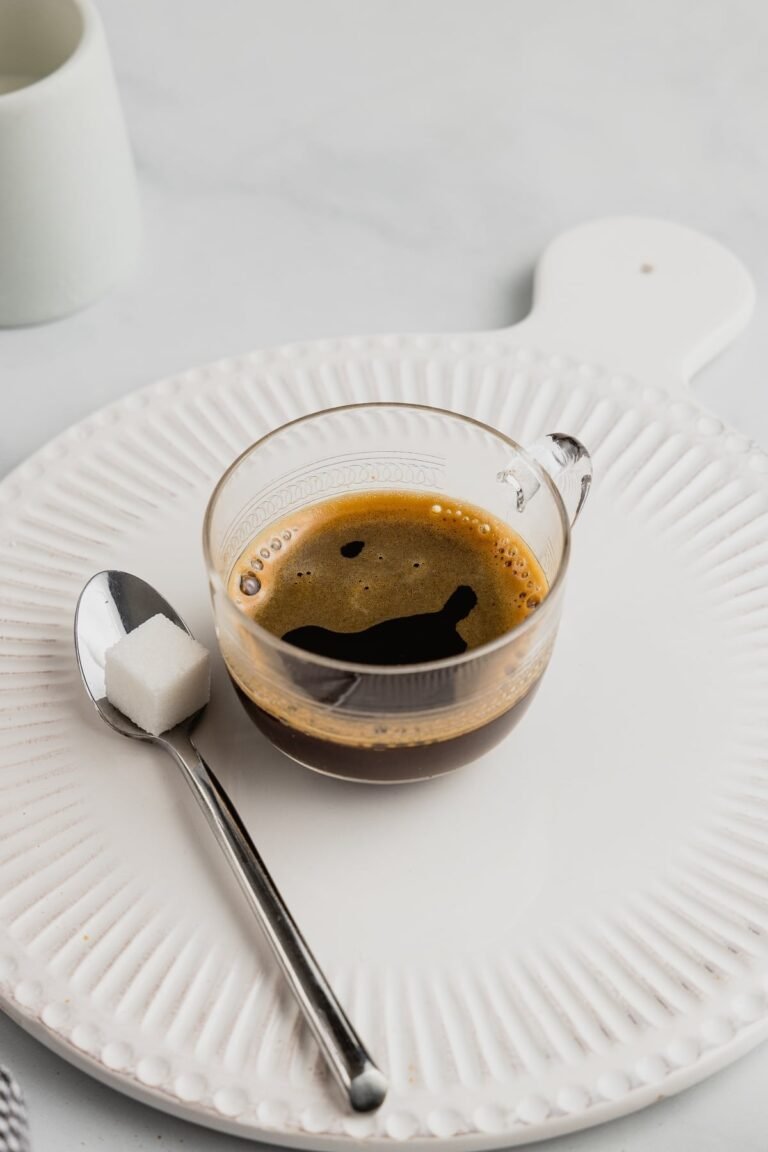
| Espresso | Fine | Water passes through a compact puck under pressure |
| AeroPress | Fine to medium | The method supports many recipes and brew times |
| Pour-over | Medium-fine to medium | Water passes through a paper filter |
| Automatic drip | Medium | The machine controls contact time and flow |
| French press | Coarse | A metal filter allows larger particles to remain |
| Cold brew | Coarse | Long steeping time favors a larger grind |
These ranges are broad. The right setting depends on the grinder, coffee, recipe, and taste.
A practical grind adjustment rule
Change only one variable at a time when dialing in coffee.
If the brew runs too fast and tastes weak or sour, move one or two steps finer. If it runs too slowly and tastes bitter or dry, move one or two steps coarser.
Make small changes. A large adjustment can make it hard to tell what caused the flavor change.

Why Do Grinder Speed, Heat, and Static Matter?
Grinder speed affects how quickly beans move through the burrs and how much heat the motor and grinding surfaces produce. A high-speed motor is not automatically poor, and a low-speed motor is not automatically better.
The key issue is how the full grinder manages:
- Motor power
- Burr size
- Burr speed
- Bean feed rate
- Ventilation
- Grinding time
- Alignment
- Particle exit path
Heat
Heat can come from the motor, bearings, burrs, and friction. A small dose ground for a few seconds usually creates less heat than repeated commercial grinding.
Heat may affect volatile aroma compounds, but flavor also depends heavily on bean age, roast, storage, brew method, and water. Avoiding exaggerated heat claims is useful: grinder temperature alone does not predict cup quality.
If a grinder becomes unusually hot, smells of burning, or changes speed, stop using it. Let it cool and check the manual. Persistent overheating may require service or replacement.
Static electricity
Static occurs when ground coffee particles gain an electrical charge. The grounds may cling to the chute, container, or grinder body. Fine particles often make the problem more noticeable.
Static can lead to:
- Mess around the grinder
- Retained coffee in the chute
- Inconsistent dosing
- Clumps in the grounds
Dry indoor air can make static worse. This is common during cold winters in many parts of the United States.
Some users lightly mist or add a tiny amount of moisture to beans before grinding. Do this only if the grinder manufacturer permits it. Water can damage electrical parts, encourage residue, and affect burrs or bearings. Never spray water into a running grinder.
What Is Retention, and Why Does It Matter?
Retention is the coffee that remains inside the grinder after grinding. It may sit in the burr chamber, chute, or exit path.
A little retention is normal. The concern is that old coffee can mix with a new dose. This can affect freshness and make the grinder deliver less coffee than expected.
Retention matters most when you:
- Change beans often
- Grind one dose at a time
- Use light roast and dark roast beans on the same day
- Need exact doses
- Prepare espresso
How to reduce retained coffee
Use the steps below:
- Weigh the beans before grinding.
- Grind the dose fully.
- Gently tap or use the grinder’s approved clearing feature.
- Weigh the output when accurate dosing matters.
- Clean the chute and burr area on the schedule in the manual.
Do not force tools into moving burrs. Unplug the grinder before removing parts or clearing a jam.
Some grinders use a short burst of air or a flexible bellows system to reduce retained grounds. Follow the manufacturer’s instructions. Do not use compressed air unless the manual specifically allows it, because it can push coffee dust into the motor or bearings.
How to Use a Coffee Grinder Correctly
The right method depends on the grinder type, but these steps work for most home setups.
1. Choose the brewing method
Start with the brew method before choosing a grind setting. Espresso needs a much finer grind than French press coffee.
2. Measure the beans
Use a scale if you want repeatable results. Weighing whole beans helps you keep the coffee dose consistent.
3. Set the grinder
Use the manufacturer’s suggested range as a starting point. If the grinder uses numbered settings, remember that the numbers are not universal between brands.
4. Grind the beans
For a burr grinder, run the grinder until the dose is complete. For a blade grinder, use short pulses and inspect the grounds between pulses.
5. Check the grounds
Look for a particle mix that fits the brewing method. Espresso grounds should be fine and fairly even. French press grounds should be coarse, but they will still contain some smaller particles.
6. Brew and taste
Taste the coffee before changing the grinder. If the coffee is sour and weak, try a finer setting. If it is bitter and dry, try a coarser setting.
7. Record useful settings
Write down the coffee, dose, grinder setting, water amount, and brew time. This simple record makes it easier to repeat a good cup.
Signs of a good grind
A useful grind should:
- Match the brewing method.
- Produce a stable brew time.
- Give a balanced taste.
- Avoid excessive powder or very large chunks.
- Repeat reasonably well from one dose to the next.
A good-looking grind does not guarantee good coffee. Taste and brew behavior are the final checks.
How Should You Clean and Maintain a Coffee Grinder?
Clean the grinder when grounds build up, the smell changes, the grind becomes inconsistent, or the chute starts to clog.
Always unplug the grinder before cleaning inside it. Remove the hopper, burrs, or chamber only as the manual directs.
Basic cleaning routine
- Unplug the grinder.
- Empty the hopper.
- Brush loose grounds from the chamber and chute.
- Wipe removable parts with a dry or slightly damp cloth, if allowed.
- Let every washable part dry completely.
- Reassemble the grinder correctly.
- Run a small amount of coffee through it to clear remaining dust.
Do not wash electrical parts. Do not use soap or water on burrs unless the manufacturer says that the part is washable.
When burrs need replacement
Burrs wear over time. Signs may include:
- A wider range of particle sizes
- Slower grinding
- More heat
- A change in grind setting
- More crushed or broken-looking grounds
- Difficulty reaching the setting you used before
Replacement intervals vary by burr material, grinder design, coffee volume, and roast. Use the model’s service instructions rather than a universal number.
Dark, oily beans may leave more residue. That does not mean they will always damage a grinder, but they can increase cleaning needs and may clog some designs.

Common Coffee Grinder Problems and Fixes
Use the safest and simplest checks first.
| Symptom | Likely causes | What to check |
|---|---|---|
| Grinder does not start | Power issue, lid sensor, jam, overheated motor | Check the outlet, lid, manual, and cooling time |
| Grounds are too fine | Setting moved, burrs too close, coffee trapped in the chute | Adjust coarser and clean after unplugging |
| Grounds are too coarse | Setting too open, worn burrs, poor burr alignment | Adjust finer and inspect the burrs |
| Coffee tastes sour | Grind too coarse, short brew, low extraction | Grind slightly finer or extend contact time |
| Coffee tastes bitter or dry | Grind too fine, long brew, high extraction | Grind slightly coarser or shorten contact time |
| Grounds remain in the chute | Static, buildup, grinder design | Brush the chute and follow the cleaning guide |
| Grinder smells burned | Overheating, blocked airflow, motor fault | Stop use and seek service if the smell remains |
| Output weight changes | Retention, inconsistent feeding, clogged chute | Weigh beans and grounds; clean the exit path |
Never place fingers, spoons, or tools into a grinder while it is connected to power. If a hard object may have entered the grinder, unplug it before inspection. For electrical faults, smoke, damaged cords, or repeated overheating, stop using the appliance and contact the manufacturer or a qualified repair professional.

Burr Grinder vs. Blade Grinder: Which One Should You Use?
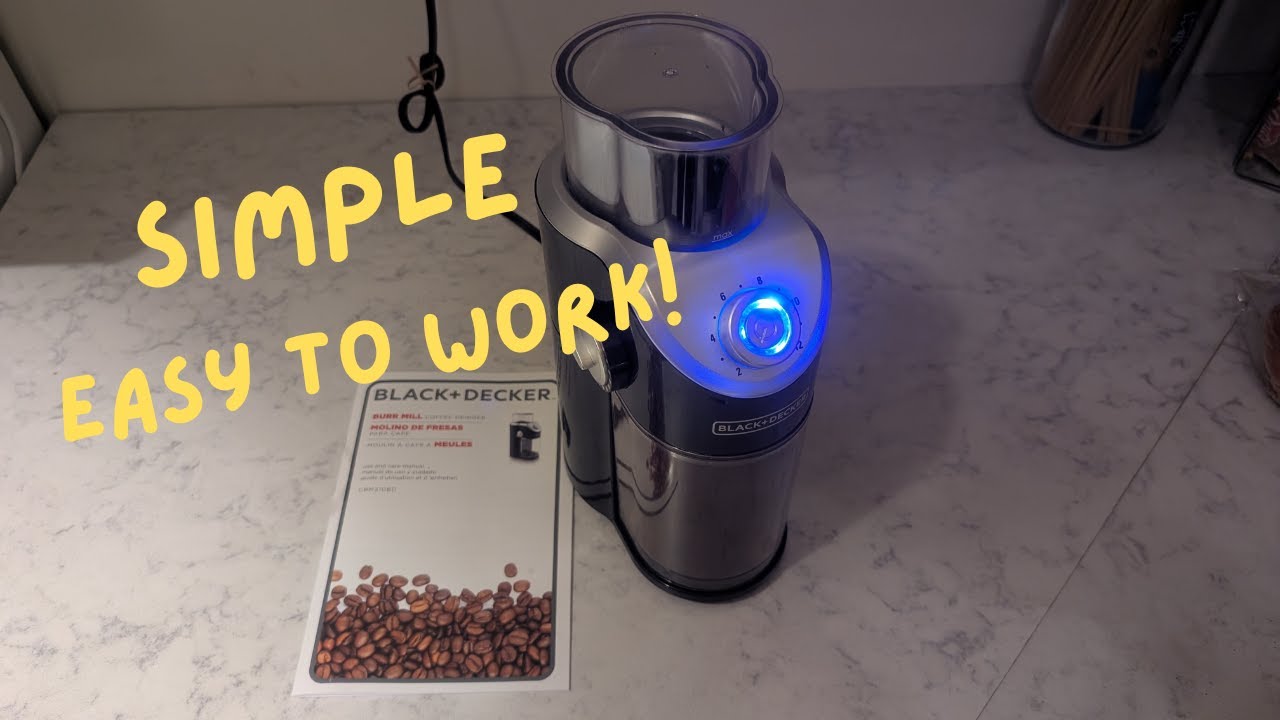
A burr grinder usually fits people who want repeatable grind size and more control. A blade grinder can fit people who want the lowest cost and accept more variation.
| Need | Better fit | Main trade-off |
|---|---|---|
| Lowest upfront cost | Blade grinder | Less control and more uneven particles |
| Repeatable pour-over brewing | Burr grinder | Higher cost and more parts to clean |
| Espresso | Espresso-capable burr grinder | Requires fine adjustment and good consistency |
| Occasional coffee | Blade or entry burr grinder | Convenience may matter more than precision |
| Frequent bean changes | Low-retention burr grinder | Often costs more |
| Quiet operation | Depends on the model | Motor and burr design both matter |
Do not select a grinder based on burr type alone. Check adjustment range, ease of cleaning, dose control, replacement parts, warranty, and whether the design suits your brew method.
For most people who brew coffee at home several times a week, a basic burr grinder provides the clearest improvement in control. It will not fix stale beans, poor water, or an unsuitable recipe, but it makes grind adjustment more predictable.
Frequently Asked Questions
Does a coffee grinder actually cut coffee beans?
A burr grinder both cracks and shears coffee beans. Its teeth break the bean and guide the pieces through a narrowing gap. A blade grinder mostly chops the beans through repeated impacts.
Is a finer grind always stronger?
No. Finer grounds often extract faster, but perceived strength also depends on the coffee dose, water amount, brew time, and extraction level. A finer grind can make coffee taste stronger, but it can also make it bitter if extraction goes too far.
Why does my coffee grinder make uneven grounds?
Uneven grounds can result from the grinder design, worn burrs, poor alignment, static, oily residue, or an unsuitable setting. Blade grinders naturally produce more variation because the beans move freely in the chamber.
Can I grind spices in a coffee grinder?
Check the manual first. Spices can leave strong oils and odors that transfer to coffee. Some grinders have removable parts that are easier to clean, while others are intended only for coffee.
Should I grind coffee beans before storing them?
Whole beans usually protect aroma better than ground coffee. For the freshest flavor, grind just before brewing and store whole beans in a sealed container away from heat, light, and moisture.
Key Takeaways
- A coffee grinder breaks whole roasted beans into smaller particles.
- Burr grinders control particle size with the gap between two grinding surfaces.
- Blade grinders chop beans through repeated impact and usually create a wider particle range.
- Fine grounds extract faster; coarse grounds extract more slowly.
- Grind size should match the brewing method and be adjusted by taste.
- Static, heat, and retention can affect cleanliness and dosing.
- Unplug the grinder before clearing jams or cleaning internal parts.
- A burr grinder is usually the better choice for repeatable home brewing.
Conclusion
A coffee grinder works by applying force to brittle roasted beans until they become brewable particles. Burr grinders use a controlled gap for more consistent results, while blade grinders rely on repeated chopping.
The best way to use any grinder is to start with the correct range for your brewing method, change the setting in small steps, and judge the result by both taste and brew behavior. Keep the grinder clean, avoid unsafe clearing methods, and use the manual for model-specific care.
One Comment