
An espresso machine makes small, strong shots, while a coffee machine brews larger cups for easy everyday sipping.
Choosing between an espresso machine and a coffee machine depends on your taste, time, budget, and daily routine. This guide explains the real differences in brewing method, flavor, cost, effort, and maintenance so you can choose with confidence.
Espresso vs Coffee Machine: The Basic Difference
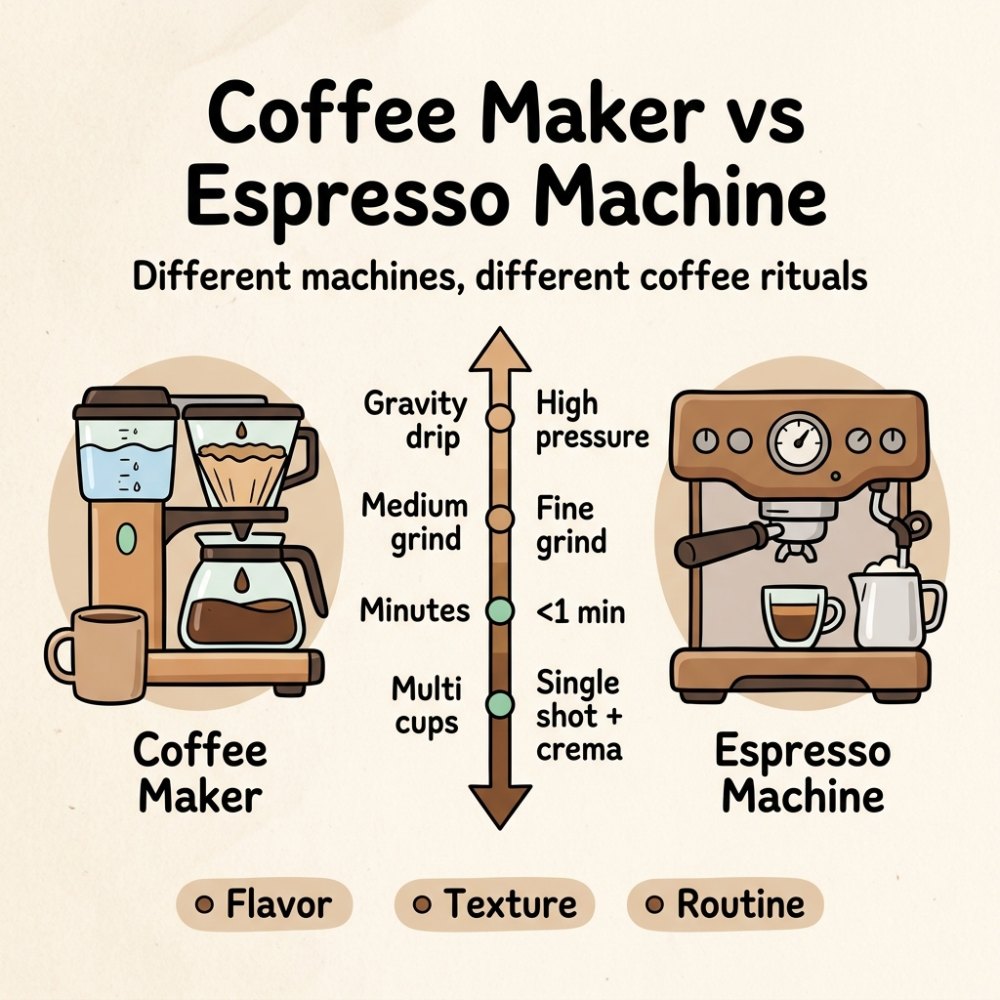
The main difference between an espresso machine and a coffee machine is how each one brews coffee. An espresso machine pushes hot water through finely ground coffee at high pressure. A standard coffee machine slowly drips hot water through medium-ground coffee and a paper or reusable filter.
Espresso is concentrated. A single shot is often about 1 to 1.5 ounces. Drip coffee is lighter and comes in a larger serving, often 8 to 12 ounces.
Think of espresso as a strong musical note. Drip coffee is more like a full song. Both use coffee beans, but the process creates a very different drink.
| Feature | Espresso Machine | Coffee Machine |
|---|---|---|
| Brewing method | Pressurized water through fine grounds | Hot water drips through medium grounds |
| Typical serving | 1 to 2 ounces | 8 to 12 ounces |
| Flavor | Rich, bold, and concentrated | Smooth, balanced, and lighter |
| Brewing time | About 25 to 35 seconds for a shot | About 4 to 10 minutes for a pot |
| Common drinks | Espresso, latte, cappuccino, Americano | Drip coffee, iced coffee, large black coffee |
| Skill level | Moderate to high | Low to moderate |
| Typical cleaning | More frequent and detailed | Simple and less frequent |
A coffee machine can sometimes include espresso-style features, milk systems, grinders, or pod brewing. For that reason, it helps to check the exact machine type before you buy.

How an Espresso Machine Works
An espresso machine uses pressure to extract flavor from finely ground coffee. Most modern machines aim for about 9 bars of pressure during extraction, although pump pressure and brewing pressure are not always the same.
The process usually includes these steps:
- Grind coffee beans finely.
- Measure the grounds into a portafilter or brew chamber.
- Tamp the grounds into an even puck.
- Lock the portafilter into the machine.
- Start the pump and let hot water pass through the coffee.
- Stop the shot when the desired volume and taste are reached.
A well-made espresso has a rich body, strong aroma, and a layer called crema. Crema is the golden foam that forms when carbon dioxide and coffee oils mix during extraction. It looks attractive, but crema alone does not prove that the shot tastes good.
Espresso machines come in several forms:
Manual espresso machines
Manual machines give you the most control. You manage the grind, dose, tamp, water flow, and shot time. They can produce excellent coffee, but they require practice.
Semi-automatic espresso machines
Semi-automatic models control the water pump but require you to grind, tamp, and start or stop the shot. This is a popular choice for people who want control without doing everything by hand.
Automatic espresso machines
Automatic models control the shot volume. You still add coffee and perform basic cleaning, but the machine handles much of the brewing process.
Super-automatic espresso machines
Super-automatic machines grind beans, brew espresso, and often froth milk with one touch. They offer speed and ease, though they usually cost more and provide less control.
In my experience comparing home coffee setups, the grinder often matters as much as the espresso machine. A basic machine with fresh, evenly ground coffee can outperform an expensive machine paired with stale or poorly ground beans.

How a Coffee Machine Works
A standard coffee machine, often called a drip coffee maker, uses gravity instead of high pressure. It heats water and releases it over ground coffee. The brewed liquid then passes through a filter and collects in a carafe or cup.
Most drip coffee makers use medium-ground coffee. The brewing process takes longer than espresso because water spends more time moving through the grounds.
A typical coffee machine includes:
• A water reservoir
• A heating element
• A showerhead that spreads water over the grounds
• A filter basket
• A carafe or cup platform
• A warming plate or insulated container
Coffee machines are simple to use. Add water, add coffee, press a button, and wait. This makes them popular in homes, offices, and places where several people want coffee at once.
Other types of coffee machines include:
Single-serve pod machines
Pod machines brew one serving at a time. They are fast and convenient, but pods can cost more per cup and create extra packaging waste.
Grind-and-brew machines
These machines grind whole beans before brewing. Fresh grinding can improve aroma and flavor, but the built-in grinder may be harder to clean or replace.
French press coffee makers
A French press is not an electric coffee machine, but it is often compared with one. It uses immersion brewing and produces a fuller body because the metal filter allows more natural oils into the cup.
Cold brew systems
Cold brew devices steep coffee in cold water for many hours. The result is smooth and less sharp, but the method needs planning because it is not a quick brewing option.
A coffee machine is usually the better fit when you want a dependable cup with little effort. It is also the better choice for families, workplaces, and anyone who drinks several cups throughout the morning.

Espresso vs Coffee Machine: Flavor and Strength
Espresso tastes stronger because it has a higher concentration of dissolved coffee compounds in a smaller volume. However, a stronger taste does not always mean more caffeine.
A standard 1-ounce espresso shot may contain around 60 to 75 milligrams of caffeine. An 8-ounce cup of drip coffee may contain roughly 80 to 120 milligrams, depending on the beans, serving size, and brewing method.
This means a full cup of coffee can contain more total caffeine than one espresso shot. A double espresso may change the comparison, so serving size matters.
Flavor also depends on several factors:
• Bean type and roast level
• Freshness of the coffee
• Grind size
• Water temperature
• Brewing time
• Coffee-to-water ratio
• Storage conditions
Espresso often brings out deep notes such as chocolate, caramel, nuts, or dried fruit. Drip coffee may show lighter notes such as citrus, berries, flowers, or toasted grains.
Neither method is automatically better. Espresso suits people who enjoy intense flavor and milk drinks. A coffee machine suits people who want a longer, smoother drink that they can sip over time.
Espresso vs Coffee Machine: Which One Is Easier to Use?
A coffee machine is usually easier for beginners. You do not need to learn tamping, shot timing, milk steaming, or fine grind adjustment. Many models also offer programmable timers, so coffee can be ready when you wake up.
An espresso machine has a steeper learning curve. Small changes in grind size or coffee dose can make a shot taste sour, bitter, thin, or harsh.
Common espresso mistakes include:
• Using coffee that is too old
• Grinding too coarse or too fine
• Tamping unevenly
• Letting the shot run too long
• Failing to warm the portafilter
• Using poor-quality water
• Ignoring the machine’s temperature
The first few shots may not taste perfect. That is normal. Espresso brewing is closer to cooking than pressing a button. You adjust one variable at a time until the result improves.
For a simple morning routine, choose a coffee machine. For a hands-on hobby, choose an espresso machine. If you enjoy making café-style drinks at home, the extra learning can feel rewarding.

Espresso vs Coffee Machine: Cost Comparison
The purchase price varies widely for both types of machines. A basic drip coffee maker may cost less than $50, while a premium model can cost several hundred dollars.
Espresso machines range from affordable entry-level models to advanced machines that cost thousands of dollars. You may also need extra equipment, including:
• A burr grinder
• A digital scale
• A tamper
• A milk pitcher
• A knock box
• Cleaning tablets or brushes
• A water filter
A built-in grinder can reduce equipment costs, but separate grinders often provide better control. The grinder is especially important for espresso because small changes in grind size can affect the entire shot.
Coffee also costs different amounts depending on the format. Whole beans and ground coffee are usually affordable per serving. Pods often cost more per cup, although they save time and reduce mess.
Long-term cost includes more than the machine price. Consider energy use, filters, cleaning products, replacement parts, coffee waste, and service needs.
A practical buying rule is simple:
• Choose a drip coffee maker for the lowest overall cost.
• Choose a pod machine for speed and convenience.
• Choose an espresso machine if you will regularly make espresso drinks.
• Choose a super-automatic model if convenience matters more than hands-on control.
Espresso vs Coffee Machine: Cleaning and Maintenance
Every coffee machine needs regular cleaning. Old coffee oils can become rancid and affect flavor. Mineral deposits from hard water can also reduce heating performance and slow water flow.
For a drip coffee maker:
- Empty the filter and rinse the basket after each use.
- Wash the carafe regularly.
- Wipe the warming plate.
- Run a descaling cycle as recommended by the manufacturer.
- Clean the water reservoir and lid.
For an espresso machine:
- Purge and wipe the steam wand after every use.
- Rinse the portafilter and basket after brewing.
- Backflush the machine when required.
- Clean the group head.
- Empty and wash the drip tray.
- Descale based on water hardness and manufacturer guidance.
- Replace water filters when needed.
Milk systems need special care. Milk residue can support bacterial growth, so rinse milk pathways promptly after use. Never leave milk sitting in a frothing tube for hours.
One lesson many home brewers learn the hard way is that cleaning is part of brewing, not an optional extra. A clean machine makes better coffee, lasts longer, and is safer to use.

Which Machine Is Best for Different Coffee Drinkers?
The best choice depends on how you drink coffee.
Choose an espresso machine if:
• You enjoy espresso, lattes, cappuccinos, or macchiatos.
• You want concentrated coffee with a rich texture.
• You like learning a hands-on skill.
• You care about adjusting flavor and extraction.
• You are willing to clean the machine often.
Choose a coffee machine if:
• You prefer a large cup of coffee.
• You want simple, repeatable brewing.
• You serve coffee to several people.
• You have a limited budget.
• You do not want to steam milk or adjust espresso settings.
Choose both if:
• Different people in your home prefer different drinks.
• You want drip coffee during the week and espresso on weekends.
• You often entertain guests.
• You have enough counter space and budget for both machines.
You can also make espresso-style drinks with a coffee machine by brewing strong coffee and adding steamed or frothed milk. The result may be enjoyable, but it is not the same as true espresso. Espresso depends on pressure, fine grinding, and controlled extraction.

How to Choose the Right Espresso Machine or Coffee Machine
Start with your daily habits, not the most impressive features. Ask yourself how much coffee you drink, how much time you have, and whether you enjoy the brewing process.
Use this checklist:
- Decide whether you prefer small, strong drinks or large cups.
- Set a realistic budget for the machine and accessories.
- Check the machine’s size and counter space needs.
- Look for easy-to-find replacement parts.
- Read the cleaning instructions before buying.
- Check the warranty and customer support.
- Choose a grinder that matches your brewing method.
- Consider water hardness in your area.
- Avoid paying for features you will not use.
- Choose a model with clear controls and simple upkeep.
For espresso, prioritize temperature stability, a reliable pump, a quality portafilter, and a capable grinder. For drip coffee, look for even water distribution, a strong thermal design, and a brewing temperature within the commonly recommended range of about 195°F to 205°F.
Certifications can also help. Look for products tested against recognized electrical and safety standards. Product reviews are useful, but give more weight to repeated comments about durability, cleaning, heat performance, and customer service.

Brewing Tips for Better Results
Fresh coffee usually tastes better than coffee that has been open for months. Store beans in an airtight container away from heat, light, and moisture. Avoid storing coffee in the refrigerator because changing temperatures can create condensation.
Use clean, filtered water when possible. Water makes up most of the final drink, so poor-tasting water can ruin good beans.
For drip coffee, begin with a coffee-to-water ratio near 1:16. For example, use about 20 grams of coffee for 320 grams of water. Adjust the ratio to taste.
For espresso, start with a common double-shot recipe:
• 18 grams of coffee
• About 36 grams of liquid espresso
• Around 25 to 35 seconds of extraction time
These are starting points, not strict laws. Dark roasts may need a different approach than light roasts. Taste matters more than a timer when the goal is an enjoyable cup.
If coffee tastes sour, the brewing may be too fast or the coffee may be under-extracted. If it tastes bitter or dry, the brewing may be too slow or over-extracted. Change one setting at a time so you know what helped.
Common Mistakes to Avoid
Buying the wrong machine is often caused by focusing on marketing instead of routine. A machine can have many settings and still fail to match your daily needs.
Avoid these common mistakes:
• Buying an espresso machine without budgeting for a grinder.
• Choosing a large coffee machine for a one-cup household.
• Ignoring the cost of pods or specialty coffee.
• Leaving wet grounds inside the machine.
• Using stale beans and blaming the equipment.
• Choosing a machine that is difficult to clean.
• Assuming more pressure always means better espresso.
• Overfilling the filter basket.
• Using milk without cleaning the steam system.
• Buying a machine that does not fit under your cabinets.
Another common mistake is expecting café results immediately. Good espresso takes practice, and even a good coffee machine cannot fix poor beans or dirty equipment.
The best machine is the one you will use often. A simple machine that fits your habits is more valuable than an expensive model that feels stressful or complicated.
Frequently Asked Questions About Espresso vs Coffee Machine
Is espresso stronger than regular coffee?
Espresso has a stronger, more concentrated flavor, but it may not contain more caffeine per serving. A full cup of drip coffee can contain more total caffeine because it is much larger.
Can a coffee machine make espresso?
A standard drip coffee machine cannot make true espresso because it does not use the same pressure and extraction process. Some specialty coffee machines include an espresso function, but they are different from basic drip models.
Is an espresso machine worth it for home use?
An espresso machine can be worth it if you enjoy espresso drinks and will use it often. It may not be worthwhile if you prefer large cups of simple coffee or want the lowest-cost option.
Which is easier to clean, an espresso machine or a coffee machine?
A coffee machine is usually easier to clean because it has fewer parts and no milk steam system. Espresso machines need more frequent cleaning, especially around the portafilter, group head, and steam wand.
Does espresso have more caffeine than coffee?
Espresso has more caffeine by ounce, but drip coffee often has more caffeine in a full serving. The final amount depends on the serving size, coffee type, roast, and brewing method.
Can I use regular ground coffee in an espresso machine?
You can use regular coffee beans if they are ground fine enough for espresso. Pre-ground coffee made for drip brewing is often too coarse and may produce a weak or fast shot.
What is better for beginners, an espresso machine or a coffee machine?
A coffee machine is usually better for beginners who want simple, consistent results. An espresso machine is a good choice for beginners who are willing to practice and learn basic brewing skills.
Conclusion
The choice between an espresso machine and a coffee machine comes down to your preferred drink, budget, time, and interest in brewing. An espresso machine creates concentrated shots and café-style drinks, while a coffee machine offers larger servings with less effort.
Choose the espresso machine if you enjoy rich flavor, milk drinks, and hands-on brewing. Choose the coffee machine if you want simple, affordable, and dependable coffee each day.
Take a close look at your morning routine before you buy. Then choose the machine you will enjoy using, cleaning, and maintaining. Explore different beans and brewing styles, and share your favorite setup with other coffee lovers.

3 Comments