
For home cooks in the United States, the short answer is no—not as a recommended or manufacturer-approved use. The KitchenAid Grain Mill attachment is made for dry, low-moisture grains such as wheat, corn, rice, oats, and barley. Coffee beans are oily, dense, and best ground with equipment built for coffee.
The attachment may break coffee beans into smaller pieces, but that does not make it a good coffee grinder. It can leave an uneven grind, hold coffee oils in the burrs, and may go against KitchenAid’s care instructions. For better flavor and safer use, choose a dedicated burr coffee grinder.

What Is the KitchenAid Grain Mill Attachment?
The KitchenAid Grain Mill is an attachment for compatible KitchenAid stand mixers. It uses a grinding mechanism to crush dry grains into flour or meal. KitchenAid lists foods such as wheat, oats, rice, corn, barley, buckwheat, millet, and similar dry grains as suitable uses.
The attachment is mainly designed for baking and cooking. It can help make:
- Whole-wheat flour
- Cornmeal
- Oat flour
- Rice flour
- Pancake and bread flour
- Coarse grain meal
Coffee beans are different from most grains. They contain natural oils, and roasted beans are often harder and more brittle than raw grains. Those traits affect both the grind and the cleaning process.
The official KitchenAid Grain Mill instruction manual should be the final authority for your model and region. Product instructions can change, and some KitchenAid attachments may have different limits.

Can You Grind Coffee Beans in a KitchenAid Grain Mill?
You may be able to crush coffee beans with the attachment, but you should not use the KitchenAid Grain Mill as a regular coffee grinder.
There are three main reasons:
- The grind may be uneven. Coffee needs a fairly consistent particle size for good brewing. A mix of fine dust and large pieces can produce weak, bitter, or muddy coffee.
- Coffee oils can remain inside the mill. These oils may affect later batches of flour and can become rancid if they are not fully removed.
- The use may not match the manual. KitchenAid’s grain mill instructions focus on dry grains and may warn against oily foods or other ingredients not listed for the attachment.
A grain mill and a coffee grinder also use different designs. A coffee grinder is built around the needs of brewing. It must produce a suitable grind for methods such as drip coffee, French press, espresso, or pour-over. A grain mill is built to turn grains into flour or meal.
What happens if you try it?
The result depends on the bean, the mill setting, and the mixer speed. The beans may crack into coarse pieces, or they may produce a rough mixture with fine particles. The attachment may also become harder to turn as coffee oils coat the grinding parts.
That result might be acceptable in an emergency if you only need coarse crushed coffee. However, it is not a reliable way to prepare coffee for daily brewing.

Why Coffee Beans Are a Poor Match for a Grain Mill
Coffee beans are roasted seeds, not cereal grains. roasting changes their structure and gives them a brittle texture. It also brings oils to the surface, especially in dark-roasted or flavored beans.
A grain mill is usually intended for clean, dry ingredients with little surface oil. Coffee can create several problems:
Coffee oil can build up
Coffee oils may stick to burrs, plates, and narrow passages. A dry brush may remove some residue, but it may not remove all of the oil. Water can create its own problem because many mill parts should not be soaked.
If you later grind wheat or rice, old coffee residue can transfer into the flour. The flour may smell or taste like coffee.
Coffee may produce too much fine dust
A coarse grind is not simply a pile of cracked beans. Brewing depends on controlled particle size. Too many fine particles can make coffee over-extract quickly, which may cause a harsh or bitter taste.
Large particles may under-extract at the same time. This uneven mix is one reason a dedicated coffee grinder performs better.
The attachment may not provide coffee settings
Many grain mills use adjustment controls for flour, meal, or coarse grain. Those settings do not automatically match coffee grind sizes.
Coffee grinders often provide settings labeled or calibrated for:
- Extra coarse
- Coarse
- Medium
- Medium-fine
- Fine
- Espresso-fine
Even these labels can vary between brands. A grain mill may not offer the control needed for repeatable coffee brewing.
Cleaning may be difficult
Coffee residue is oily. Grain dust is usually dry and powdery. The cleaning method that works for flour may not fully remove coffee residue.
Always follow the cleaning directions for the exact attachment. Do not rinse or immerse parts unless the manual says they are water-safe.

What Does KitchenAid Recommend?
KitchenAid’s grain mill documentation describes the attachment for dry grains and similar low-moisture foods. It also gives instructions for cleaning, adjustment, mixer speed, and suitable ingredients.
The safest reading is simple: use the attachment only for foods listed in the current manual or product documentation. If coffee is not listed as an approved ingredient, do not assume that the attachment is suitable just because it can physically crush the beans.
This distinction matters:
- Can it crush coffee? Possibly.
- Is it designed for coffee? No.
- Is it the best tool for coffee? No.
- Could regular use affect cleaning, flavor, or support coverage? Yes.
Check the model number before relying on advice from another KitchenAid owner. A common model in the United States is the KGM Grain Mill attachment, but product instructions and accessory details can vary by market and production date.
For the most accurate information, compare your attachment with:
- The manual supplied with your product
- The current KitchenAid product page
- KitchenAid customer support
- The warranty and care instructions for your region

Can You Use the KitchenAid Grain Mill for Other Coffee Substitutes?
The answer depends on the ingredient. Do not treat all seeds, beans, and spices as interchangeable with wheat or rice.
Some ingredients may be too oily, sticky, moist, hard, or fibrous for the grain mill. Examples can include:
- Nuts
- Flaxseed
- Sesame seeds
- Wet beans
- Oily seeds
- Dried fruit
- Spices
- Sugar
- Chocolate
- Roasted coffee beans
The grain mill is generally better suited to dry grains that break down into flour or meal. If an ingredient leaves oil on your fingers, clumps easily, or has a high moisture level, check the manual before grinding it.
A food processor, spice grinder, or dedicated coffee grinder may be more suitable. The right choice depends on the ingredient and the texture you need.
What Is the Best Alternative for Grinding Coffee?
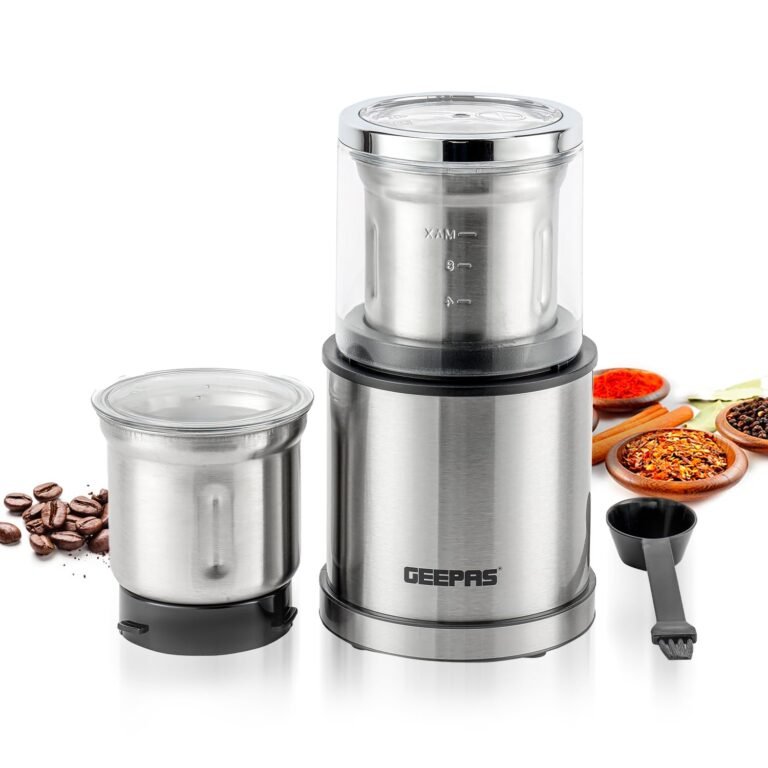
A dedicated burr coffee grinder is the best general alternative. Burrs crush coffee between two grinding surfaces and usually provide more control than a blade grinder.
Choose the grinder based on your brewing method:
| Brewing method | Typical grind | Useful grinder feature |
|---|---|---|
| French press | Coarse | Wide, consistent adjustment range |
| Drip coffee maker | Medium | Repeatable medium setting |
| Pour-over | Medium to medium-fine | Small adjustment steps |
| AeroPress | Medium-fine to fine | Flexible control |
| Moka pot | Fine | Fine adjustment |
| Espresso | Very fine | Espresso-capable burr system |
These are starting points, not universal rules. Coffee type, roast level, water, dose, and brew time also affect the result.
A blade grinder can work for basic coffee, but it chops rather than grinds. Short pulses and gentle shaking can improve the result, yet the grind will usually remain less even than one made with a burr grinder.
If you want to use your KitchenAid stand mixer for coffee, look for a coffee-specific attachment or accessory that is approved for your mixer model. Do not assume that an attachment made for grains will work the same way as a coffee grinder.

What Should You Do If You Already Ground Coffee in the Grain Mill?
If you used the KitchenAid Grain Mill for coffee once, stop using it for food until you inspect and clean it.
Follow these steps:
- Unplug the stand mixer.
- Remove the grain mill attachment.
- Check the manual before cleaning.
- Brush away dry coffee particles.
- Clean only the parts that the manual identifies as safe to clean.
- Inspect the grinding surfaces for oil, packed grounds, or damage.
- Run a small amount of approved dry grain through the mill only if the manual allows this step.
- Discard that test material.
- Stop using the attachment if coffee odor or oily residue remains.
Do not use water, soap, rice, or another cleaning material as a substitute for the manufacturer’s instructions. Some internet cleaning tips may be unsuitable for a specific mill.
Contact KitchenAid support if:
- The mill will not turn
- The mixer makes a new grinding or burning sound
- The attachment becomes unusually hot
- The grinding parts are damaged
- You cannot remove oily coffee residue
- The attachment no longer adjusts correctly
A single accidental use does not prove that the attachment is ruined. Still, repeated coffee grinding can increase cleaning and performance concerns.

Common Mistakes to Avoid
The most common mistake is confusing “possible” with “recommended.” A machine may process an ingredient without being designed for it.
Avoid these errors:
- Using the grain mill for coffee every day
- Grinding oily or flavored coffee beans
- Pouring water into the attachment without checking the manual
- Assuming a flour setting equals a coffee grind setting
- Using the same mill for coffee and flour without checking for residue
- Running the mixer at an unapproved speed
- Ignoring unusual noise, heat, or resistance
- Treating online comments as a replacement for the product manual
Also avoid forcing the mixer when the attachment slows down. Resistance can signal unsuitable food, too much material, incorrect assembly, or a mechanical problem.
Key Takeaways
- The KitchenAid Grain Mill is not the right tool for coffee.
- It is designed mainly for dry grains and flour-making tasks.
- Coffee beans may leave oily residue and produce an uneven grind.
- A dedicated burr coffee grinder is the better choice for brewing.
- Check the current KitchenAid manual for your exact model before trying any unlisted ingredient.
- If you already used the mill for coffee, clean it only according to the manufacturer’s instructions.
Frequently Asked Questions
Can the KitchenAid grain mill grind roasted coffee beans?
It may physically crack or crush roasted coffee beans, but it is not recommended as a regular coffee grinder. The beans can leave oil, create an uneven grind, and fall outside the attachment’s intended use.
Can the KitchenAid grain mill make espresso grounds?
No. Espresso requires a very fine and consistent grind. The KitchenAid Grain Mill does not provide the same control as an espresso-capable burr grinder.
Can I grind coffee beans and wheat in the same mill?
You should avoid doing so unless you can fully remove all coffee residue using the manufacturer-approved cleaning method. Coffee oils and aroma can transfer into wheat or other grains.
Will grinding coffee damage the KitchenAid mixer?
There is not enough model-specific evidence to promise that coffee will damage every KitchenAid mixer or grain mill. However, unsuitable ingredients may increase resistance, leave residue, or create a support and warranty question. Follow the manual for your exact attachment.
What is the best KitchenAid-compatible option for coffee?
Use a coffee-specific grinder or an accessory that KitchenAid identifies as compatible with your mixer model. A standalone burr grinder is often the simplest option because it is made for coffee particle control and easier to keep separate from flour-making equipment.
Conclusion
The KitchenAid Grain Mill can be useful for turning dry grains into flour and meal, but it is not a proper coffee grinder. Coffee beans are oily and need a more controlled grind than a grain mill usually provides.
For occasional coffee preparation, use a dedicated coffee grinder. If you already tried coffee in the grain mill, clean it according to the official manual and stop if oil, odor, heat, or unusual noise remains. The safest next step is to check your model’s KitchenAid instructions before grinding any ingredient that is not clearly listed.


2 Comments