A standard U.S. coffee maker “pot” holds 8 to 12 coffee-maker cups, but those cups are usually only 5 to 6 fluid ounces each. A 12-cup coffee maker often makes about 60 fluid ounces of brewed coffee, which equals 7.5 standard 8-ounce cups.
The most accurate answer depends on what “cup” means:
- Coffee-maker cup: Usually 5 fluid ounces, though some brands use 4, 5, or 6 ounces
- U.S. measuring cup: 8 fluid ounces
- 12-cup coffee maker: Often 60 fluid ounces, or about 7.5 standard cups
- 10-cup coffee maker: Often 50 fluid ounces, or about 6.25 standard cups
- 8-cup coffee maker: Often 40 fluid ounces, or about 5 standard cups
This difference explains why a “12-cup” coffee pot may not fill twelve regular mugs.
What Does a “Cup” Mean on a Coffee Maker?
On most coffee makers sold in the United States, one marked cup is smaller than a standard U.S. measuring cup. The coffee industry often uses a 5-ounce serving when labeling coffee brewers.
A coffee maker may show markings such as 4, 6, 8, 10, or 12 cups. These marks usually refer to the brewer’s own serving size, not an 8-ounce kitchen cup.
For example, a brewer marked “12 cups” may have this capacity:
12 coffee-maker cups × 5 fluid ounces = 60 fluid ounces
That amount equals:
60 fluid ounces ÷ 8 fluid ounces = 7.5 standard U.S. cups
Some machines use a 6-ounce cup instead. A 12-cup brewer with 6-ounce markings would hold 72 fluid ounces. Always check the owner’s manual or the water-level marks on the carafe for the exact capacity.
Coffee-maker cups versus standard cups
| Description | Fluid ounces | What it usually means |
|---|---|---|
| Coffee-maker cup | 4–6 fl oz | One mark on many brewers |
| Common U.S. coffee serving | 6–8 fl oz | A typical small or medium mug serving |
| U.S. measuring cup | 8 fl oz | Used in cooking and recipes |
| Large travel mug | 12–20 fl oz | Often equal to 2–4 coffee-maker cups |
A “cup” is a serving label on many coffee makers. It is not always a measure of volume used in cooking.

How Many Ounces Are in a Coffee Pot?
The number of ounces in a coffee pot depends on its size and the maker’s definition of a cup. Use the markings on the carafe when possible, because the label may vary by model.
The table below uses the common 5-fluid-ounce coffee-maker cup.
| Coffee maker size | Approximate brewed coffee | Equivalent 8-ounce cups |
|---|---|---|
| 4-cup | 20 fl oz | 2.5 cups |
| 5-cup | 25 fl oz | 3.1 cups |
| 6-cup | 30 fl oz | 3.75 cups |
| 8-cup | 40 fl oz | 5 cups |
| 10-cup | 50 fl oz | 6.25 cups |
| 12-cup | 60 fl oz | 7.5 cups |
| 14-cup | 70 fl oz | 8.75 cups |
These figures describe the water capacity before brewing. The final amount in the pot can be slightly lower because coffee grounds retain some water.
For a quick calculation, use this formula:
Coffee-maker cups × ounces per marked cup = total fluid ounces
Then convert the result into standard cups:
Total fluid ounces ÷ 8 = standard U.S. cups
Example: A 10-cup coffee maker
If a 10-cup brewer uses 5-ounce markings:
- 10 × 5 = 50 fluid ounces
- 50 ÷ 8 = 6.25 standard cups
So, a full 10-cup coffee pot makes about six full 8-ounce cups, plus 2 ounces.

How Many Regular Mugs Does a Pot of Coffee Make?
A full pot usually makes fewer mugs than its coffee-maker label suggests. The answer depends on mug size.
A standard mug may hold 8 to 12 fluid ounces. Large travel mugs may hold 16 ounces or more.
Approximate servings from common coffee makers
| Coffee maker | 8-ounce mugs | 12-ounce mugs | 16-ounce mugs |
|---|---|---|---|
| 4-cup brewer | 2.5 | About 1.5 | About 1 |
| 8-cup brewer | 5 | About 3 | 2.5 |
| 10-cup brewer | 6.25 | About 4 | About 3 |
| 12-cup brewer | 7.5 | 5 | About 4 |
| 14-cup brewer | 8.75 | About 6 | About 4.5 |
These numbers assume a 5-ounce coffee-maker cup and do not account for coffee left in the filter or carafe.
If you fill a large 16-ounce travel mug, a full 12-cup coffee maker may provide only about four mugs. If you use small 6-ounce cups, the same pot may serve about ten people.
How Much Ground Coffee Do You Need for a Pot?
A common starting point is about 1 to 2 level tablespoons of ground coffee for every 6 fluid ounces of water. The right amount depends on the coffee, grind, brewer, and personal taste.
The Specialty Coffee Association describes a brewing ratio near 55 grams of coffee per liter of water, with an accepted range around that target. This is close to using about 10 to 11 grams of coffee per 6 fluid ounces of water.
For home brewing, start with the coffee maker’s scoop instructions. Then adjust the amount after tasting the coffee.
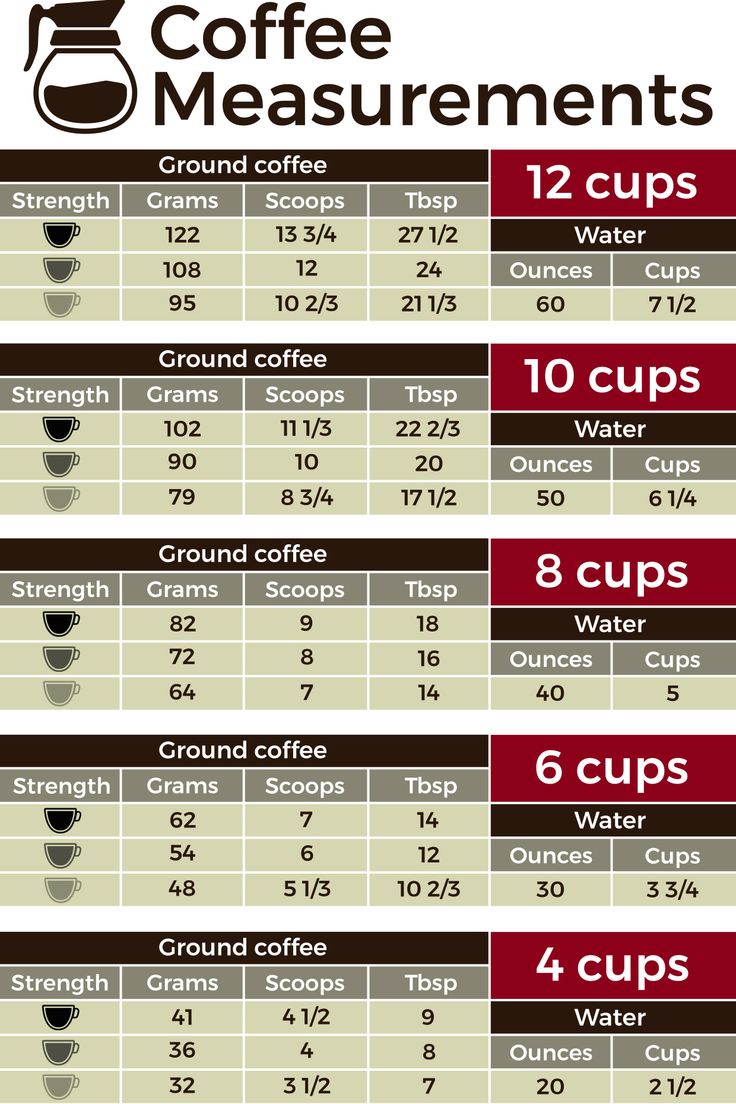
Ground coffee guide for common pot sizes
The table below gives a practical starting range. It assumes a 5-ounce coffee-maker cup and about 1 level tablespoon per marked cup.
| Coffee maker setting | Water | Starting amount of ground coffee |
|---|---|---|
| 4 cups | About 20 fl oz | 4 tablespoons |
| 6 cups | About 30 fl oz | 6 tablespoons |
| 8 cups | About 40 fl oz | 8 tablespoons |
| 10 cups | About 50 fl oz | 10 tablespoons |
| 12 cups | About 60 fl oz | 12 tablespoons |
For stronger coffee, add a little more ground coffee. For milder coffee, reduce the amount slightly. Do not use less coffee while keeping the same water amount if the brew tastes thin; that can make the coffee weak and flat.
A kitchen scale gives more consistent results than a spoon. A useful starting point is about 55 grams of coffee for each liter of water, then adjust to taste.

How Much Coffee Does a 12-Cup Pot Make?
A typical U.S. 12-cup coffee maker makes about 60 fluid ounces when its cup size is 5 fluid ounces.
That equals:
- About 7.5 standard 8-ounce cups
- Five 12-ounce servings
- About four 16-ounce travel mugs
- Roughly 12 small 5-ounce servings
A full 12-cup pot may not reach the very top of the carafe. The water level drops during brewing because coffee grounds absorb some water.
Many brewers also have a maximum fill line below the lid or rim. Do not add water above that line. Overfilling can cause spills, poor brewing, or water leaks.
For a 12-cup pot, begin with about 10 to 12 tablespoons of ground coffee. Taste the result and adjust the next batch rather than making a large change at once.

How Many Cups of Coffee Are in a 6-Cup or 8-Cup Pot?
A 6-cup coffee maker usually holds about 30 fluid ounces if each marked cup is 5 ounces. That equals about 3.75 standard 8-ounce cups.
An 8-cup coffee maker usually holds about 40 fluid ounces. That equals about five standard 8-ounce cups.
| Coffee maker size | Approximate volume | Standard 8-ounce cups |
|---|---|---|
| 6-cup | 30 fl oz | 3.75 |
| 8-cup | 40 fl oz | 5 |
| 10-cup | 50 fl oz | 6.25 |
| 12-cup | 60 fl oz | 7.5 |
If the brewer uses 6-ounce markings, the total will be higher. For example, an 8-cup, 6-ounce brewer holds 48 fluid ounces, or six standard 8-ounce cups.
The markings on the carafe are more reliable than the number printed on the product box.

Why Does a Coffee Pot Make Less Coffee Than the Water You Add?
A coffee maker produces less liquid than the amount of water you pour into the reservoir because some water stays in the coffee grounds and filter. A small amount may also remain in the internal tubing or evaporate during brewing.
Coffee grounds can hold roughly one to two times their dry weight in water, though the exact amount varies. This means the finished coffee may be a little below the starting water volume.
Other causes of a low carafe include:
- A filter that blocks the outlet
- Grounds that spill into the filter basket
- A carafe that is not seated correctly
- A clogged spray head
- Mineral buildup inside the brewer
- A reservoir filled below the marked line
Clean the filter basket and carafe first. If the brewer still makes much less coffee, follow the manufacturer’s descaling instructions.
Do not run a coffee maker without water. Do not take apart an electrical brewer unless the manufacturer permits it and the appliance is unplugged.

How to Calculate Coffee for Any Pot Size
You can calculate the coffee amount in three simple steps.
Step 1: Find the pot’s actual volume
Check the carafe markings or owner’s manual. If the manual says each cup is 5 ounces, multiply the number of cups by five.
Step 2: Convert the volume if needed
Divide the total fluid ounces by eight to find the number of standard U.S. cups.
For example:
8 marked cups × 5 ounces = 40 fluid ounces
40 ounces ÷ 8 = 5 standard cups
Step 3: Choose a coffee ratio
Start with about 55 grams of ground coffee per liter of water, or use the brewer’s scoop guide. If you do not have a scale, start with about one level tablespoon per 5-ounce coffee-maker cup.
A simple formula is:
Coffee-maker cups × 1 tablespoon = starting tablespoons of coffee
This is only a starting point. Dark roasts, light roasts, fine grinds, and coarse grinds can taste different even when you use the same amount.

Common Mistakes When Measuring Coffee
The most common mistake is treating a coffee-maker cup as an 8-ounce measuring cup. This makes people add too much water or misjudge how many servings a pot will produce.
Other frequent mistakes include:
- Filling the reservoir by the mug instead of using the carafe marks
- Counting a 16-ounce travel mug as one coffee-maker cup
- Using heaping tablespoons for every batch
- Changing both the coffee amount and water amount at once
- Ignoring the brewer’s maximum fill line
- Assuming every brand uses the same cup size
- Measuring coffee grounds by volume when consistent results matter
- Forgetting that coffee grounds absorb part of the water
For repeatable coffee, measure water with the same method each time. Keep the grind and coffee amount steady while adjusting one variable at a time.

Does the Coffee Maker Size Include the Water or Finished Coffee?
The advertised cup count usually describes the brewer’s water capacity, not the exact volume of coffee that reaches the carafe.
A 12-cup machine may be rated for 60 fluid ounces of water. The brewed coffee may be slightly lower because the grounds retain water.
The label also does not describe the size of your drinking mug. A coffee maker rated for 12 cups might serve five 12-ounce mugs or four 16-ounce mugs.
When buying or comparing coffee makers, look for the actual fluid-ounce capacity. This gives a clearer comparison than the cup count alone.

Frequently Asked Questions
Is a coffee-maker cup 6 ounces or 8 ounces?
It can be either, but many U.S. coffee makers use about 5 fluid ounces per marked cup. Some use 4 or 6 ounces. An 8-ounce cup is the standard U.S. measuring-cup definition, not a universal coffee-maker standard.
How many cups are in a 12-cup coffee maker?
A typical 12-cup coffee maker holds about 60 fluid ounces. That equals 7.5 standard 8-ounce cups, five 12-ounce servings, or about four 16-ounce travel mugs.
How much coffee should I use for 8 cups?
For an 8-cup brewer using 5-ounce markings, start with about 8 tablespoons of ground coffee. You can adjust the amount based on taste.
Can I use a regular measuring cup to fill my coffee maker?
Yes, but check the brewer’s capacity first. If the machine is marked in 5-ounce cups, eight marks equal about 40 fluid ounces, not 64 fluid ounces.
Does coffee lose caffeine when brewed in a larger pot?
The total caffeine in the pot usually increases when you use more coffee and water. The caffeine in each serving depends on the coffee type, amount used, grind, brew method, and serving size. The pot’s cup label does not show caffeine content.
Key Takeaways
- A coffee-maker “cup” is often 5 fluid ounces, not 8 ounces.
- A typical 12-cup coffee pot holds about 60 fluid ounces.
- That equals about 7.5 standard 8-ounce cups.
- A 12-cup pot usually makes about five 12-ounce mugs.
- Start with about one tablespoon of ground coffee per marked cup, then adjust.
- Check the carafe or manual because cup sizes vary by brand and model.
Conclusion
The best short answer is this: a standard 12-cup coffee maker usually makes about 60 fluid ounces of coffee, or 7.5 standard U.S. cups. The word “cup” on the brewer usually means a smaller 5-ounce serving.
For the most accurate result, read the fluid-ounce markings on the carafe, divide by eight to estimate regular cups, and adjust the coffee grounds to match your taste.